Etrasimod for Eosinophilic Esophagitis?

ES Dellon et al. Lancet Gastroenterol Hepatol 2025; 10: 622–33. Etrasimod as a treatment for eosinophilic oesophagitis (VOYAGE): a double-blind, placebo-controlled, randomised, phase 2 trial

Background: “Etrasimod is an oral, once-daily, selective S1P1,4,5 receptor
modulator for the treatment of moderately to severely active ulcerative colitis and in development for the treatment of other immune-mediated inflammatory diseases. Etrasimod prevents trafficking of lymphocytes to inflamed mucosal tissue and sites of primary disease
manifestation, offering a unique, promising mechanism for the treatment of eosinophilic oesophagitis.”

There were 108 participants in this study: 41 patients received etrasimod 2 mg, 39 received etrasimod 1 mg, and 28 received placebo.

Key findings:

  • Median percentage changes from baseline in peak eosinophil count (PEC) at week 16:6 were −58·4% for etrasimod 2 mg (p=0·010 vs placebo), −39·4% for etrasimod 1 mg (p=0·29 vs placebo) and −21·5% for placebo.
  • Significant reductions from baseline in oesophageal PEC were achieved with both etrasimod
    doses (n=27 for 2 mg n=28 for 1 mg) at week 24 versus placebo (n=19), with a numerically larger reduction seen with the 2 mg dose, which had a median placebo-adjusted difference of –103·9% from baseline in oesophageal PEC. Oesophageal PEC did not decrease further with longer etrasimod treatment during the extension period (to 52 weeks in a smaller subset)
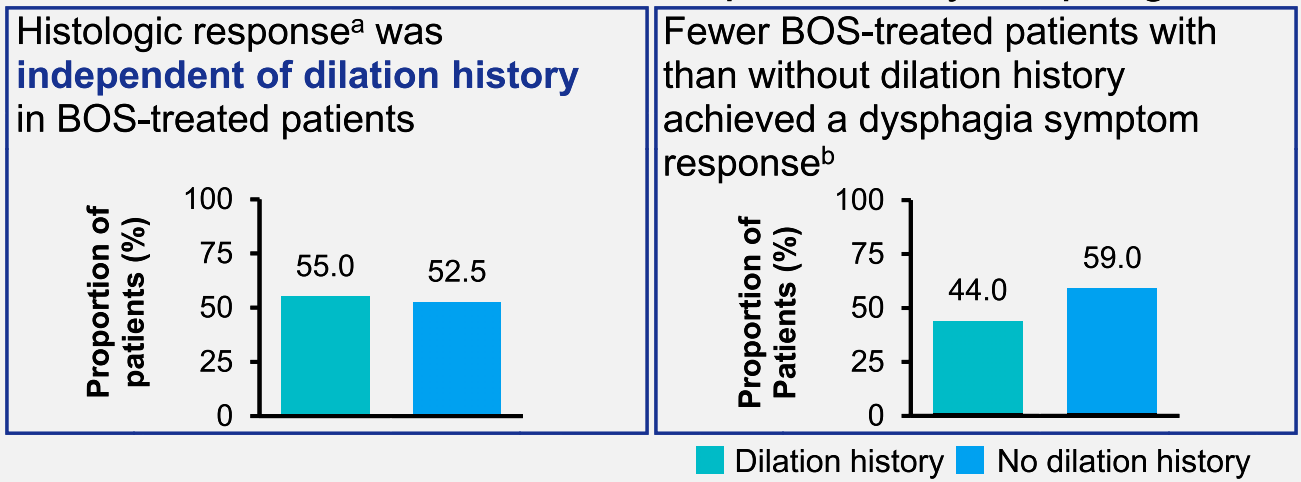
  • Etrasimod 2 mg was associated with a significant improvement in DSQ score at week 24 versus placebo in patients with no history of dilation (LS mean −21·6 vs –9·6, p=0·031)
  • No serious treatment-emergent adverse events occurred.

My take (borrowed from the authors): “This [phase 2] study provides the first evidence
that targeting the S1P pathway can improve disease activity in eosinophilic oesophagitis. Given that current treatment options for eosinophilic oesophagitis have variable and incomplete response rates, etrasimod presents a promising option.” Larger studies are warranted.

Related blog posts:

Wat Arun (Temple of Dawn), Bangkok

Budesonide Tablet vs Off-Label Corticosteroids in Eosinophilic Esophagitis

G Pellegatta et al. Clin Gastroenterol Hepatol 2025; 23: 1058-1060. Open Access! Switch From Off-Label Swallowed Topical Corticosteroids to Budesonide Orodispersible Tablets in Eosinophilic Esophagitis Patients

Methods: This was a single center, prospective, observational study with adult patients previously diagnosed with EoE. Thirty EoE patients, receiving off-label swallowed topical corticosteroids (STCs), were consecutively enrolled. “This is the first study to evaluate the clinical, histological, and endoscopic efficacy of the switch from STCs to BOT [Budesonide Orodispersible Tablet]”

Key findings:

  • The median Dysphagia Symptoms Score decreased from 5 (range 0–9) under STCs therapy to 0 (range 0–6) under BOT therapy (P < .0001)
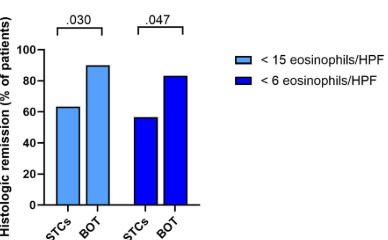
  • After switching to BOT, there was a significant increase in the number of patients in histological remission (STCs: n = 19 of 30 [63.3%] vs BOT: n = 27 of 30 [90%]; P = .030) and histological deep remission (STCs: n = 17 of 30 [56.6%] vs BOT: n = 25 of 30 [83.3%]; P = .047) 
  • Another important improvement following the switch was the improved patient satisfaction with the therapy in terms of a faster and easier modality of assumption…favors a better compliance to BOT
  • There was a “slight increase in oral Candida infection after BOT”

The authors did not include any cost information regarding the switch. In U.S., BOT is not an available treatment option. However, Eohilia, which is a budesonide suspension with a 12-week FDA approval period, costs ~$2100 per month (for 600 mL =30 day supply), whereas budesonide ampules at same dosage cost ~$300 per month (60 1 mg ampules).

My take: BOT therapy, which was targeted for esophageal delivery, was associated with better response rates. However, the cost of targeted FDA approved budesonide therapy in U.S, is exorbitant.

Related blog posts:

Impact of Disease Severity on Eosinophilic Esophagitis Treatment Responses

CC Reed et al. Clinical Gastroenterology and Hepatology 2025; Worsening Disease Severity as Measured by I-SEE Associates With Decreased Treatment Response to Topical Steroids in Eosinophilic Esophagitis Patients

This was a retrospective study with children and adults with eosinophilic esophagitis (EoE). Among 1312 patients, there were 657 (50%), 461 (35%), and 194 (15%) with mild, moderate, and severe disease by I-SEE, respectively. Disease activity was categorized as mild (I-SEE 1–6), moderate (I-SEE 7–14), or severe (I-SEE ≥15).

Key findings:

  • Patients with severe disease were less likely to have histologic response (49% (severe) vs 55% (moderate) vs 64% (mild); P = .03 for <15 eosinophils per high-power field) 
  • Patients with severe EoE also had lower global symptom response rates (53% vs 79% vs 83%, respectively) and higher post-treatment EoE Endoscopic Reference Scores (EREFS; 3.6 ± 2.3 vs 2.4 ± 1.8 vs 1.6 ± 1.6, respectively)

My take: More severe disease is harder to treat with EoE (and most everything else too).

Related blog posts:

Link: I-SEE Tool Scoring Table

Crazy wiring in Chiang Mai, Thailand (but prevalent in many areas of Thailand)

Delivery Vehicle and Outcomes for Budesonide-Treated Eosinophilic Esophagitis

N Lendner, et al. J Pediatr Gastroenterol Nutr. 2024;79:92‐99. Comparison of budesonide vehicles in inducing histologic remission in pediatric eosinophilic esophagitis.

This retrospective study with 111 patients with EoE examined histologic remission with oral viscous budesonide (OVB) and various delivery vehicles (Splenda, honey, syrup or applesauce). Key findings:

  • Overall rate of histologic remission with OVB was 52.6% (“which is less than the reported response of approximately 66% for topical steroid therapy”).
  • There was no difference in rates of histologic remission or response in mid and distal esophagus, respectively) among the different vehicle types or treatment regimens. Similarly, there was no difference in endoscopic remission or response

My take: It does not seem to matter which delivery vehicle is used for OVB; thus, clinicians should aim for more palatable and cost‐effective vehicles.

Related blog posts:

Arches National Park

When To Take Fewer Biopsies With Eosinophilic Esophagitis

A Godat et al. Clin Gastroenterol Hepatol 2024: 22: 1528-1530. Eosinophil Distribution in Eosinophilic Esophagitis and its Impact on Disease Activity and Response to Treatment

In this post hoc analysis of the EOS-1 and EOS-2 trials with 263 adult patients, the authors analyzed eosinophil distribution and impact on treatment. Key findings;

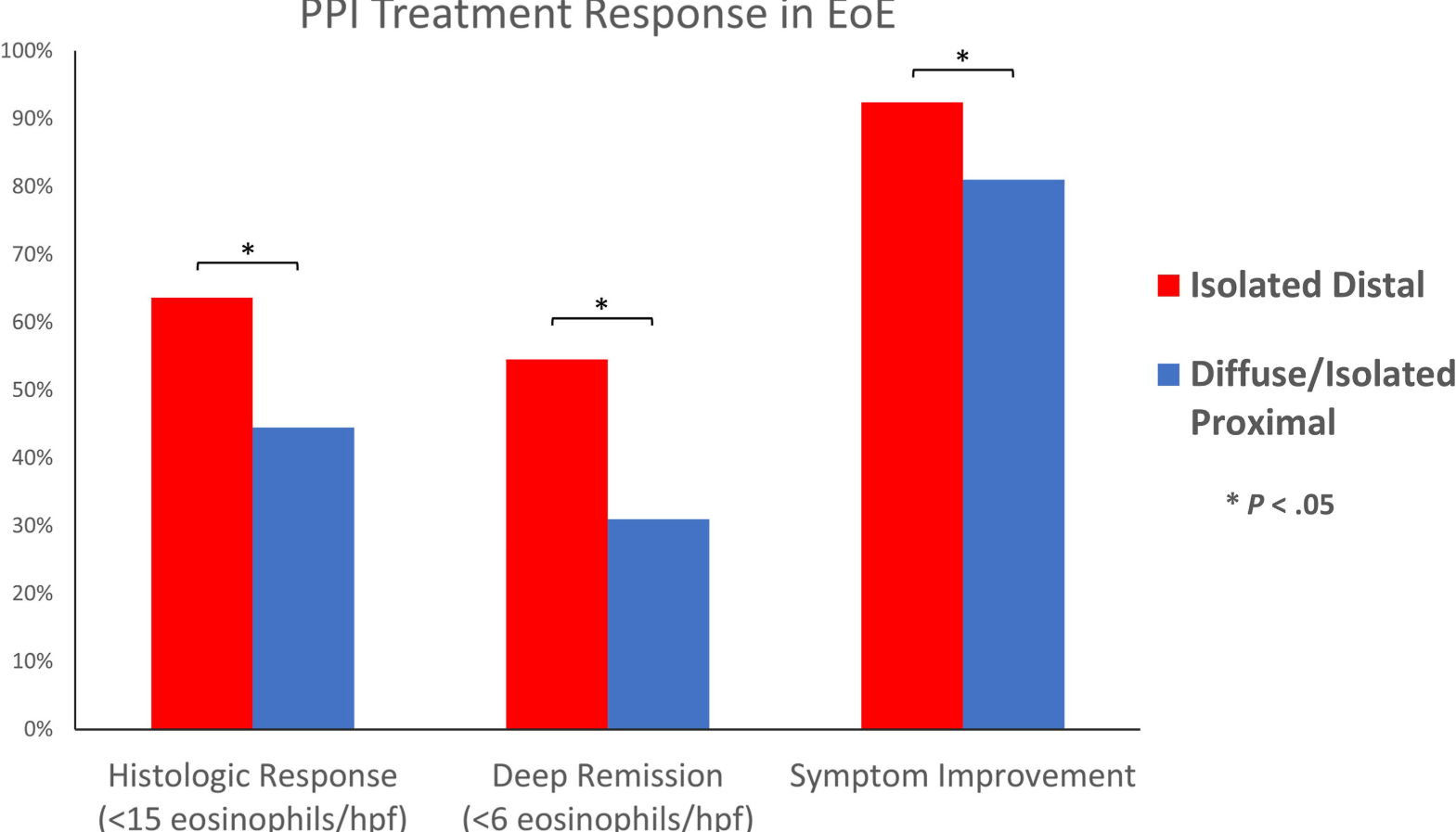
  • Peak eosinophil count was highest in the distal esophagus (median 166 eos/mm2) followed by mid esophagus (142) and then proximal esophagus (113). 46% of patients had highest peak eosinophil count in the distal esophagus, 33% in the mid esophagus, and 21% of patients in the proximal esophagus
  • Diagnosis: a biopsy protocol using only distal esophagus would have missed EoE diagnosis in only 13 (4.9%) of patients
  • Remission rates stratified by histologic categories were not statistically different base on disease location: 73% distal esophagus, 76% mid esophagus, 64% proximal esophagus, and 64% diffuse esophageal disease
  • None of the following factors affected treatment outcome: histologic location category, histologic disease severity (peak eos count) and atopic status. For example, treatment failure occurred in 37% without atopy and 30% with atopy

My take: In this study population, separate evaluation of biopsies by location modestly increased the diagnostic yield at baseline. Thus, additional biopsies at disease onset is a good idea. However, the actual distribution of disease activity did not seem to help provide any insight into therapeutic response (to budesonide). Practical implications are that fewer biopsies on follow-up endoscopy may be reasonable to help determine a treatment response.

Related blog posts.

Food-Specific IgG4: With This Guided Testing, You Can Achieve the Same Results As Those Who Don’t Have This Testing

On first glance at this article, it looks like the authors have found that testing for food-specific IgG4 (FS-IgG4) could be useful in guiding dietary treatment for eosinophilic esophagitis (EoE). However, the data don’t support this conclusion.

Methods: Prospective observational cohort in adult patients with EoE (n=22 along with 13 controls) placed on elimination diet based on FS-IgG4 levels (ImmunoCAP, cutoff of 10 mgA/L).

Key findings:

  • Elevated serum FS-IgG4 to 1 or more food groups (median 2) was identified in 21/22 (95.4%) patients with EoE; 20/21 underwent 6-week dietary elimination
  • Nine (45%) patients had histological remission (<15 eosinophils per high-power field)
  • Serum FS-IgG4 did not decline by 6-week follow-up. In addition, there was no difference in the FS-IgG4 levels between active and inactive EoE
  • 19 of 22 (86.4%) patients had high FS-IgG4 to milk and 13 of 22 (59.1%) had high FS-IgG4 to wheat. No patients required seafood elimination

The authors note in their introduction that total IgG4 levels in the esophagus are 45-fold those of healthy controls. In addition, “a preliminary study assessing trigger foods in patients undergoing 6FEDs has demonstrated elevated FS-IgG4 was associated with trigger foods in esophageal secretions but not foods that did not trigger esophageal eosinophilia” (K Peterson et al. Aliment Pharmacol Ther 2020; 52: 997-1007).

Despite the lack of any proven efficacy of this FS-IgG4-directed diet (over empiric elimination), the editorial suggests that FS-IgG4 levels may be beneficial, noting that the histologic remission rate increased to 64.3% after excluding ~30% patients with concerns of non-adherence. Removing 30% of patients to get better results would often be called “cherry-picking.”

In addition, neither the editorial (nor the study) delves into the fairly high rates of FS-IgG4 to milk and wheat. This suggests that FS-IgG4 testing will be unreliable with numerous false-positives (though there is wide range of reported reactions to milk and wheat in the literature). Even the control group had high FS-IgG4 to milk in half of the patients. Both the editorial and the study review the limitations which include small sample size, need for control group with atopy, and a lack of established cutoff values for FS-IgG4.

My take: This is a NEGATIVE study. Using FS-IgG4 levels to guide elimination diet was NOT better than empiric elimination of either 1 or 2-food groups. This finding should be more clearly stated in both the study and the editorial. It would be very useful to provide specific dietary advice to our patients with EoE. It is possible that a larger study with higher cutoff levels could find some utility for FS-IgG4. However, this study does not make this approach look terribly promising.

Related blog posts.

Arches National Park

Dupilumab (Dupixent) for Young Children with Eosinophilic Esophagitis (Published Data)

M Chehade et al. NEJM 2024;390:2239-2251 Dupilumab for Eosinophilic Esophagitis in Patients 1 to 11 Years of Age

This study provides published data that has been referenced previously at time of FDA approval and prior meetings (see posts: Dupixent Approved in Younger Children (15 kg+), Dupixent for Eosinophilic Esophagitis (1-11 yrs) and Clinical Diagnosis of Rumination from DDW Tweets).

Methods:

  • Part A -In this phase 3 trial, we randomly assigned, in a 2:2:1:1 ratio, patients 1 to 11 years of age (n=102) with active eosinophilic esophagitis who had had no response to proton-pump inhibitors to 16 weeks of a higher-exposure or lower-exposure subcutaneous dupilumab regimen or to placebo (two groups)
  • Part B- At the end of Part A, eligible patients in each dupilumab group continued the same regimen and those in the placebo groups were assigned to higher-exposure or lower-exposure dupilumab for 36 weeks  

Key findings:

  • In Part A, histologic remission occurred in 25 of the 37 patients (68%) in the higher-exposure group, in 18 of the 31 patients (58%) in the lower-exposure group, and in 1 of the 34 patients (3%) in the placebo group
  • The higher-exposure dupilumab regimen led to significant improvements in histologic, endoscopic, and transcriptomic measures as compared with placebo
  • The improvements in histologic, endoscopic, and transcriptomic measures between baseline and week 52 in all the patients were generally similar to the improvements between baseline and week 16 in the patients who received dupilumab in Part A
  • Similar adverse effects were noted across all groups. There was an increased rate (at least 10%) of COVID infections in participants receiving dupilumab whereas the incidence of vomiting was at least 10 percentage points lower among patients who received dupilumab (either group) than among those who received placebo 

My take: Dupilumab is an effective option for eosinophilic esophagitis.

Related blog posts:

Manometry for Persistent Dysphagia in Eosinophilic Esophagitis

D Yogev et al. JPGN Reports; 2024 https://doi.org/10.1002/jpr3.12083. Open Access! Manometric findings in children with eosinophilic esophagitis and persistent post-remission dysphagia

In this 10-year retrospective review (2013-2023), the authors reviewed children with EoE referred for high-resolution impedance manometry (HRIM) due to persistent dysphagia despite histologic healing (i.e., <15 Eos/hpf).

Key findings:

  • Among a cohort of ~1500 children, only 4 patients met inclusion criteria:  histologic remission (<15 eos/hpf) and absence of fibrostenotic features on endoscopic evaluation
  • Thus, the estimated prevalence of post-remission dysphagia in this cohort was exceedingly rare (<0.05%).
  • On HRIM, all four patients had a hypomotile esophagus and abnormal bolus clearance. Lower esophageal sphincter integrated relaxation pressure values were normal in three patients and elevated in one. Two patients were diagnosed with ineffective esophageal motility, one with aperistalsis and one with achalasia type 1.
Manometry findings from 12 yo diagnosed with Achalasia Type 1

Discussion:

  • “Endoscopic evaluation of fibrosis is somewhat limited as less than 50% of biopsies contain an adequate sample of the lamina propria for evaluation..[Also, these] patients did not undergo endoluminal functional lumen imaging (Endoflip) which has been recently shown to correlate with fibrotic changes of the esophagus in pediatric patients…Nonetheless, this case series highlights the fact that esophageal dysmotility can persist, even in the absence of endoscopic or histologic findings”
  • The authors “did not study all EoE patients treated in our facility who had persistent dysphagia despite histologic remission of EoE, but rather explored just those who were referred for manometry. This methodology creates a risk of referral bias.”

My take: Though there is a referral bias due to the methodology, this study suggests that persistent dysphagia is rare in children who achieve EoE histologic remission. In addition, in those with significant dysphagia despite improvement in EoE, manometry is worthwhile.

A related study suggests that achalasia may be more common in patients with Klinefelter syndrome, though still quite rare: L Miller et al. JPGN Reports 2024: https://doi.org/10.1002/jpr3.12084 Open Access! Achalasia in Klinefelter syndrome: A suspected pediatric case as well as prevalence analysis suggesting increased risk in this population

Related blog posts:

Budesonide FDA-Approved for Eosinophilic Esophagitis

AAP News 2/13/24: FDA approves first oral therapy for EoE

Eohilia is given in doses of 2 milligrams twice a day for 12 weeks. The label notes it has not been shown to be safe and effective for longer.

The FDA accepted Takeda’s new drug application in December 2020. A year later, the FDA determined more study was needed. Takeda revised its application and resubmitted it in September 2023.

Takeda conducted two multicenter, randomized, placebo-controlled trials in patients 11 to 56 years and 11 to 42 years, respectively. The first found 53% of the treatment group achieved histologic remission compared to 1% receiving a placebo. The second found 38% of the treatment group achieved remission vs. 2% of the placebo group, according to Takeda

Patients [need] to refrain from eating or drinking for at least 30 minutes after taking Eohilia. After 30 minutes, patients should rinse their mouth and spit to reduce the risk of developing thrush.

My take: Budesonide has been used effectively for EoE for a long time; it is good news that it is recognized by FDA with a specific EoE indication. However, it is a little concerning that the label indication is for 12 weeks when we know that this is chronic disease. Also, I am eager to see how much this formulation costs in comparison to the budesonide ampules.

Related blog posts:

NASPGHAN Alert: Flovent HFA Discontinuation

12/7/23 NASPGHAN Alert: Guidance for Flovent HFA Upcoming Discontinuation Used For The Treatment of Eosinophilic Esophagitis

Situation:
Brand name Flovent HFA will no longer be manufactured after December 31, 2023.

Background:
• Flovent HFA is a commonly utilized swallowed topical steroid treatment for patients with eosinophilic esophagitis (EoE). It works by the patient swallowing the aerosolized medication dispensed by a metered dose inhaler (MDI).
• Both Medicaid and many private insurance formularies have transitioned to breath-actuated inhalers as their preferred inhaled steroid formulation, which cannot be used for EoE because they cannot be swallowed.
• GlaxoSmithKline will be discontinuing manufacture of brand Flovent HFA after December 31, 2023. While an authorized generic fluticasone HFA is available, it is not listed on many insurance formularies and for those that do include it, it is typically not listed as a preferred medication.
• Two other steroid MDIs are available on the market – Alvesco HFA (ciclesonide) and Asmanex HFA (mometasone). Limited data is available regarding dosing and efficacy in EoE 1,2.
• We are actively working to raise these concerns with major payors.

Assessment & Recommendation:
Given upcoming Flovent HFA discontinuation, patients needing this formulation of drug could be switched to generic fluticasone HFA. For many insurances this may require a prior authorization, which may delay initiation of the medication and families should be counselled accordingly.

In those whom generic fluticasone HFA is denied despite submission of a prior authorization, alternative options include:
• Oral viscous budesonide
• Swallowed topical Asmanex (mometasone) HFA or Alvesco (ciclesonide) HFA. Data on dosing in EoE is limited and these medications are also likely to require a PA.

References:
1. Tytor J, Larsson H, Bove M, Johansson L, Bergquist H. Topically applied mometasone furoate improves dysphagia in adult eosinophilic esophagitis – results from a double-blind, randomized, placebo-controlled trial. Scand J Gastroenterol. 2021 Jun;56(6):629-634. doi: 10.1080/00365521.2021.1906314. Epub 2021 Apr 8. PMID: 33831327.
2. Nistel M, Nguyen N, Atkins D, Miyazawa H, Burger C, Furuta GT, Menard-Katcher C. Ciclesonide Impacts Clinicopathological Features of Eosinophilic Esophagitis. J Allergy Clin Immunol Pract. 2021 Nov;9(11):4069-4074. doi: 10.1016/j.jaip.2021.06.058. Epub 2021 Jul 19. PMID: 34293498.

The information provided is intended solely for educational purposes and not as medical advice. It is not a substitute for care by a trained medical provider. NASPGHAN does not endorse any of these products and is not responsible for any omissions. For additional information please email floventquestions@naspghan.org.

Any substitution should only be done under the recommendation and supervision of a healthcare professional.