
NY Times (9/13/22): Is Food Sensitivity Testing a Scam?
Key points:
- According to Dr. David Stukus, director of the Food Allergy Treatment Center at Nationwide Children’s Hospital in Columbus, Ohio, the term food sensitivity is used more in marketing than in medicine. “There really is no consensus definition of what a food sensitivity is,”…A food intolerance or sensitivity is different from a food allergy, Dr. Stukus said, which is an immune reaction to certain foods that can cause more severe symptoms like vomiting, hives, shortness of breath or even life-threatening anaphylaxis, usually within minutes of eating even a small amount. There are also more chronic immune reactions to foods, like those from celiac disease, a serious autoimmune condition triggered by gluten.
- Aside from the breath tests that gastroenterologists sometimes use to diagnose certain intolerances, like those to lactose or fructose, there aren’t validated tests for food intolerances or sensitivities… The only way to figure out if you are sensitive to certain foods or ingredients is to see how your symptoms change after eliminating them from your diet, ideally with the help of a registered dietitian or physician
- Medical organizations, including those in the United States, Europe and Canada, have recommended against using food sensitivity or intolerance tests because there is no good evidence that they work.
Related blog posts:
- “The Truth About Allergies and Food Sensitivity Tests”
- How Allergy Testing Can Lead to More Allergies
- What’s Wrong with “I Want My Kid Tested For Food Allergies” | gutsandgrowth
- An Unexpected Twist for “Gluten Sensitivity”
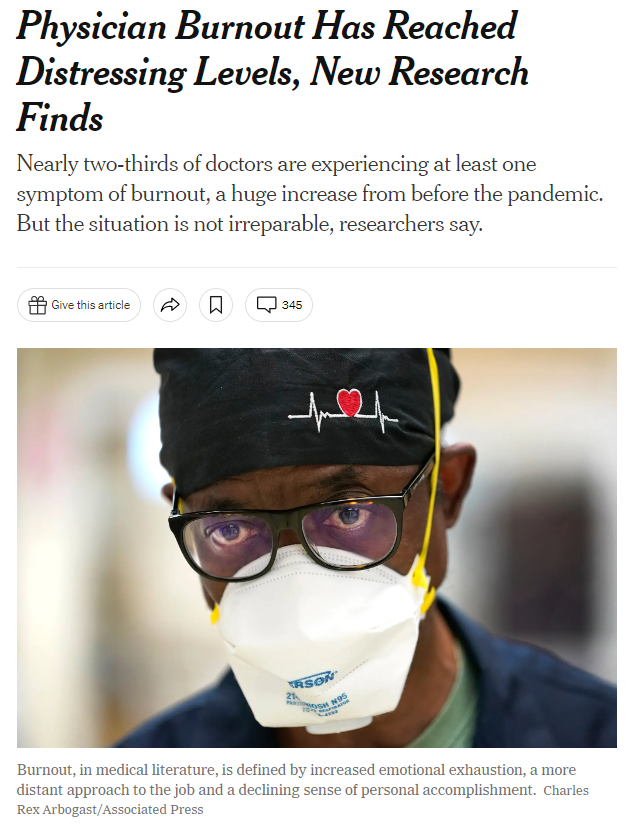
NY Times (9/29/22): Physician Burnout Has Reached Distressing Levels, New Research Finds This article reports on a survey from the Mayo Clinic Proceedings. The research is limited by a low response rate by mass email and likely selection bias.
Related blog posts:
- Why Physician Burnout is Happening and How to Fix It
- Financial Cost of Physician Burnout (possibly 4.6 billion annually)
- EMR Learning Curve -Long-term Benefits & Burnout Narrative
- Physician Burnout: Hidden Health Care Crisis
- Physician Burnout Spreading (Part 1)
- Physician Burnout Spreading (Part 2)
- Addressing Physician Burnout
- Increasing Rates of Professional Burnout
- The burden of being a physician | gutsandgrowth
- MD Job Dissatisfaction –Million $ Mistake? | gutsandgrowth
- Off-Duty Doctors and Family Obligations | gutsandgrowth
- “It is never boring to be a physician” | gutsandgrowth
- Physician Team Cohesiveness
WSJ (9/10/22) (Behind Pay Wall) Apple’s Medications Reminder Is Coming in iOS 16. Here’s How to Use It. And from 9to5Mac (9/20/22): Track medications and supplements on iPhone: How the new iOS 16 feature works (lots of pictures on this website)
Track medications on iPhone: iOS 16 guide
- Running iOS 16 on iPhone, open the Health app
- Choose the Browse tab in the bottom right corner
- Tap Medications, then choose Add a Medication
- Use your camera to scan your medication or type it in manually (Apple says scanning will be limited to US users for now)
- Follow the prompts to set reminders and more
- Head back to the Health app > Browse tab > Medications any time to log what you’ve taken and more


 gutsandgrowth