Is Manometry Useful to Determine if Botox Will Help Nausea/Vomiting?

Before reviewing today’s article, I wanted to make a comment about the blog post on 12/17/23 (Endoscopy of the Ileal Pouch Anal Anastomosis) which was a JPGN topic of the month. The editorial staff encourages author-driven communication and author-driven initiatives for these types of articles. If you have a topic for JPGN, please send an email to the Section Editor Darla Shores (dshores1@jhmi.edu) or to the editor Sandeep Gupta. (skgupta@uabmc.edu). This includes articles that you would like to write (fellow/interested faculty with senior faculty, up to 5 authors, 1500 words, 12 references), or  if you have a topic that you would like to see in JPGN but do not wish to write yourself, please inform the editorial team as well. 

———

PT Osgood et al. JPGN 2023; 77: 726-733. Intrapyloric Botulinum Toxin Injection for Refractory Nausea and Vomiting in Pediatric Patients

In this retrospective review, pediatric patients (n=25) received intrapyloric botox injections: (80-100 IU divided into 4 doses administered via sclerotherapy needle.

Key findings with botox injections:

  • Of 22 patients completing a GE study, 14 had delayed GE with no significant difference between IPBI responders and nonresponders
  • Improvement in vomiting in 80% (16/20), nausea 75% (15/20), abdominal pain 79% (15/19).
  • In those with psychiatric diagnosis, improvement was seen 71%. In those with orthostatic intolerance, improvement was noted in 67%.
  • In those with delayed GE, improvement was noted in 79% compared with 63% (5/8) with normal GE

My take: Botox was associated with improvement in this refractory pediatric group regardless of gastric emptying/manometry. This suggests that relaxation of pylorus is a useful therapeutic modality in a subset of patients.

Related blog posts:
Dreaded Nausea (2022) Plus Skills or Pills

C DiLorenzo. Front Pediatr 2022; https://doi.org/10.3389/fped.2022.848659. Open Access: Functional Nausea Is Real and Makes You Sick

Couple of key pointers:

Diagnosis:

  • ” I tend to refrain from ordering gastric emptying studies in patients with nausea unless vomiting hours after eating occurs.” According to the article, this is mainly due to the overlap symptoms of gastroparesis and functional dyspepsia, the suboptimal reliability of testing, and the uncertain value of testing in targeting therapy.
  • “Much like in most other DGBI, diagnostic tests in patients with chronic nausea should only be indicated in the presence of other alarm signs or features (weight loss, severe pain, bilious vomiting, etc.) (29). Upper endoscopies are particularly unhelpful with 98% reported to be normal in patient with nausea as the predominant symptom”

Treatment:

  • “Most beneficial treatment is hypnotherapy.” Cognitive behavioral therapy is likely helpful.
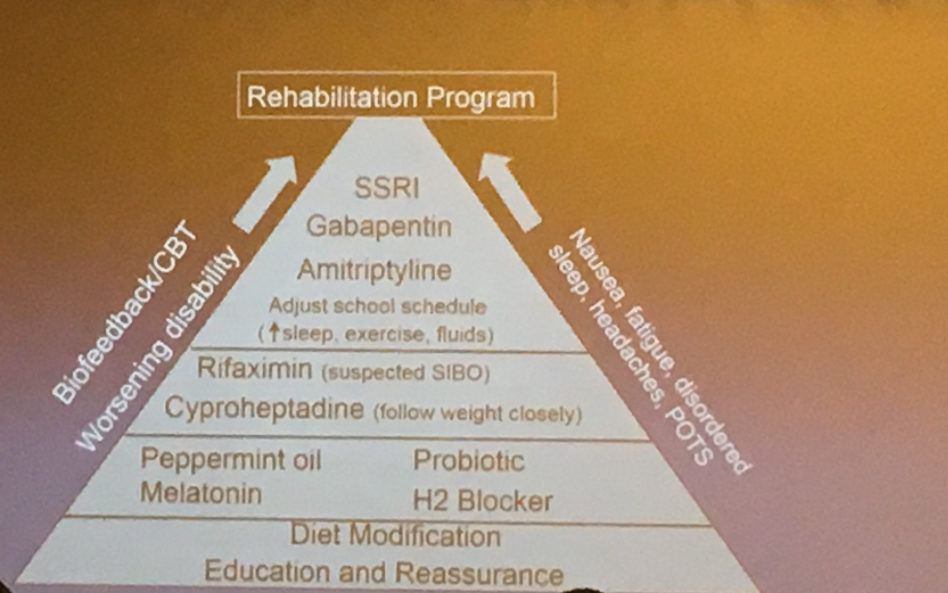
  • Medications that may be useful: cryproheptadine, STW5 (an herbal supplement), scopolamine patch, and erythromycin (when there is gastroparesis); “use of psychotropic agents such as amitriptyline, buspirone, and mirtazapine (which decrease visceral hyperalgesia, improve accommodation or accelerate gastric emptying may be justified in selected cases.” There is little evidence that classical antiemetics such as ondansetron are beneficial for functional nausea.
  • Also consider wrist acupuncture &/or commercially available devices based on the same principle, endoscopic injection of botulinum toxin in the pylorus; implantation of a gastric pacemaker improves drug-refractory nausea. Treatment of anxiety and depression, if present, is also beneficial.

My take: This is a useful review on a tough disorder to manage.

Related blog posts

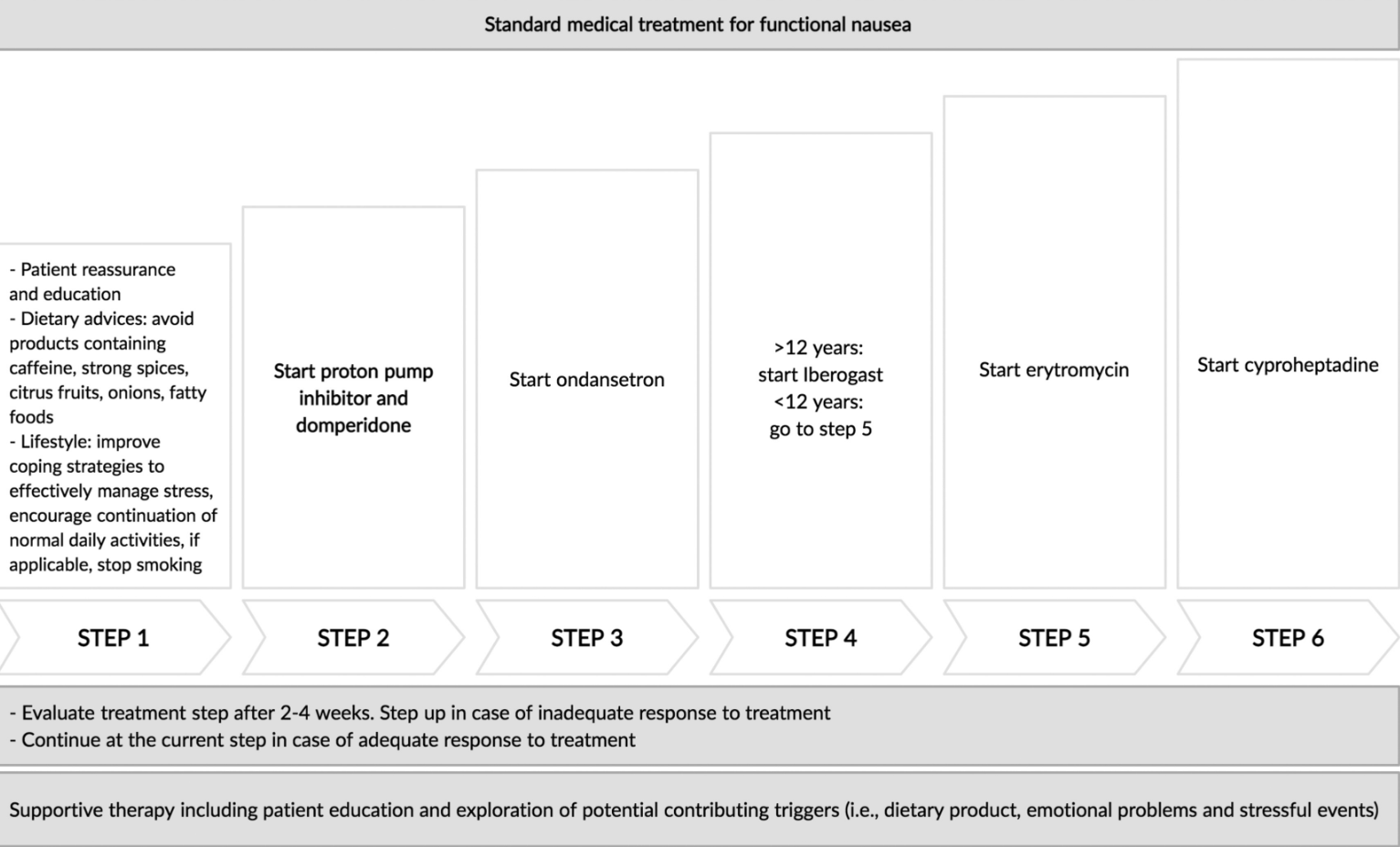
Related article: PD Browne et al. Clin Gastroenterol Hepatol 2022; 20: 1847-1856. Open Access! Skills or Pills: Randomized Trial Comparing Hypnotherapy to Medical Treatment in Children With Functional Nausea

This article found that hypnotherapy was more effective than standard medical therapy during the first 6 months and similar subsequently in children with functional nausea. Standard medical therapy was a progression of treatment:

Faulty Narrative with Functional Nausea Study

A recent study (SE Tarbell et al J Pediatr 2020 225: 109-108. Children with Functional Nausea—Comorbidities outside the Gastrointestinal Tract) highlights the frequent comorbidities in children with functional nausea. The authors have combined prospective and retrospective elements with specific questionnaires and review of the electronic medical records.

Key points:

  • High rates of comorbidities were noted: Abdominal pain 94%, Headache 83%, Orthostatic Intolerance 81%, Fatigue 75%, Disturbed sleep 71%, Anxiety 59%, and Constipation 57%. Other frequent findings included vomiting in 51%, Allergies 54%, , Joint Pain 46%, Hypermobility in 37%.
  • 69.5% of subjects missed more than 10 days of school due to their symptoms.
  • There was extensive testing in this cohort (n=63), including 96 endoscopies, and 199 radiologic tests. In addition, 4 patients had cholecystectomies.
  • Among 64 EGDs, 28 were considered abnormal. The authors claim that 6 had specific findings: H pylori (n=2), polyps (n=2), celiac disease (n=1), and lactase deficiency (n=1).
    • It is likely that H pylori and celiac disease could have been identified/suspected by non-invasive testing; these two findings may make a diagnosis of functional nausea more tricky.
    • Lactase deficiency could be considered a normal finding.
  • The authors state that 32 of 59 AXRs had “moderate to severe constipation” based on stool burden

Overall, this article makes some useful points about the high rate of comorbidities with functional nausea but I disagree with some of the other discussion points.

The authors claim that “negative tests can reassure families of the absence of a more serious underlying condition.” This assertion has been disputed in other studies. In one study (A Rolfe et al. JAMA Intern Med. 2013;173(6):407-416 Full text: Reassurance After Diagnostic Testing With a Low Pretest Probability of Serious Disease), the authors conclude that ‘diagnostic tests for symptoms with a low risk of serious illness do little to reassure patients, decrease their anxiety, or resolve their symptoms, although the tests may reduce further primary care visits.’

The authors also have a permissive attitude regarding AXRs saying “a radiograph may validate a diagnosis of constipation.” Yet the preponderance of evidence indicates that AXRs are not needed or recommended for the diagnosis of constipation. The juxtaposition of this statement on page 107 of this issue with the next article on page 109 which details a quality improvement process of reducing abdominal radiographs to diagnose constipation in the ED is interesting. The ED physicians in the next article are trying to adhere to evidence-based guidelines; in this article, the authors correctly note that evidence “has shown abdominal radiographs to be unreliable in establishing an association between clinical symptoms of constipation and fecal load on abdominal radiographs.”

My take: Tarbell et al show that in patients with functional nausea, nausea is the tip of the symptom iceberg. Generally, radiographic and endoscopic diagnostic studies have very low yield and should be discouraged.

Related posts:

Getting In the Shower for Emetic Symptoms

A recent study (I Aziz et al. Clin Gastroenterol Hepatol 2019; 17: 878-86) examined the epidemiology and clinical characteristics of Rome IV functional nausea and vomiting disorders (FNVDs) in adults.  The study used internet cross-sectional health surveys from 5931 adults in 2015.

Key findings:

  • 2.2% of the population (n=131) fulfilled criteria for Rome IV FNVDs
  • Hot water bathing, which has been reported in cannaboid hyperemesis syndrome, was also noted  in patients with cyclic vomiting syndrome (CVS) in 44%.  “This behavior was independent of cannabis but augmented by its use.”

My take: FNVDs are common and hot water bathing is not pathognomonic for cannaboid hyperemesis syndrome.

Related references:

  1. Moon AM, Buckley SA, Mark NM. Successful treatment of cannabinoid hyperemesis syndrome with topical capsaicin. ACG Case Rep J. 2018 Jan 3;5:e3.
  2. Graham J, Barberio M, Wang GS. Capsaicin cream for treatment of cannabinoid hyperemesis syndrome in adolescents: A case series. 2017 Dec;140(6): e20163795.

Hotel in Barcelona

Algorithm for “Cursed” Dyspepsia

A recent review (P Koduru et al. Clin Gastroenterol Hepatol 2018; 16: 467-79) provides a good review of dyspepsia and in addition provides some literary perspective.

In their introduction, the authors quote James Joyce in Ulysses: “Tom Rochford split powder from a twisted paper into the water set before him –That cursed dyspepsia, he said before drinking. –Breadsoda is very good Davy.”

After reviewing the definition and the pathophysiology, the authors provide a suggested algorithm (Figure 2).

Initial options:

  • In areas with high H pylori, there is an option of “test and treat” and relying on endoscopy in those who fail to respond
  • Empiric PPI therapy which works best if reflux-type symptoms are present and relying on endoscopy in those who fail to respond
  • Endoscopy without empiric treatment

In those with a negative endoscopy –>functional dyspepsia treatment is driven by symptoms:

  • If pain, the first line option recommended is a tricyclic antidepressant (pain modulator)
  • If nausea, the first line option recommended is an antiemetic
  • If early satiety, the first line option recommended is buspirone

For those with resistant and disabling symptoms, “consider nonpharmacologic approaches, such as psychotherapy or acupuncture.”

Related posts:

Disclaimer: These blog posts are for educational purposes only. Specific dosing of medications/diets (along with potential adverse effects) should be confirmed by prescribing physician/nutritionist.  This content is not a substitute for medical advice, diagnosis or treatment provided by a qualified healthcare provider. Always seek the advice of your physician or other qualified health provider with any questions you may have regarding a condition.

Isopropyl Alcohol -Antiemetic Aromatherapy

Review/excerpt of this study from NEJM Journal Watch: by Daniel J. Pallin, MD, MPH.

In the current trial, 120 adult ED patients with nausea or vomiting who did not require intravenous access were randomized to inhaled isopropyl alcohol plus 4 mg oral ondansetron; inhaled isopropyl alcohol plus oral placebo; or inhaled saline plus 4 mg oral ondansetron. Isopropyl alcohol was provided in the form of a standard alcohol swab. Patients received a single dose of the oral intervention but could sniff alcohol or saline swabs repeatedly. Nausea was measured on a 100-mm visual analog scale at baseline and 30 minutes.

Mean nausea scores decreased by 30 mm in the alcohol/ondansetron group, 32 mm in the alcohol/placebo group, and 9 mm in the saline/ondansetron group. Rescue antiemetic therapy was given to 28%, 25%, and 45% of each group, respectively. Differences between alcohol and saline groups were statistically significant. Patients in the inhaled alcohol groups also had better nausea control at the time of discharge and reported higher satisfaction with nausea treatment. No adverse events occurred. The mechanism of action is currently unknown.

Dr. Pallin’s comments on study:

It is uncommon for us to assign a rating of “Practice Changing” to a small, single-center study, but these results are truly remarkable and are consistent with prior research. For patients not obviously requiring IV therapy, we should treat nausea with repeated inhalations from an isopropyl alcohol swab instead of administering any other drug. And, although this study provides no direct evidence of benefit to patients who do require IV therapy, there would seem to be little downside to trying this simple and safe intervention in that group, too.

My take: Who is doing the pediatric study to try to replicate these results in the pediatric population?

Related blog posts:
Foggy Morning in Sandy Springs

#NASPGHAN17 Why Rome IV Criteria are important

More information from this year’s annual NASPGHAN meeting.

This blog entry has abbreviated/summarized this presentation. Though not intentional, some important material is likely to have been omitted; in addition, transcription errors are possible as well.

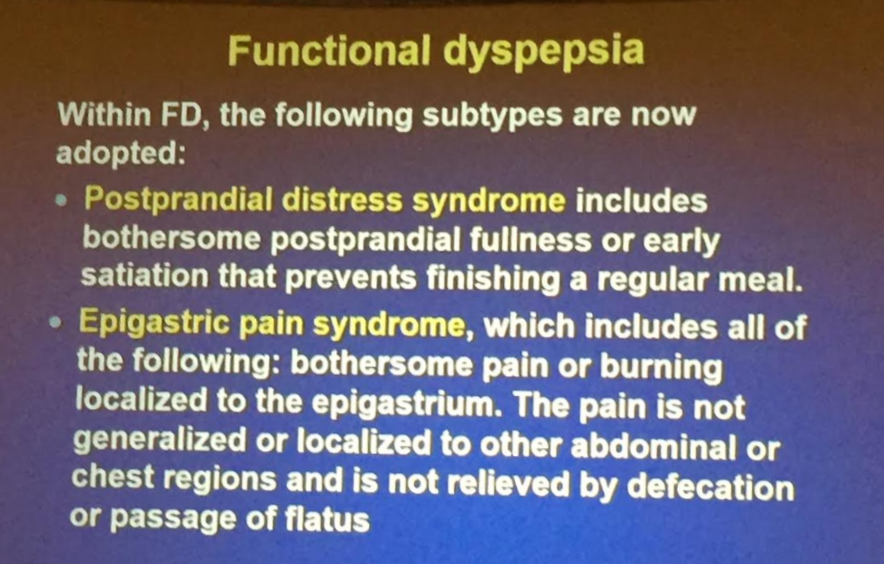
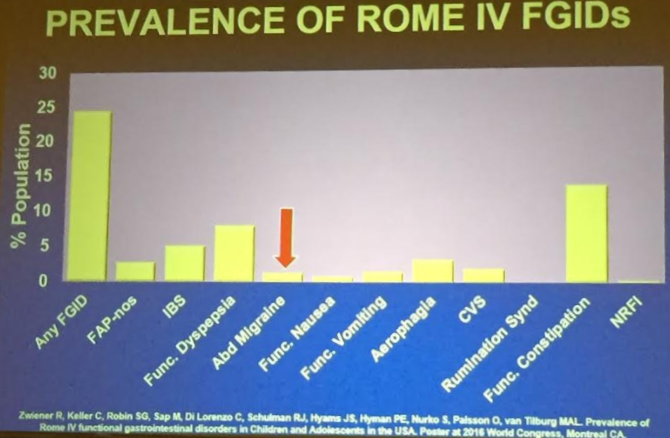
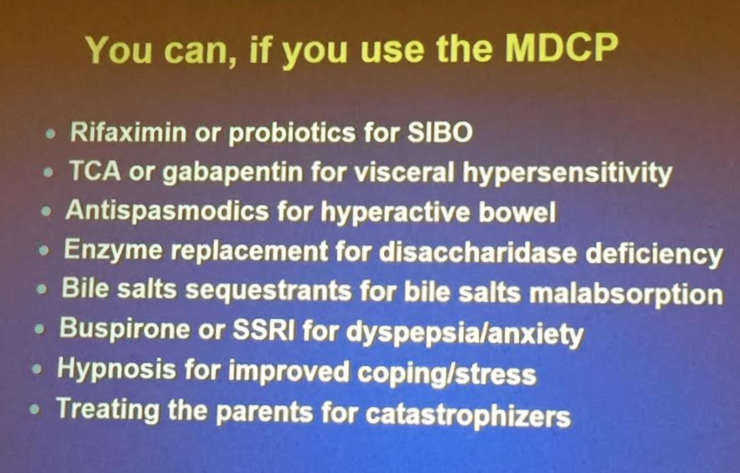
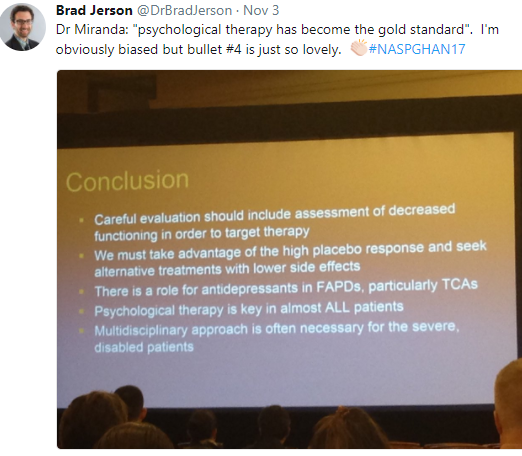
The following slides highlight a terrific lecture by Carlo DiLorenzo (Nationwide Children’s Hospital).  Subsequently, I’ve included slides from Miranda van Tilburg (UNC); I was unable to attend her lecture and found some of the slides via twitter.

Key points:

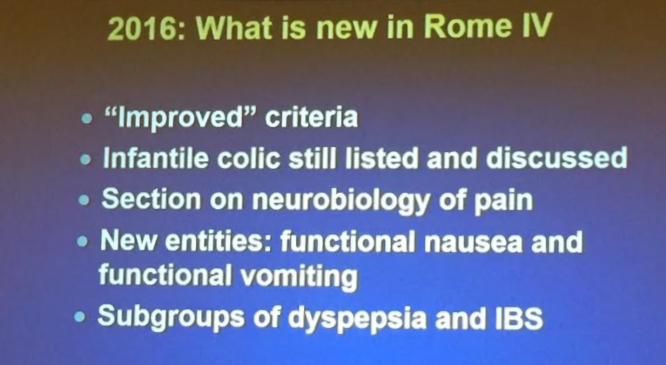
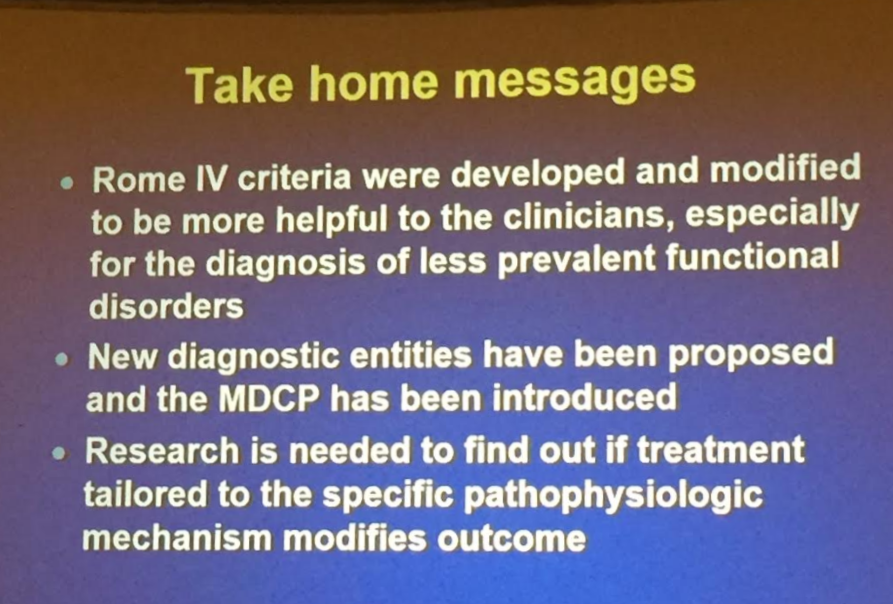
  • Rome IV criteria are helpful, particularly with less common presentations like rumination
  • There has been an increase in nausea.  Morning nausea can be equated as a marker of anxiety until proven otherwise.
  • There is improved wording. “After appropriate medical evaluation, the symptoms cannot be attributed to another condition” may help facilitate the diagnosis of irritable bowel syndrome, for example, in patients with IBD who are in remission.

From Miranda Tilburg:

Dreaded Nausea (2017)

This post provides followup to a previous post: Dreaded Nausea.

A recent study (AC Russell, AL Stone, LS Walker, Clin Gastroenterol Hepatol 2017; 15: 706-11) provides even more reasons to dread nausea.

This prospective study of 871 children with functional abdominal pain examined the comorbidity of nausea.  Followup data were collected from 392 patients at median of 8.7 years later.

Key findings:

  • At baseline, 44.8% of patients reported nausea. This group reported worse abdominal pain, somatic symptoms and depression than those without nausea.
  • At followup, “those with nausea in childhood continue to have more severe GI (P<.001) and somatic symptoms (P=.003)…as well as higher levels of anxiety (P=.02) and depression (P=.02).”  Anxiety and depression remained significant after controlling for baseline abdominal pain severity.
  • At the followup evaluation, the prevalence of any functional GI disorder (FGID) was 85 (48%) of those who had nausea at baseline compared with 77 (36%) for those without nausea at baseline.

In their discussion, the authors reiterate findings from previous work on this patient sample: “current and lifetime diagnoses of anxiety disorders are substantially higher in adolescents with a history of FAP [functional abdominal pain] compared with healthy controls (lifetime, 51% vs. 20%; current 30% vs 12%). The lifetime risk of depressive disorder is also significantly higher in those with FAP (40% vs. 16%).”  They also note some limitations in their work, including the absence of formal screening for postural orthostatic tachycardia syndrome (POTS).

My take (borrowed from authors): This study “suggests that nausea is more than just a comorbid symptom of FAP and may have a different underlying etiology” and increases likelihood of persistent symptoms as well as anxiety and depression.

Briefly noted: RJ Shulman et al. Clin Gastroenterol Hepatol 2017; 15: 712-9. This randomized, double-blind study showed that added psyllium reduced frequency (but not severity) of abdominal pain in children (n=103) with irritable bowel syndrome. Psyllium was dosed at 6 g/day for 7-11 year olds, and 12 g for 12-18 year olds. Interestingly, this study did not show that psyllium caused a difference in normal stools or other mechanistic reasons for improvement, like breath hydrogen, breath methane, intestinal permeability or microbiome composition.

Related posts:

Atlanta Zoo, Bald Eagle


Antipsychotic Agent, Olanzapine, Helps in Reducing Chemotherapy-Induced Nausea/Vomiting

Briefly noted: RM Navari et al. NEJM 2016; 375: 134-42. Olanzapine (marketed as Zyprexa), compared with placebo, in combination with dexamethasone, aprepitant (or fosaprepitant) and a 5-hydroxytryptomaine type 3 antagonist (eg palonosetron, ondansetron, or granisetron) helped reduced nausea/vomiting.  Among a total of 380 patients, 74% in the olanzapine group had no nausea/vomiting compared with 45% in the placebo group in the first 24 hours.  In the 1st 120 hours, the rates of no nausea/vomiting were 37% vs. 22%.  A “complete response,” defined as no emesis episodes and no rescue medications, occurred in 64% vs 41% in the 1st 120 hours.  The most concerning side effect reported was severe sedation which was reported in 5%.

Arthur Ravenel Jr Bridge

Arthur Ravenel Jr Bridge

Dreaded Nausea

One symptom that is dreaded by both patients and physicians is nausea.  A helpful review on this topic (K Kovacic, C DiLorenzo. JPGN 2016; 62: 365-71) provides information on functional nausea.  A few points:

Diagnostic:

  • Endoscopy has low yield.  One cited study suggested that in the absence of clinical alarm symptoms, 98% of endoscopies were normal.
  • 4-hour nuclear medicine study ‘may be justified.’

Therapeutic: Numerous drug/alternative therapies are discussed -most with a paucity of data.  These include:

  • Alternatives agents: Ginger, STW5 (iberogast), peppermint oil
  • Antiemetics: Ondansetron, promethazine, prochlorperazine
  • TCAs: amitriptyline, nortriptyline, imipramine, doxepin
  • SSRIs: citalopram, fluoxetine, paroxetine
  • Anxiolytics: buspirone
  • Tetracyclic antidepressant: mirtazapine
  • Antimigraine: cyprohepatadine, propranolol, topiramate, levetiracetam
  • Prokinetics: erythromycin, metoclopropramide, domperidone
  • Others: fludrocortisone, aprepitant, cannabionids
  • Psychology: “early involvement of a psychologist and emphasis on coping strategies and maintaining functioning with continued school attendance is a primary goal.”

The authors note that retrospective data in children suggest that TCAs have a response rate of ~50% (defined as more than a 50% improvement).  In one study, the mean dose of amitriptyline was 50 mg at bedtime.

In a related study, Madani et al (JPGN 2016; 62: 409-13) describe their experience (retrospective review) using cyproheptadine in children with a range of functional gastrointestinal disorders.  The most common indications were functional abdominal pain (36%), functional dyspepsia (23%), combination disorder (17%) and abdominal migraines (12%).  Overall, they included 151 children and they report 110 (72.8%) had complete symptom improvement; the remainder had either partial or no improvement.  In those who responded, the mean initial dose was 0.14 mg/kg/day; the final mean dose was nearly identical. Adverse effects of sleepiness was reported in 13% and weight gain in 10%.

Related posts:

Link: Impressive “water swallowing” NEJM video (thanks to Jose Garza for sharing).  In a person who had undergone an esophagogastric bypass as a child.  Still photo below:

NEJM Chest