The Pediatrician’s Role in Vaccination and Trust

Two recent commentaries on “hot button” issues:

  • ER Menzin: The Pediatrician’s Lament. NEJM 2025; 392: 320-321
  • PMG Santos et al. Texas Executive Order GA-46 and the Erosion of Trust in Health Care. NEJM 2025; 392: 108-109

An excerpt from the first commentary:

“Throughout my career, I have seen new vaccines approved: pneumococcus, rotavirus, meningococcus, and human papillomavirus. In each case, I have studied the data, reviewed published recommendations, and adjusted my language to encourage vaccination. I consider the high immunization rate in my patient panel to be one of my greatest professional accomplishments — a quantitative metric of the benefit I provide…

Every so often, parents will look at me over a smiling infant and tell me they want their child to have only one or two recommended vaccines. Can I choose the most important? I tell them the question is akin to asking me to pick my favorite child — an impossible task…

Some will ask, “Can you recommend a good pediatrician who does not believe in vaccines?” No, I say, no more than I can recommend a good physicist who does not believe in gravity…

Even if patients are skeptical of the alphabet soup of institutions designed to protect and safeguard their health, they still have confidence in the long-standing relationships with their clinicians. To deserve that trust, we are obligated to raise our collective voice in defense of science, health, and vaccines.”

From the 2nd Commentary:

“On Halloween morning, 2024, Texas physicians received disturbing news about hospital policies set in compliance with Governor Greg Abbott’s Executive Order GA-46 — a rule that mandates the collection and reporting of information on patient citizenship status during intake…

Throughout medical training, physicians learn that trust is a cornerstone of patient care: we ask patients to share deeply personal information about themselves and their loved ones, with the assurance that legal and ethical safeguards protect against the misuse of such information. Chief among these safeguards is the Health Insurance Portability and Accountability Act (HIPAA), which restricts physicians from disclosing protected health information (PHI) without a person’s consent. Citizenship status, though not traditionally considered PHI, may be treated as such when it is paired with medical information obtained during patient encounters…

GA-46 … will deter immigrants, both documented and undocumented, from seeking help for serious medical concerns… Under the Emergency Medical Treatment and Labor Act (EMTALA), hospitals are required to provide emergency care to all patients, regardless of citizenship status. GA-46 indirectly conflicts with EMTALA’s intent to guarantee access to emergency services for all people by discouraging undocumented people from seeking care…

From an economic standpoint, Texas officials have stated that the goal of GA-46 is to protect the financial solvency of public hospitals; however, federal financial support covers most uncompensated care costs. Moreover, contributions from immigrants help sustain the viability of public health insurance programs. In 2017, immigrants helped offset a $67 billion deficit in health care costs for U.S.-born citizens by paying $58 billion more in taxes and premiums than was spent on their health care; 89% of this surplus was attributed to contributions made by undocumented immigrants…

Physicians in Texas and Florida must continue to inform patients of their right to refuse disclosure of their citizenship status.”

Related blog posts:

COVID-19 Outcomes in U.S -Why It Has Been So Bad

NY Times (2/1/22): U.S. Has Far Higher Covid Death Rate Than Other Wealthy Countries

An excerpt:

Some of the reasons for America’s difficulties are well known. Despite having one of the world’s most powerful arsenals of vaccines, the country has failed to vaccinate as many people as other large, wealthy nations. Crucially, vaccination rates in older people also lag behind certain European nations.

The United States has fallen even further behind in administering booster shots, leaving large numbers of vulnerable people with fading protection as Omicron sweeps across the country...

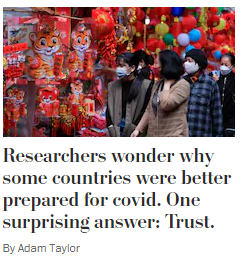
Washington Post (2/1/22): Researchers are asking why some countries were better prepared for covid. One surprising answer: Trust.

An excerpt:

new study [Lancet] of pandemic preparedness across 177 countries and territories appears to have found a key element in Vietnam’s success: trust...

These factors were key for pre-coronavirus rankings such as the Global Health Security Index, which in 2019 listed the United States and Britain as most prepared for a catastrophic biological event, like a pandemic — and Vietnam 74th out of 117 countries.

Instead, better outcomes appear to have gone hand in hand with high levels of trust in government and other citizens. Perception of government corruption was correlated with worse outcomes. Researchers measured trust with polling data from the World Values Survey and Gallup...

The pandemic has “eroded trust in the government,” Bang Petersen said. “It actually seems as if the pandemic has worsened the problem that this study identified.”

“Mistrust in Science –A Threat to the Patient-Physician Relationship”

A recent commentary, “Mistrust in Science –A Threat to the Patient-Physician Relationship” (RJ Baron, AJ Berinsky. NEJM 2019; 381: 182-5), addresses the deterioration of trust in the patient-physician relationship and potential ways to improve this.

Shortly before reading this, I read a newspaper article titled “Newtown Parents Fight Back” in Sunday’s AJC (related article online: Newton Parents Score a Win…). In this article, some of the parents of the 20 children who were killed in Newton, Connecticut have brought successful lawsuits against ‘hoaxers’ who claimed that the “rampage had been staged, with crisis actors.” Some of the parents have received death threats subsequently.

In this ‘misinformation’ age, it would be naive to expect that medicine and science would be spared. The alluded commentary makes the following points:

  • “Clinicians enter patient encounters with the reasonable presumption that they will be trusted. After all, they have powerful knowledge and good intentions…But, medicine is changing.”
  • “The legitimacy of the medical community rests on the the credibility of medical science…Physicians rely on that foundation in every interaction they have with their patients.” And on “the intimate and personal nature of each individual doctor-patient relationship”
  • “Medical practice is becoming increasingly corporate…In 2016, for the first time, less than half of practicing physicians owned their own practice…Less attention has been paid to how corporatization changes patients’ experience and …trust.”
  • “Gallup polling has revealed that confidence in almost all institutions in the United States…has deteriorated greatly…confidence in the medical system fell from 80% in 1975 to 37% in 2015.”
  • “Alternative sources of ‘authority’ have emerged to fill gap” including social media platforms, friends and relatives.

“Given the decline in trust in the institution of medicine, simply asserting medical authority or citing evidence is unlikely to win adherents…Skepticism…is a widespread phenomenon…appealing to a neutral or independent ‘referee’ of the truth…on a given subject–does not actually change minds…attempts by experts to correct misinformation may further entrench erroneous beliefs.”

Pathways to Trust

  • “Feeling recognized is a precondition for trust.”  Having to repeat stories over and over again can be ‘trust-destroying’ as the individual feels as a stranger in the health care system
  • “Explicitly acknowledging the role…of other members of the health care team may be another way…Speak positively about the staff [and colleagues]…This practice …increased patients’ trust and satisfaction.”

My take: The authors note that in this age, science s devalued and relationships are more influential.  Thus, creating trust goes back to Peabody’s 1927 admonition: “The secret of the care of the patient is in caring for the patient.”

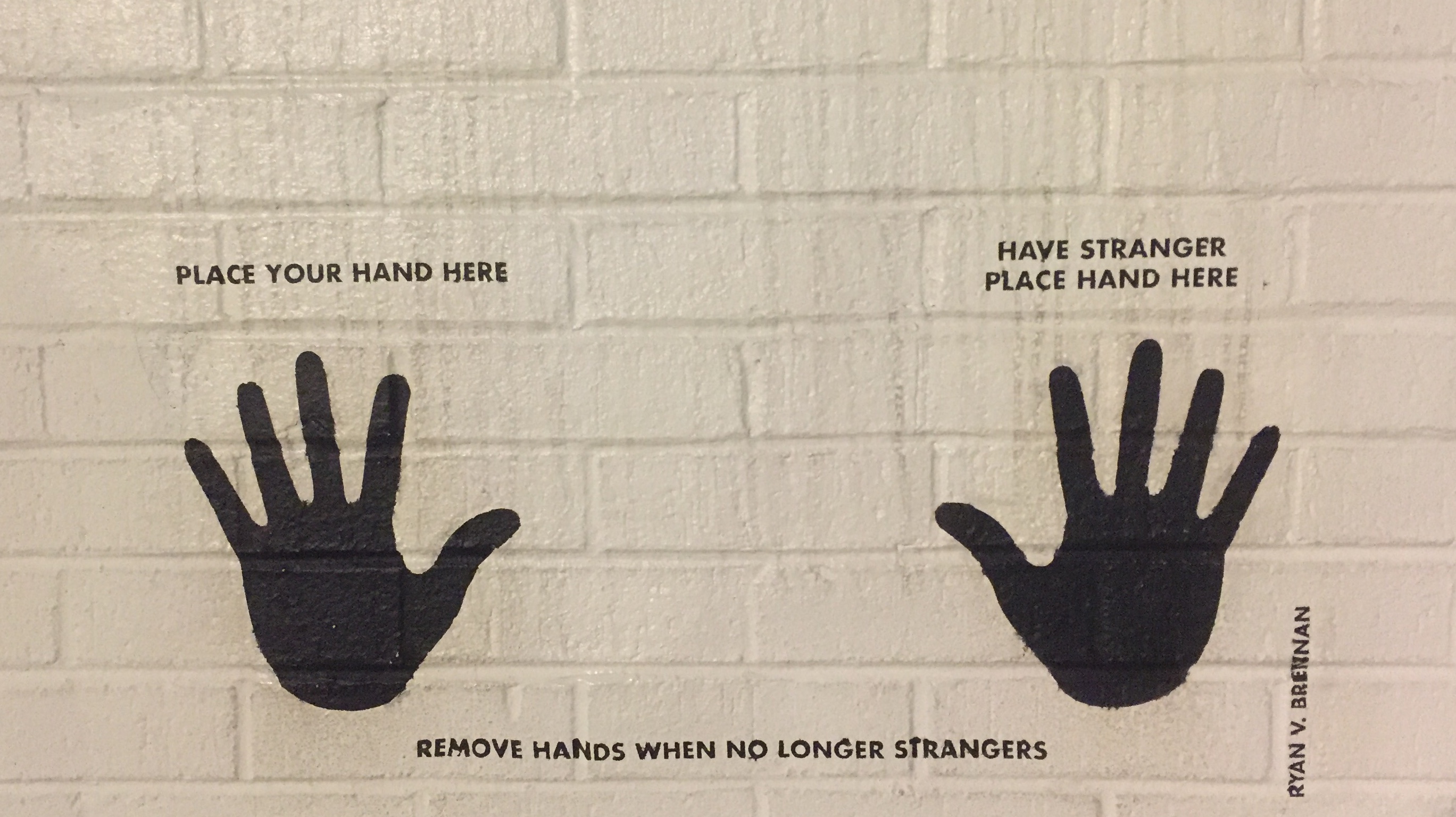
In the newspaper article, a book publisher involved in the promoting the Sandy Hook conspiracy had to meet one of the parents as part of a lawsuit.  “At the end of the day, Gahary shook Pozner’s hand and apologized. He offered condolences for Noah’s death.”  As in medicine, getting to know each other is the surest way to garner trust.

Related blog posts:

NYT: Do You Trust the Medical Profession?

An interesting commentary from NY Times: Do You Trust the Medical Profession?

This article explains how lack of trust in medical leaders can effect response to epidemics (eg. ebola), participation in clinical trials, and influence acceptance of vaccines. In addition, on a personal level, individuals who trust their physician are more likely to continue treatment important for their health.

An excerpt:

Trust, in each other and in American institutions, is vital for our social and economic well-being: It allows us to work, buy, sell and vote with some reasonable expectation that our behavior will be met with fairness and good will.

But trust has been declining for decades, and the most tangible and immediate damage may be to public health and safety. Mistrust in the medical profession — particularly during emergencies like epidemics — can have deadly consequences…

Trust is the cornerstone of the doctor-patient relationship, and patients who trust their doctors are more likely to follow treatment plans…

Another study found that trust is one of the best predictors of whether patients follow a doctor’s advice about things like exercise, smoking cessation and condom use. Mistrust can lead people to skip the flu shot or forgo the measles vaccine for their children — with potentially serious consequences for individual patients and the broader population…

A degree of skepticism is inevitable and important. But when doubt becomes pervasive, it can erode the glue that binds society together, and the medicine that keeps us healthy.

Related blog posts: