gutsandgrowth
Home | About Jay Hochman -Pediatric Gastroenterology Blog | Archives
What GI Doctors Should Know About Anti-Reflux Surgery
September 20, 2020 9:00 am
This is a useful review -with helpful diagrams: Full text Ten Things Every Gastroenterologist Should Know About Antireflux Surgery (S Park et al. Clin Gastroenterol Hepatol 2020; 18: 1923-1929)
A couple excerpts:
Selecting Patients for Surgery: Current guidelines fall short in determining appropriate patients who would benefit most from surgery. For instance, the recommendation that a desire to discontinue PPI therapy is a suitable indication for antireflux surgery fails to recognize that 62% of patients end up back on PPIs within 9 years. Furthermore, indicating that those patients who failed medical management would benefit from surgery neglects the fact that the patients who respond best to antireflux surgery are those who have responded well to PPI therapy in the first place
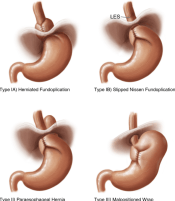
Complications: Late postoperative complaints are more common and often are referred back to the referring gastroenterologist for diagnosis and management. These include late-onset dysphagia (3%–24%), recurrent heartburn (up to 62%), gas-bloat syndrome (up to 85%), and diarrhea (18%–33%). Anatomic failure of the fundoplication (Figure Below) can present a unique challenge to the clinician because the symptoms and patient presentation (postoperative dysphagia, regurgitation, and heartburn) can be clinically indistinct from the issues seen commonly after this surgery even in the best of circumstances. Therefore, the gastroenterologist should assess symptoms carefully in a stepwise approach with upper endoscopy, barium swallow, esophageal manometry, and/or ambulatory pH monitoring when appropriate and plan any interventions based on objective findings from focused testing.
- Antireflux Surgery Has No Significant Impact on the Progression of Barrett’s Esophagus to Esophageal Adenocarcinoma: Endoscopic Ablation of Dysplastic Barrett’s Esophagus Still Is Recommended
- Medical Therapy Is More Cost Effective Than Surgical Treatment if the Cost of the Drug Is Low
- Several New, Less-Invasive Surgical and Endoscopic Antireflux Procedures Are Now Food and Drug Administration Approved, Available, and Appear Promising
Related blog posts:
Posted by gutsandgrowth
Categories: Gastroenterology
Tags: fundoplication, gastroesophageal reflux disease
« Older Newer »
Mobile Site | Full Site
Get a free blog at WordPress.com Theme: WordPress Mobile Edition by Alex King.
