
Home | About Jay Hochman -Pediatric Gastroenterology Blog | Archives
November 13, 2017 7:00 am
This blog entry has abbreviated/summarized this presentation. Though not intentional, some important material is likely to have been omitted; in addition, transcription errors are possible as well.
Safety in Pediatric IBD Therapy: Is it time to stop using thiopurines?
Jeffrey Hyams Connecticut Children’s Medical Center
Key points from this lecture:
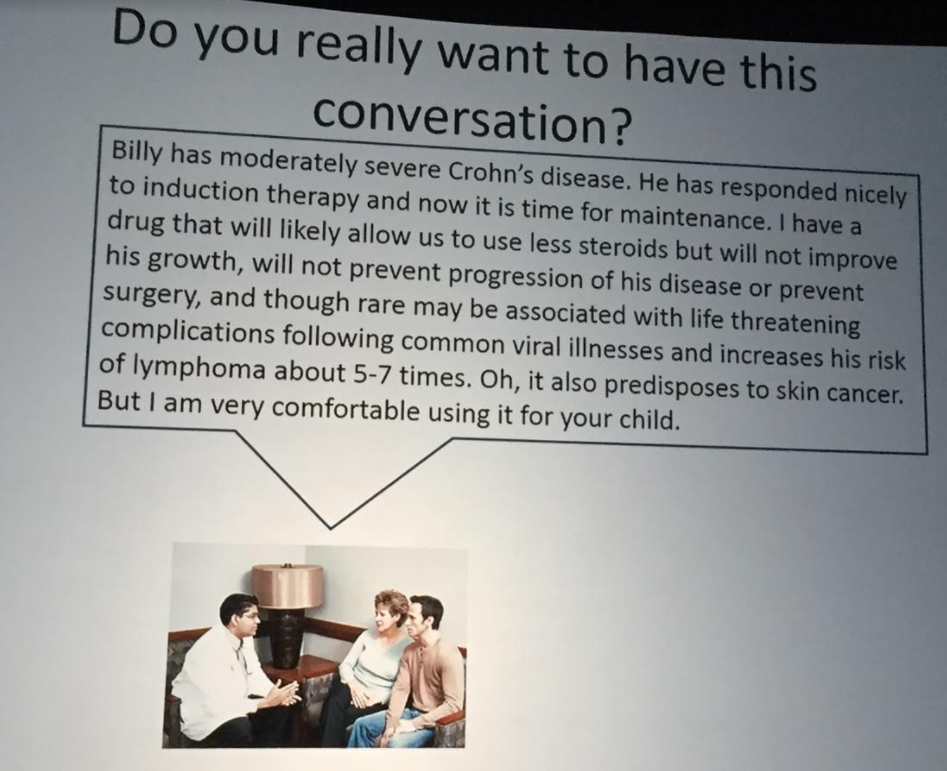
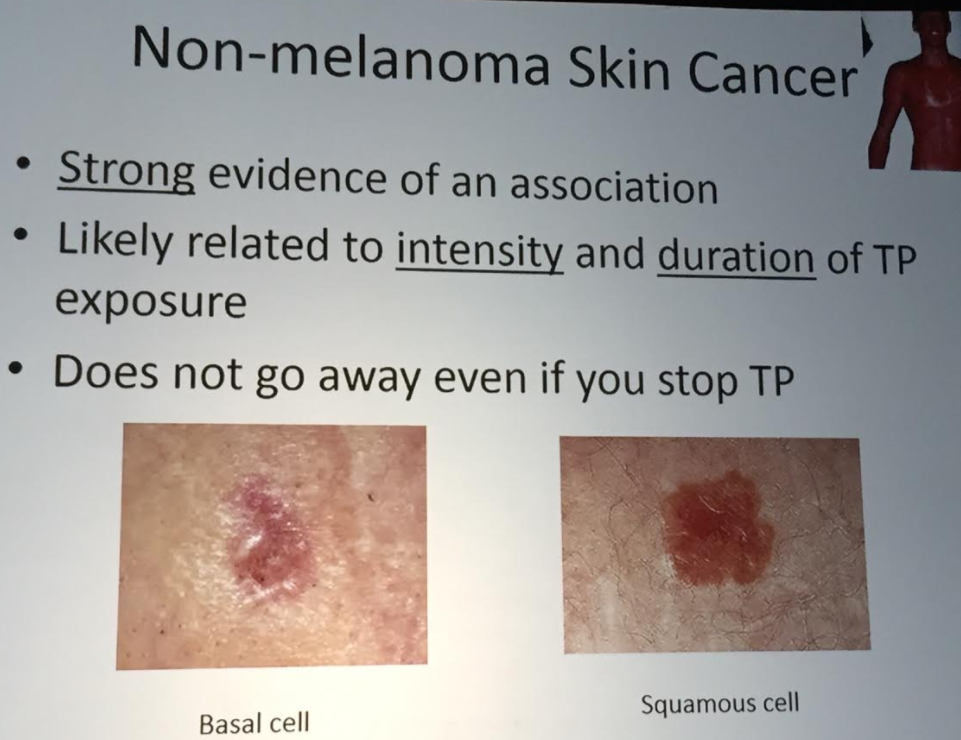
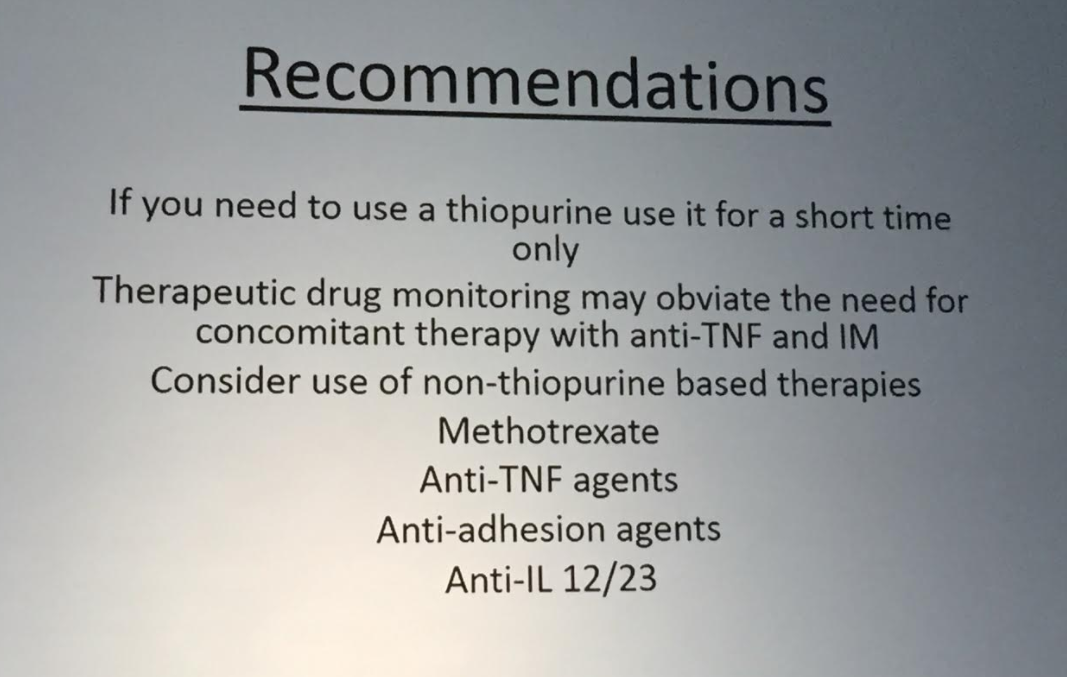
Dr. Hyams slides list some of the relative risks of thiopurine therapy. To understand these risks, the absolute risk is probably more helpful.
My take: This lecture did not focus on the main benefit of thiopurines which is its use in combination therapy. Many experts consider combination therapy to be the standard of care for adults with Crohn’s disease. The advantages of combination therapy are mainly due to improved durability of anti-TNF therapy and lower antidrug antibodies. How this benefit stacks up against the risks discussed in this lecture and whether this benefit can be supplanted by the use of therapeutic drug monitoring is uncertain.





Related blog posts:
Disclaimer: These blog posts are for educational purposes only. Specific dosing of medications (along with potential adverse effects) should be confirmed by prescribing physician. This content is not a substitute for medical advice, diagnosis or treatment provided by a qualified healthcare provider. Always seek the advice of your physician or other qualified health provider with any questions you may have regarding a condition.
Posted by gutsandgrowth
Categories: inflammatory bowel disease
Tags: 6-mercaptopurine, azathioprine, lymphoma, malignancy, thiopurine
Mobile Site | Full Site
Get a free blog at WordPress.com Theme: WordPress Mobile Edition by Alex King.
[…] #NASPGHAN17: Is it time to stop using thiopurines for IBD? […]
By A Role for Thiopurine Therapy | gutsandgrowth on March 15, 2019 at 7:03 am