
A recent commentary (J Avorn. NEJM 2018; 378: 689-91) addresses a huge problem in medicine: “medicine’s ongoing assumption that clinicians and patients are, in general, rational decision makers.”
He points out that just as Albert Einstein upended Newtonian physics with the much more complex theory of relativity, Richard Thaler’s work in economics “explained that people often don’t make choices by acting as the rational balancers of risk and reward assumed by classic economics.” (More information about his work at Wikipedia post on Nudge).
Key points:
- “We are disproportionately influenced by the most salient and digestible information” rather than the totality of information. This “helps explain the power of simplistic pharmaceutical promotional materials, often delivered..with a tasty lunch.”
- “Our beliefs are shaped by recent experiences…(Last-case bias).”
- “We often overestimate small probabilities (such as uncommon drug risks).” Another example would be fear of dying in a plane crash which is far less likely than dying in an auto accident.
The potential remedies to flawed decision-making include the following:
- “Academic detailing” which is a process attempting to integrate more information to counter biases
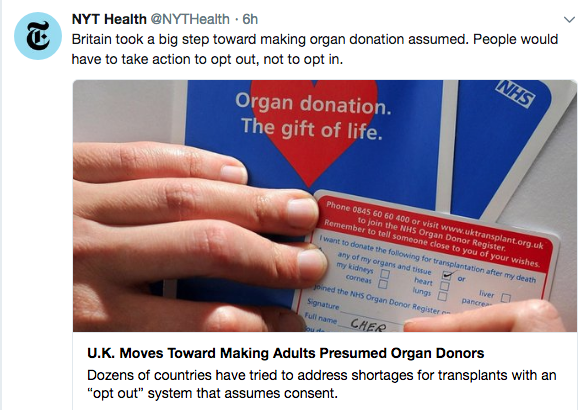
- Nudge concept. This is a strategy of “making a preferred alternative the default choice when several options exist.” Order entry systems in computers could default to preferred drugs (ie. best drug in class)
- Cost constraints can affect decision-making which could include targeting copayments for payments. For physicians/administrators, looking at what drives revenue is crucial. “As Upton Sinclair once noted, ‘It is difficult to get a man to understand something when his salary depends on his not understanding it.'”
My take: Addressing these ideas could help reduce unnecessary surgeries, increase high value care, and improve outcomes. This is why Richard Thaler’s work is important for medicine.
Related blog posts:
- Facts, “Misfearing” and Women’s Health | gutsandgrowth
- Short Take on Understanding Bias
- Marketing to Doctors -Informative Satire | gutsandgrowth
- NPR: “Should You Trust That New Medical Study?” | gutsandgrowth
- Interpreting industry-funded studies | gutsandgrowth
- How to Understand Scientific Studies | gutsandgrowth
- The Costs of Unnecessary Care –What’s Wrong with “I want everything ruled out?”
- Ordering Tests and Good Health | gutsandgrowth
- What’s More Important: Improving Mortality Rate or Survival Rate?
- Does negative testing reassure patients? | gutsandgrowth
- The Bigger Picture -Mammography as an Example | gutsandgrowth
 gutsandgrowth