
BH Foy et al. Nature (2024). https://doi.org/10.1038/s41586-024-08264-5. Haematological setpoints are a stable and patient-specific deep phenotype
Background: The complete blood count (CBC) is an important screening tool for healthy adults and a common test at periodic exams. However, results are usually interpreted relative to one-size-fits-all reference intervals1,2, undermining the precision medicine goal to tailor care for patients on the basis of their unique characteristics3,4.
Key findings:
- Routine CBC indices fluctuate around stable values or setpoints5, and setpoints are patient-specific, with the typical healthy adult’s nine CBC setpoints distinguishable as a group from those of 98% of other healthy adults, and setpoint differences persist for at least 20 years.
- Setpoints also define patient-specific reference intervals and personalize the interpretation of subsequent test results. In retrospective analysis, setpoints improved sensitivity and specificity for evaluation of some common conditions including diabetes, kidney disease, thyroid dysfunction, iron deficiency and myeloproliferative neoplasms

This study is discussed by Eric Topol: Your Lab Tests. “This [individualized setpoints] enabled the ability to differentiate increased risk of progression to Type 2 diabetes in people as a function of MCHC setpoint, likelihood of hypothyroid status (elevated thyroid stimulating hormone (TSH) from the current MCV, low iron storage (ferritin) from the drop in hemoglobin, and even a mutation in Janus Kinase (JAK2) in people with high platelet setpoints (>9-fold higher rate of mutations, which are associated with several blood cancers.).”
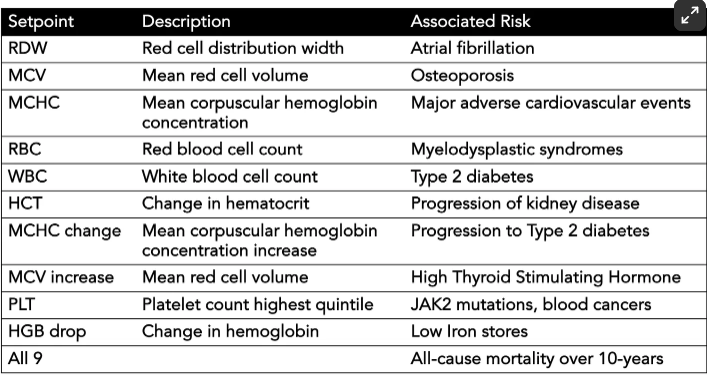
My take: This study indicates that for each individual there past test results are more useful than establised normative values. Deviation from a person’s setpoint, even if in the normal range, is more indicative of development of a medical problem. However, this type of data is not always utilized. This study focused on CBC values, but there may be setpoints with other common labs as well; more studies are needed.
 gutsandgrowth