
2015 N2U Syllabus & Presentations
Critically-ill Obese Patient (Syllabus 51-61) Ann Scheimann
Case: 14 year old with obesity –admitted to PICU with respiratory distress, BM1 51, recent hx/o 30 lb weight loss and declining school performance.
- Nutritional assessment (syllabus pg 55) References: Port et al. Curr Opin Clin Nutr Metab Care. 2010;13:184-191.McClave et al. JPEN J Parenter Enteral Nutr . 2011: 35: 88s.
- Components of nutritional support (syllabus pg 56) References: Hurt et al. JPEN J Parenter Enteral Nutr . 2011;35: 60S.
- Presentation provides good summary of vitamin deficiencies and toxicities (syllabus 57-61), which are more common after bariatric procedures.
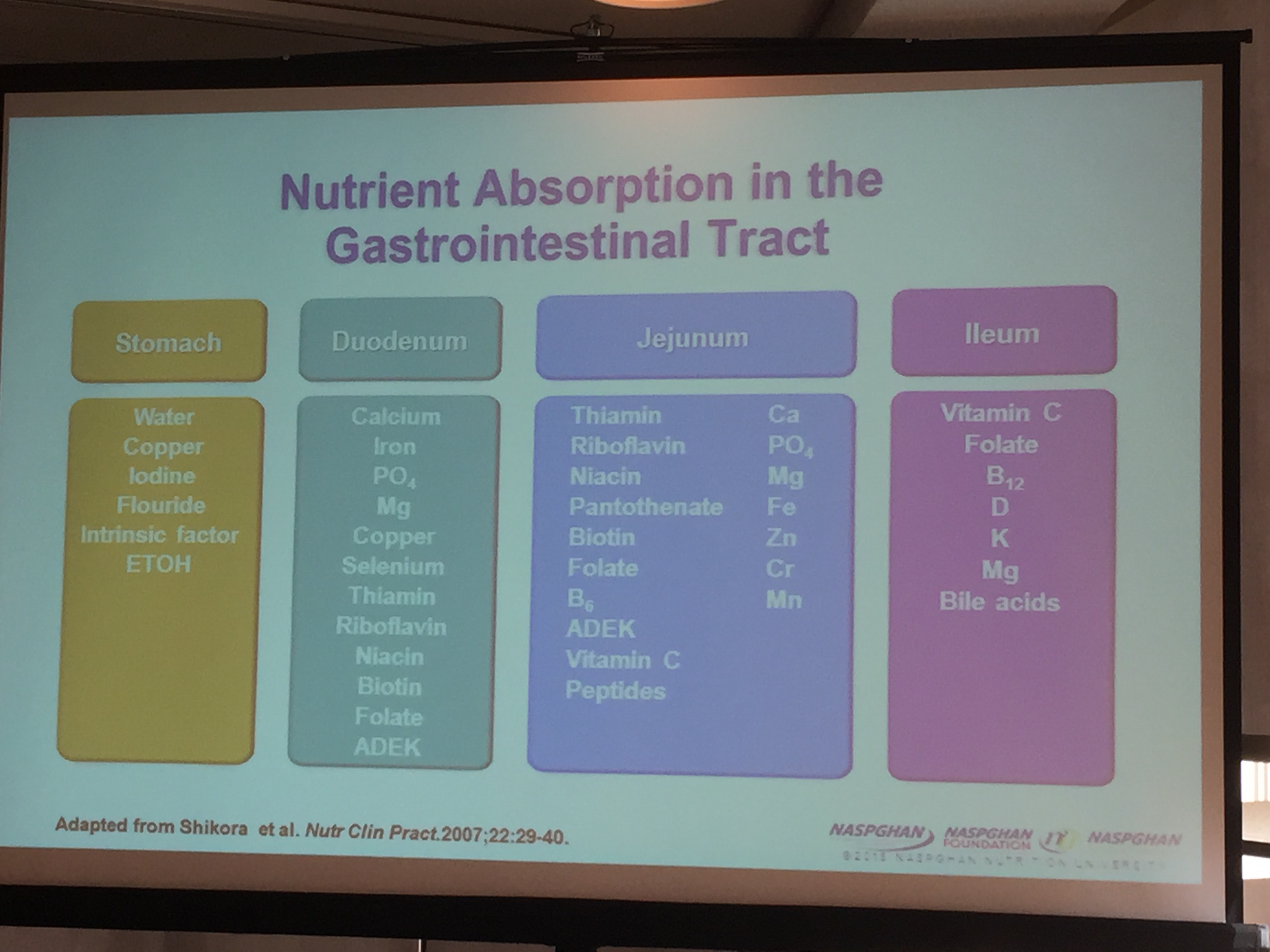
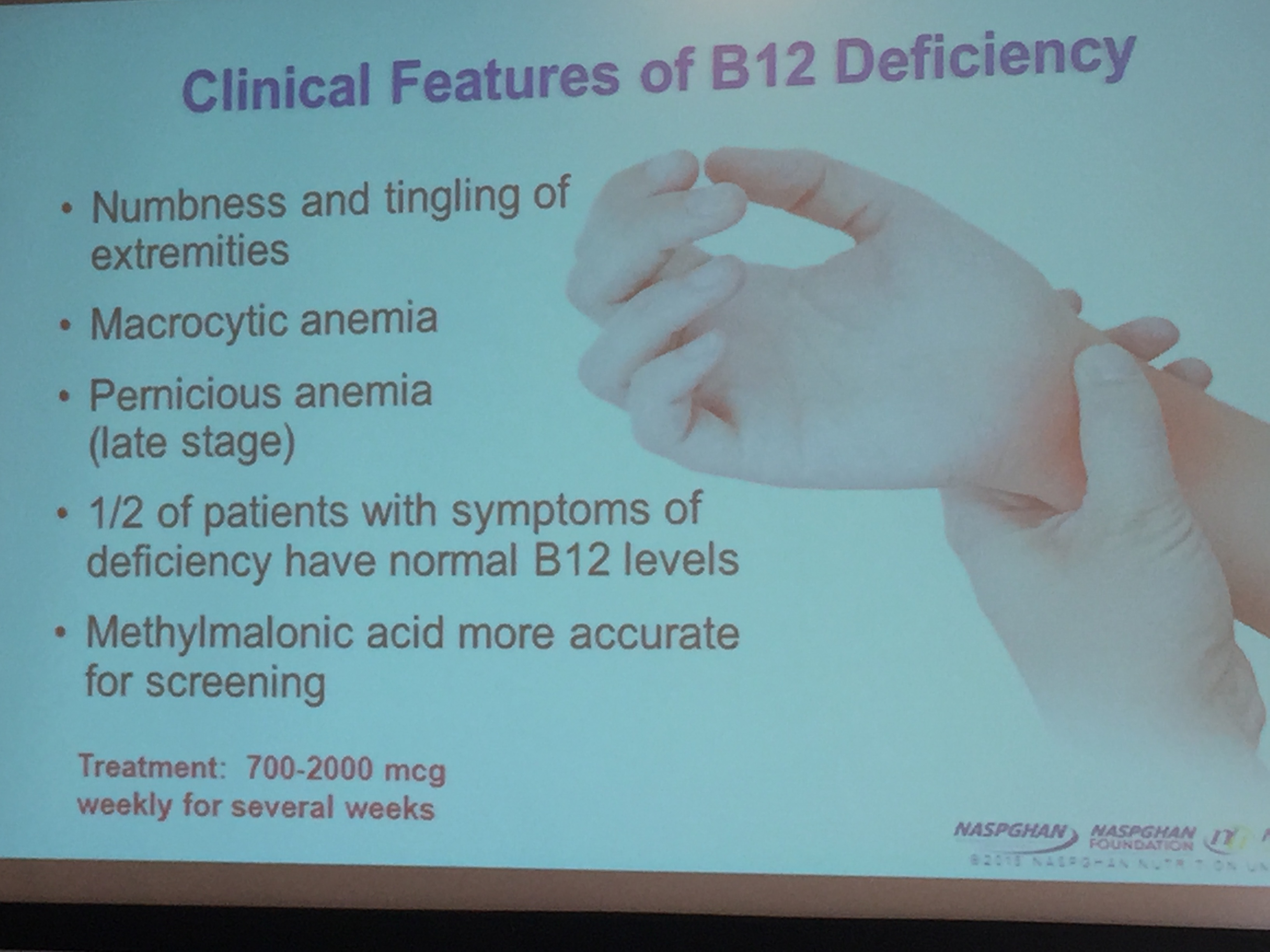
B12 Slide From Syllabus
Key points:
- For obese/overweight, for calorie calculation, can use adjusted weight to estimate energy expenditure (but don’t give more than 2000 calories per day). For teens/adults, usually need at least 1200 calories per day.
- Harris-Benedict Equation (HBE) is often used but often overestimates needs (compared with indirect calorimetry) by about 600 cal/day. Common Equations (see below)
- Protein –provide about 2 gm/kg for weight-for-length at 75-90% for age
- Formulas with relatively higher protein content (eg. Jevity or Promote) can be helpful to provide adequate protein/nutrients/fluid without excessive calories
- BUN can help with monitoring adequate nitrogen balance (in the abscess of diuretics). Goal: BUN 7-12 range
- Goal initially (first 2 weeks) is weight stability or no more than 2-3 lbs of weight loss per week
Bottomline: N2U served as a good review on a broad range of nutrition topics. While this talk discussed obesity in critically-ill patients, given the prevalence of obesity and impact on long-term outcomes, I would suggest more attention to this topic at future meetings.

Energy Calculations
Disclaimer: This blog entry has abbreviated/summarized this presentation. Though not intentional, some important material is likely to have been omitted; in addition, transcription errors are possible as well.
These blog posts are for educational purposes only. Specific dosing of medications/diets (along with potential adverse effects) should be confirmed by prescribing physician/nutritionist. This content is not a substitute for medical advice, diagnosis or treatment provided by a qualified healthcare provider. Always seek the advice of your physician or other qualified health provider with any questions you may have regarding a condition.

Downtown Chicago
 gutsandgrowth