
D Glynn et al. J Pediatr 2023; 259: 113486. Nonanaphylactic Variant of Alpha-Gal Syndrome as an Etiology for Chronic Gastrointestinal Symptoms in Children
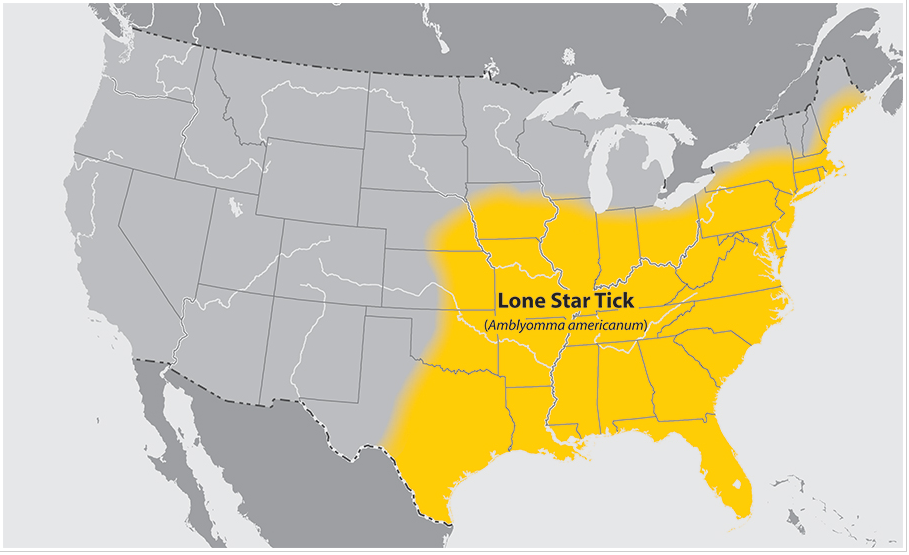
Background: A CDC report showed that between 2010 and 2022, more than 110,000 suspected cases of alpha-gal syndrome were identified. The majority of cases are linked to bites from the lone star tick which affects much of the U.S. (map below) as well as Central and South America, Asia, Africa, Australia and parts of Europe.
Findings: This study reports 3 pediatric patients who presented with only nonanaphylactic symptoms of alpha-gal syndrome. These patients with recurrent gastrointestinal distress and emesis after consuming mammalian meat, even in the absence of an anaphylactic reaction.
The diagnosis in these three patients was established by history, serum alpha-gal immunoglobulin E elevation and response to avoidance of red meat.
My take: Checking a serum Alpha-gal IgE seems like a good idea in some children with unexplained abdominal pain with episodic exacerbation with vomiting, especially if tick exposure. Anecdotally, I have checked this a few times and so far I have not I identified a case. Most cases of Alpha-gal will be associated with urticaria.
Related blog post: Tick Bites Can Lead to Allergy to Red Meat
CDC: Alpha-gal syndrome “Symptoms commonly appear 2-6 hours after eating meat or dairy products, or after exposure to products containing alpha-gal (for example, gelatin-coated medications).”
CDC: Food products that may contain alpha-gal: Mammalian meat (such as beef, pork, lamb, venison, rabbit, etc.) can contain high amounts of alpha-gal. Food products that contain milk and milk products typically contain alpha-gal (though many patients tolerate dairy products)
Foods that do NOT contain alpha-gal (unless cross contamination):
- Poultry, such as chicken, turkey, duck, or quail
- Eggs
- Fish and seafood, such as shrimp
- Fruits and vegetables
 gutsandgrowth