
D Li et al . Gastroenterol 2023; 165: 391-401. Open Access! Effect of Helicobacter pylori Eradication Therapy on the Incidence of Noncardia Gastric Adenocarcinoma in a Large Diverse Population in the United States
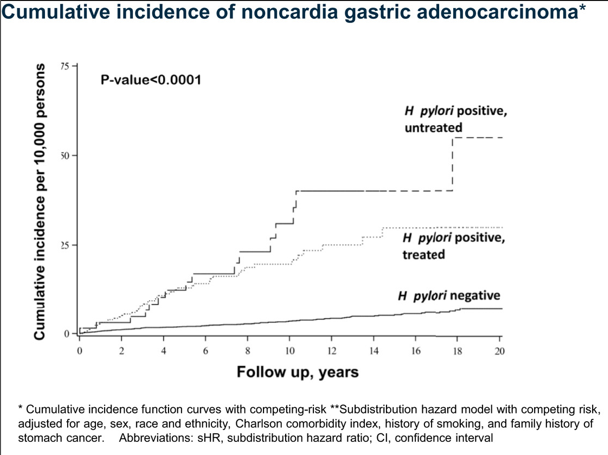
The authors examined a retrospective cohort study of Kaiser Permanente Northern California members (716,567 individuals) who underwent testing and/or treatment for H pylori between 1997 and 2015 and were followed through December 31, 2018. Key findings:
- The adjusted subdistribution hazard ratios of NCGA for H pylori–positive/untreated and H pylori–positive/treated individuals were 6.07 and 2.68, respectively, compared with H pylori–negative individuals.
- When compared directly with H pylori–positive/untreated individuals, subdistribution hazard ratios for NCGA in H pylori–positive/treated were 0.95 at <8 years and 0.37 ≥8 years of follow-up.
My take (borrowed from authors): H pylori eradication therapy was associated with a significantly reduced incidence of gastric cancer after 8 years compared with no treatment. The risk among treated individuals became lower than the general population after 7 to 10 years of follow-up. The findings support the potential for substantial gastric cancer prevention in the United States through H pylori eradication.
Related blog posts:
- Synergistic Dangers: Helicobacter Pylori and Cancer Genes
- Treating Helicobacter Pylori Lowers The Risk of Gastric Cancer
- Understanding FDA Approval of Vonoprazan-Based Therapies for Helicobacter Pylori
- Helicobacter Pylori: Relationship to Cancer and Dubious Beneficial Claims
- Helicobacter Pylori 2019 Review
- It is Getting Harder to Treat H pylori -Here’s Why

 gutsandgrowth