
Gastroenterology & Endoscopy News 4/12/24: Pain Management Protocol Reduces Opioid Use in Hospitalized IBD Patients
“Dr. Berry and his co-investigators developed the Proactive Analgesic Inpatient Narcotic-Sparing (P.A.I.N.-Sparing) protocol. The approach relies on scheduled nonopioid pain medications tailored to the severity of a patient’s pain (Figure). However, patients have the option to request opioid medication for uncontrolled breakthrough pain.”
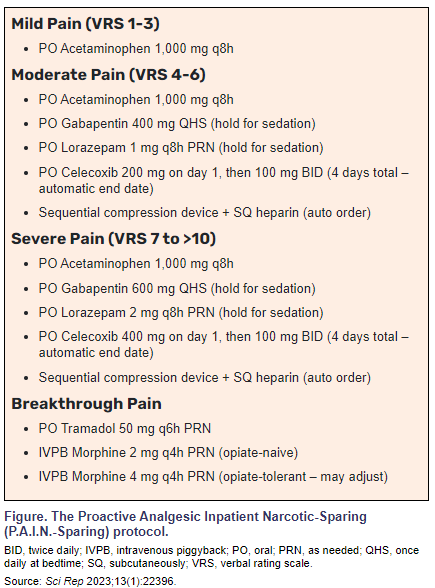
Open Access! Berry, S.K., Takakura, W., Patel, D. et al. A randomized controlled trial of a proactive analgesic protocol demonstrates reduced opioid use among hospitalized adults with inflammatory bowel disease. Sci Rep 13, 22396 (2023). https://doi.org/10.1038/s41598-023-48126-0
The authors conducted a randomized controlled trial in hospitalized patients with IBD (n=33) to evaluate the impact of a proactive opioid-sparing analgesic protocol.
Key findings:
Those randomized to the intervention tended to have lower pain scores than the control group regardless of hospital day (3.02 ± 0.90 vs. 4.29 ± 0.81, p = 0.059), used significantly fewer opioids (daily MME 11.8 ± 15.3 vs. 30.9 ± 42.2, p = 0.027), and had a significantly higher step count by Day 4 (2330 ± 1709 vs. 1050 ± 1214; p = 0.014)
My take: It is a good idea to have a set pain management pathway –especially if it works to reduce pain and reduce the risk of excess opioid use.
Disclaimer: This blog, gutsandgrowth, assumes no responsibility for any use or operation of any method, product, instruction, concept or idea contained in the material herein or for any injury or damage to persons or property (whether products liability, negligence or otherwise) resulting from such use or operation. These blog posts are for educational purposes only. Specific dosing of medications (along with potential adverse effects) should be confirmed by prescribing physician. Because of rapid advances in the medical sciences, the gutsandgrowth blog cautions that independent verification should be made of diagnosis and drug dosages. The reader is solely responsible for the conduct of any suggested test or procedure. This content is not a substitute for medical advice, diagnosis or treatment provided by a qualified healthcare provider. Always seek the advice of your physician or other qualified health provider with any questions you may have regarding a condition.
 gutsandgrowth