
Y Wang et al. Gastroenterol 2025; (Epub). Dietary Patterns and Incident Chronic Constipation in Three Prospective Cohorts of Middle- and Older-aged Adults
Methods: In three large cohorts, the Nurses’ Health Study (NHS), NHSII, and the Health Professional Follow-up Study (HPFS) (combined >95,000 participants), the authors identified chronic constipation based on repeatedly-measured self-reported constipation symptoms for ≥12 weeks in the past year.
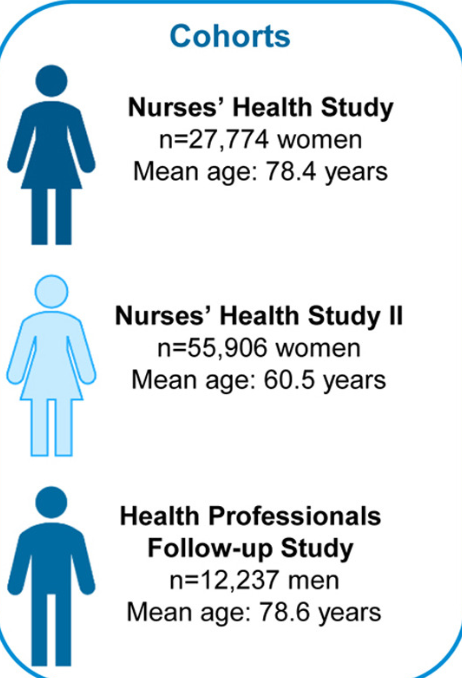
Key Findings:
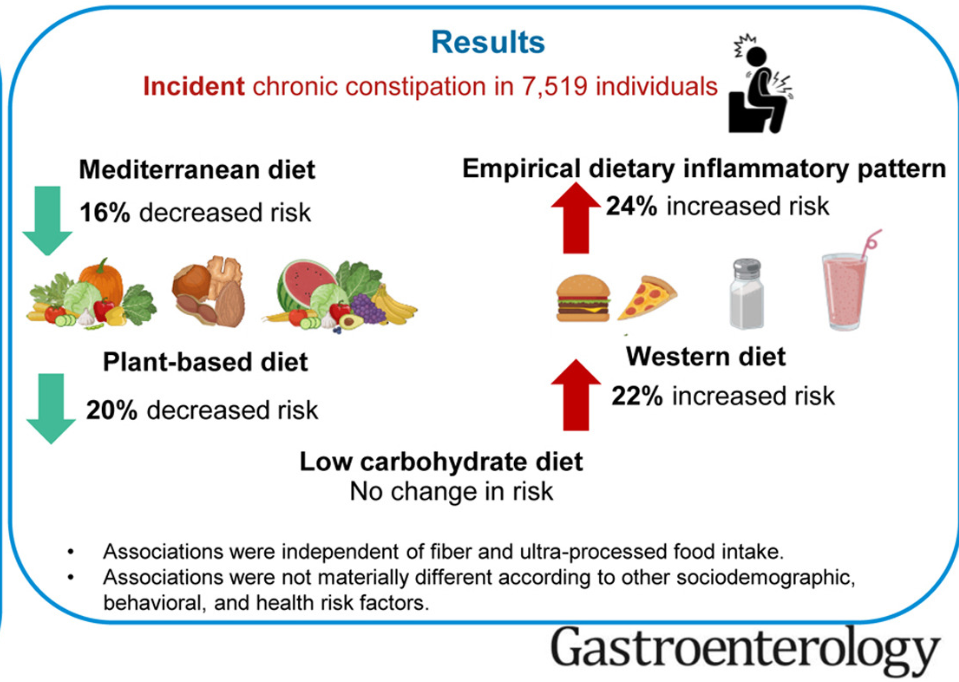
- The top quintiles of alternate Mediterranean diet (aMED) and plant-based dietary index (PDI) were associated with 16% (9-22%) and 20% (14-27%) reduced risk for constipation. Vegetable and nut intake, which are enriched in aMED and PDI, were associated with decreased constipation risks.
- A Western diet in the top quintile was associated with a 22% (11-33%) increased risk for constipation
My take: The results from this study are not surprising, but nice to see more data on the effects of diet on constipation. While this data focused on adults, it is clear that dietary patterns have a big role in the frequency of constipation in children too.
Related blog posts:
- Position Paper: Pediatric Refractory Constipation Management
- Constipation Action Plan: Better Instructions, Fewer Phone Calls
- Small Study: Kiwi For Constipation
- Lubiprostone -Effective for Pediatric Constipation Plus One
- Understanding the Laxative Effects of Coffee
- Clues about constipation and more than 2.5 million views
- “Simple Remedies for Constipation”
- Briefly Noted: Kiwi for IBS-C
- Radiographs and Constipation -Bad Practice and Good Study
- What helps kids poop?
- PEG vs. Fiber for constipation
 gutsandgrowth