
Recently Dr. Squires gave our group an excellent lecture. I have taken some notes and shared some slides. There may be inadvertent omissions and mistakes in my notes.
- Bilirubin is derived from the breakdown of red blood cells.
- Each red blood cell contains approximately 250-300 million molecules of hemoglobin. Each molecule of hemoglobin can transport four oxygen molecule; thus a single RBC can carry one billion oxygen molecules
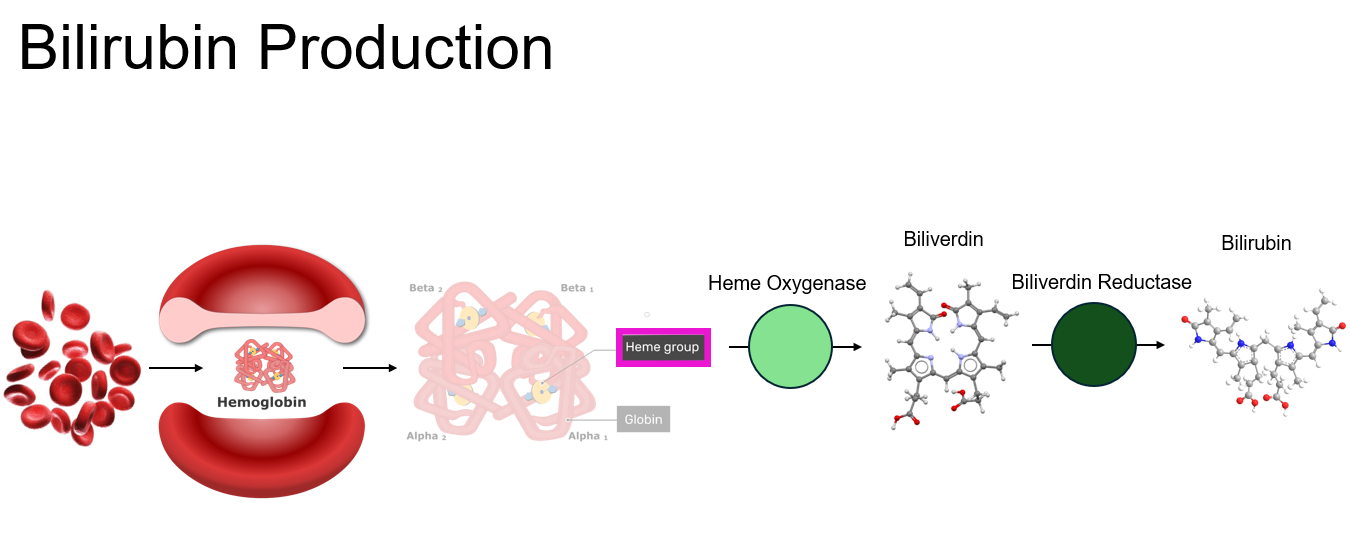
- Unconjugated bilirubin binds to albumin and is taken into cell by OAT1B1 membrane transporter. Conjugation occurs in the endoplasmic reticulum.


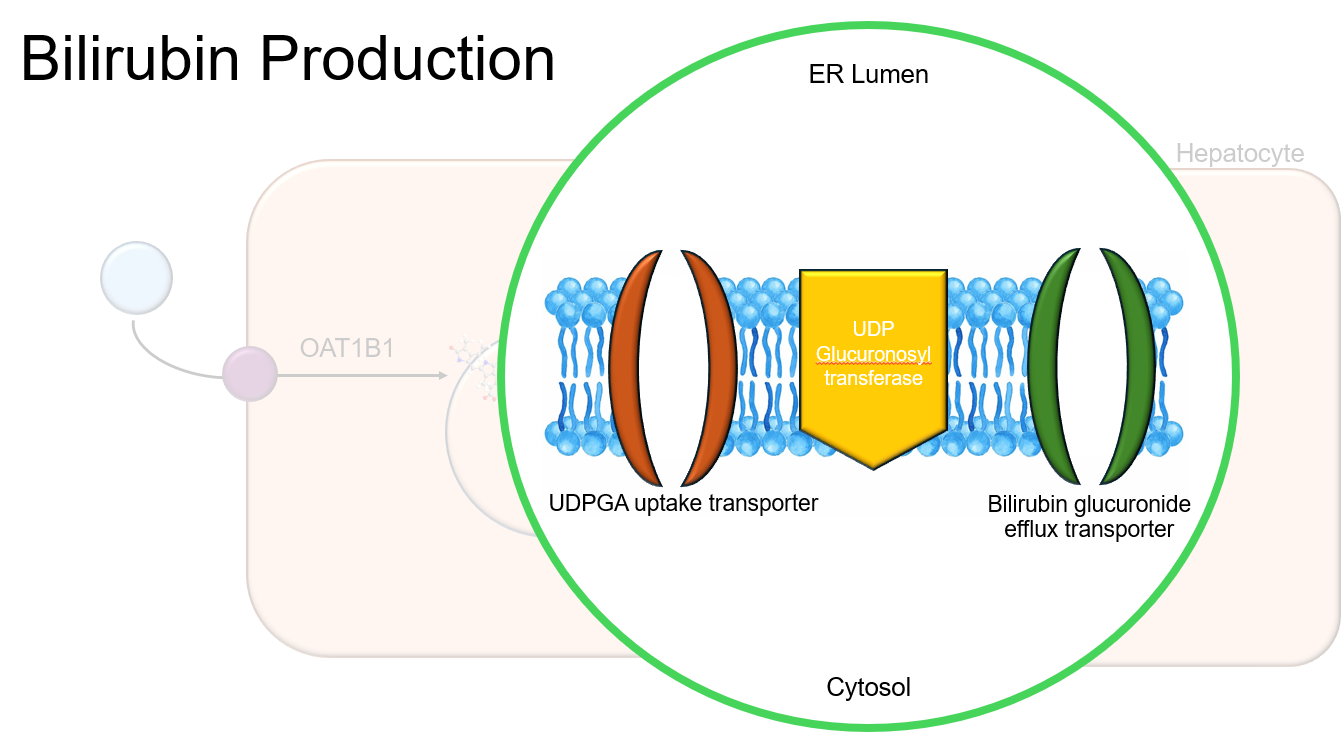
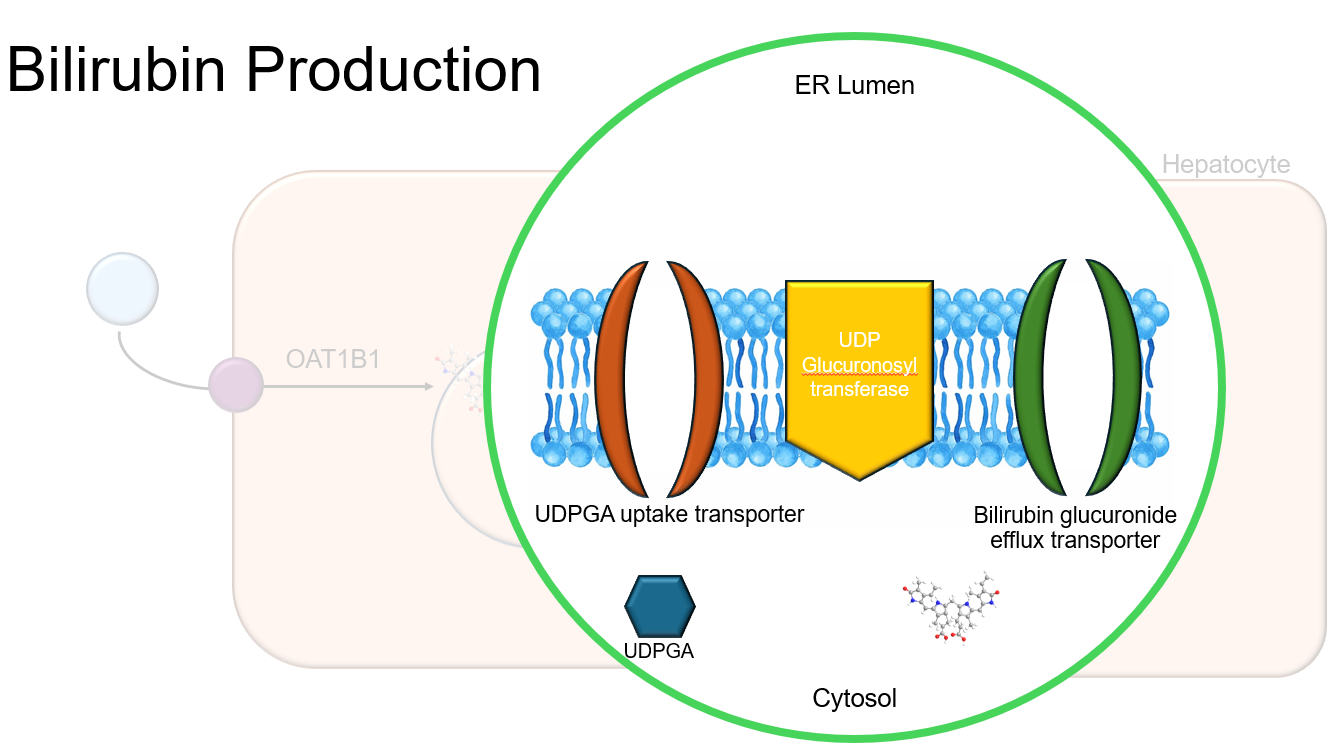
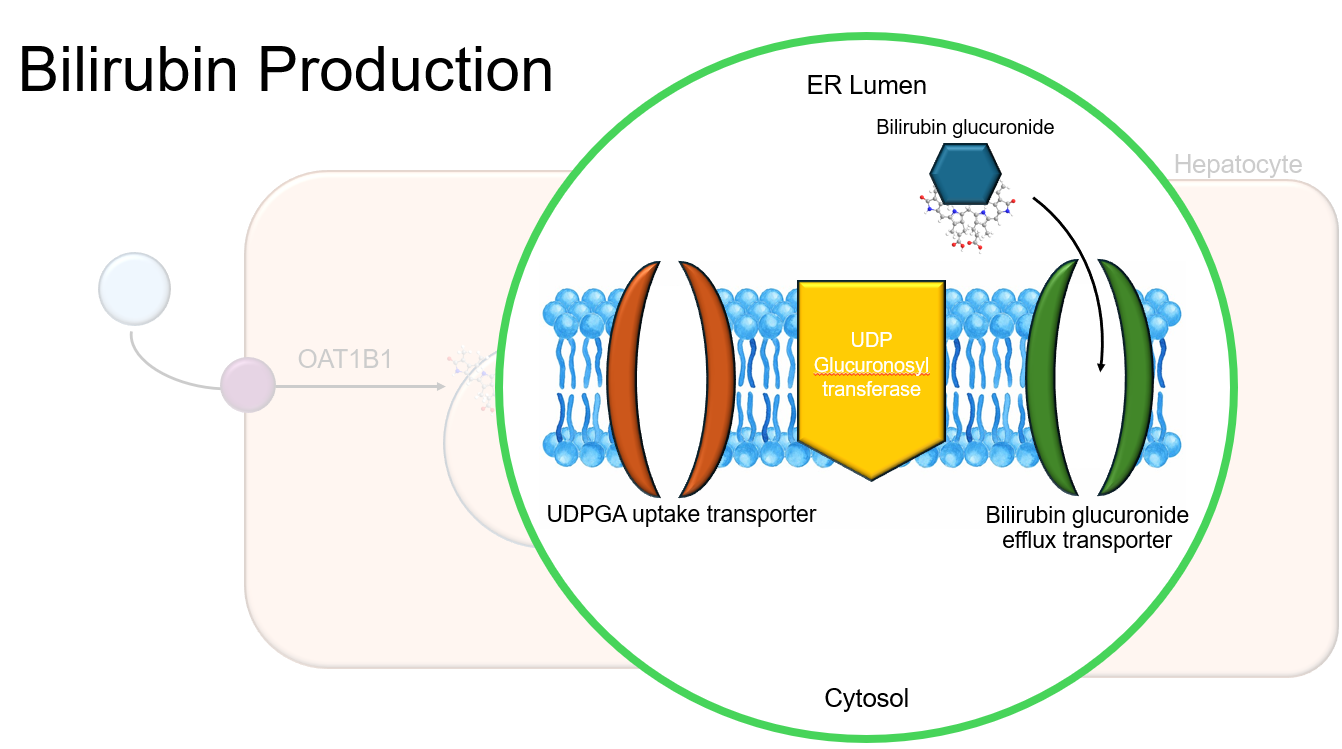
- Three main causes of indirect hyperbilirubinemia: defective bilirubin uptake, defective bilirubin conjugation, and hemolysis. In older patients, medications are another reason for indirect hyperbilirubinemia
- Evaluation for hemolysis can include CBC, LDH, Haptoglobin, and retic count
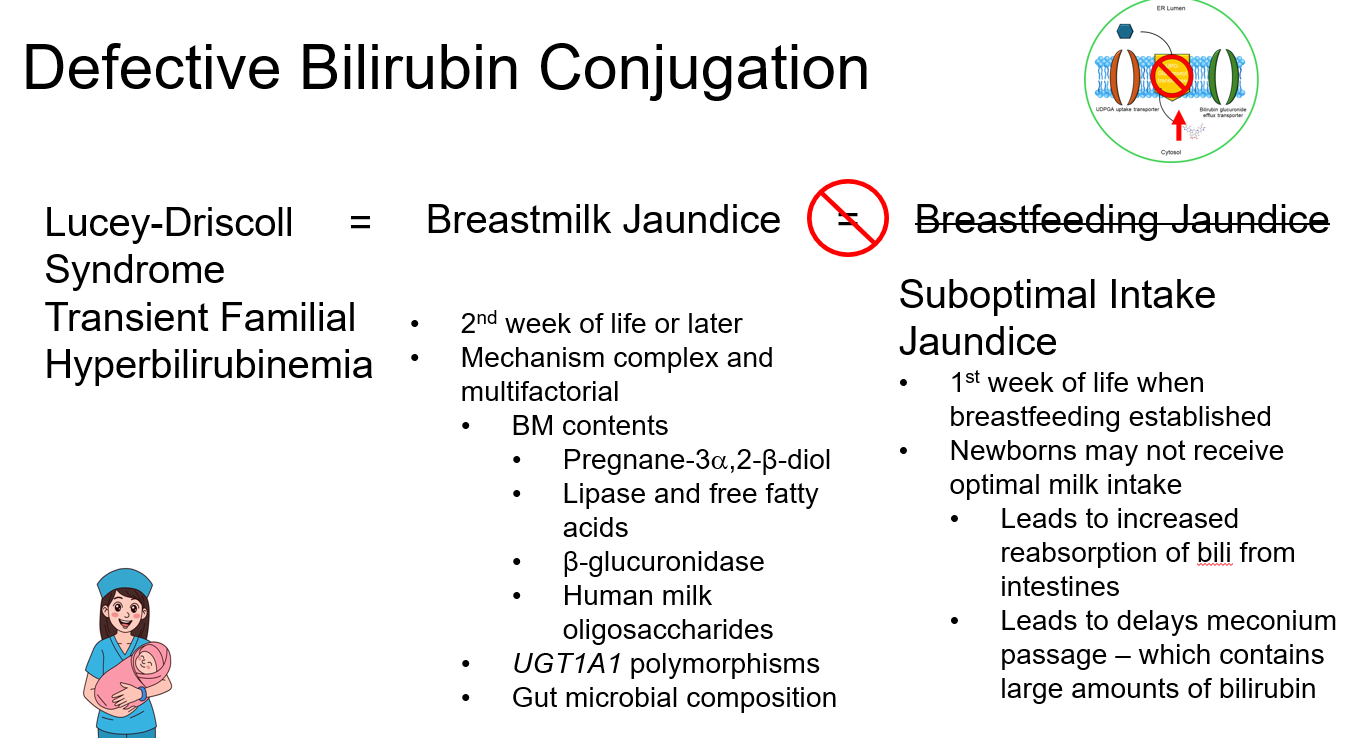
- Breastmilk jaundice (aka Lucey-Driscoll syndrome) is a different entity than “suboptimal intake jaundice” (aka breastfeeding jaundice). Suboptimal intake jaundice occurs in the fist week of life. Due to less intake, there are increased delays in meconium passage and increased reabsorption of bilirubin. Breastmilk jaundice which is much less common can result in very elevated indirect bilirubin levels.

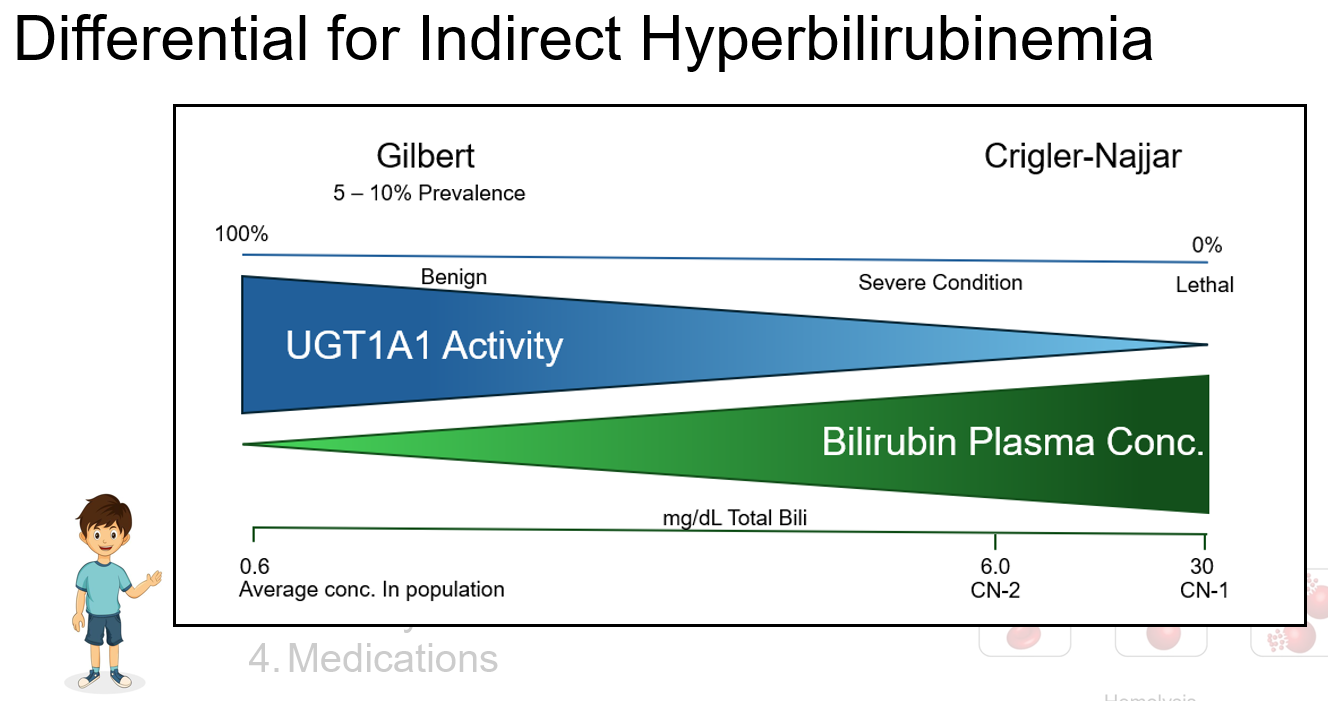
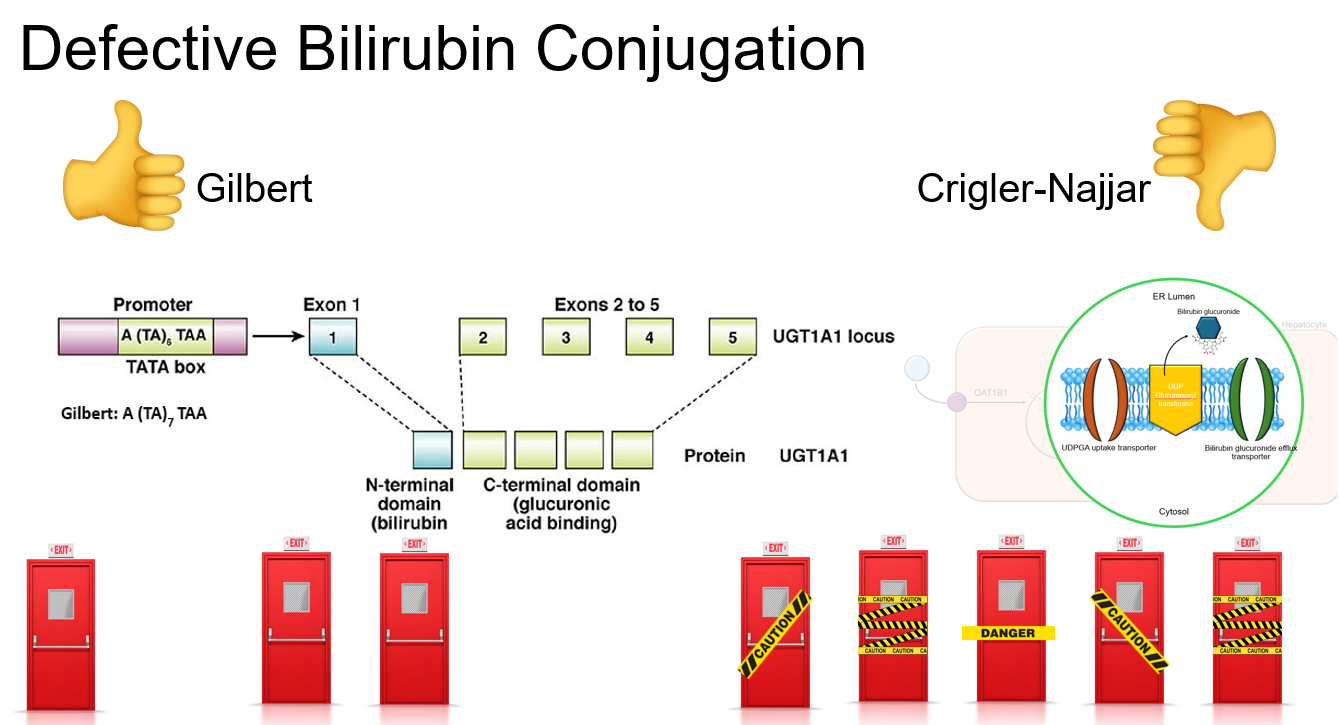
- With Gilbert, the molecular defect affects the promoter region of the UGT1A1 gene. Defects here are less critical than with Crigler-Najjar. For Gilbert’s, it is like there are fewer exits to reduce bilirubin. Whereas with severe forms of Crigler-Najjar, it is like all of the exits are blocked
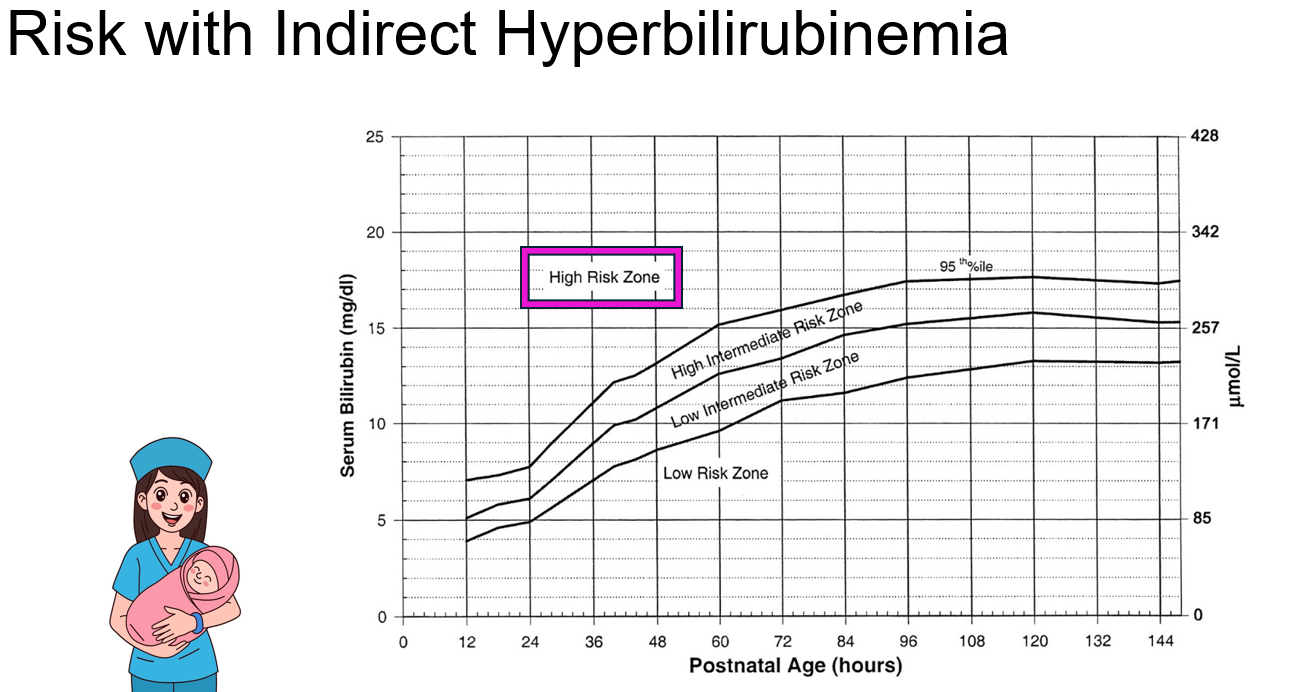
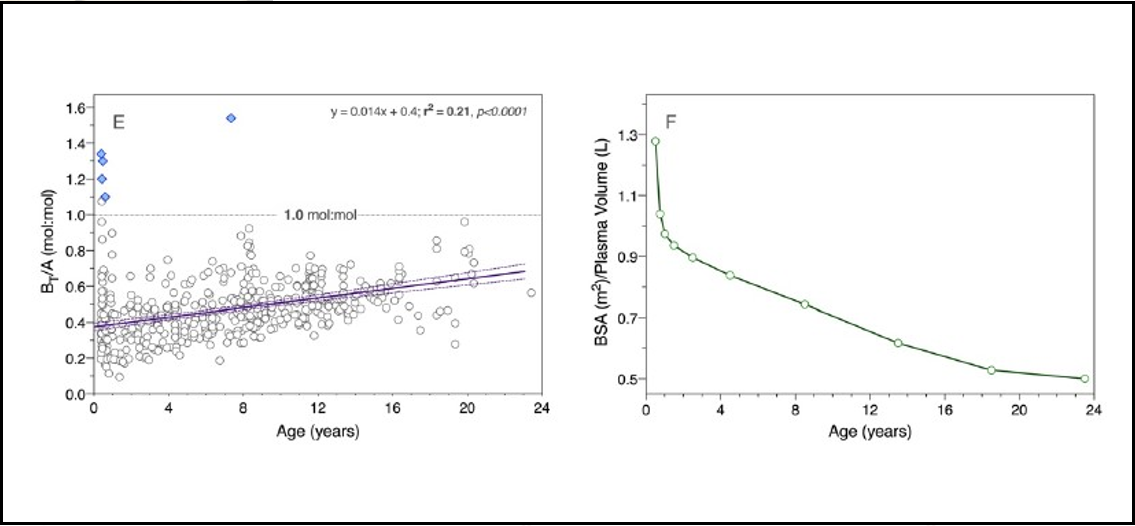
- Especially in the newborn period, very elevated unconjugated hyperbilirubinemia can result in kernicterus/severe neurologic sequelae. This can occur at older ages as well. The risk is related to the bilirubin to albumin ratio
- For Crigler-Najjar, phototherapy is less effective with age and is associated with a reduction in the ratio of body surface area to plasma volume
Conclusions:

Related blog posts:
- Genetic Diseases and Newborn Unconjugated Hyperbilirubinemia
- Year-in-Review for Pediatric Hepatology (2024) How Gilbert’s may be beneficial –>hopeful news for the mildly jaundiced children that we see. Science (M Leslie, 6/8/23): Can ‘toxic’ bilirubin treat a variety of illnesses
- Can Ceftriaxone Be Given (Safely) to Infants with Unconjugated Hyperbilirubinemia?
- Gene Therapy for Crigler-Najjar
- Unbound Bilirubin and Prematurity
- Understanding Breast Milk Jaundice
 gutsandgrowth