
AJ Lucendo et al. Clin Gastroenterol Hepatol 2025; 23: 2115-2127. Proton Pump Inhibitors for Inducing and Maintaining Remission in Eosinophilic Esophagitis: An Updated Systematic Review and Meta-Analysis
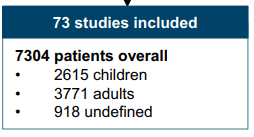
Background/Methods: This systematic review aimed to update the response/remission rates of PPI therapy for eosinophilic esophagitis. Compared to review in 2016, the current review covers a 10-fold increase in population (from 619 to 7304 patients), with a more balanced distribution between children (41%) and adults, and with a geographical representation from several continents.
Key findings:
- PPI therapy led to clinical response in 65% (95% confidence interval [CI], 57.2–72.4)) and histological remission (<15 eos/hpf) in 45.4% (95% CI, 41.6%–49.3%) of patients, without differences between children and adults (41.4% vs 48%; P = .17)
- Overall, 34.1% (95% CI, 27.9%–40.5%) achieved <5 eosinophils per high-power field
- Maintenance half-doses led to sustained histological remission in 68.2% (95% CI, 63.7%–72.6%) of patients
- Clinical and histological remission (<15 eos/hpf) was achieved in 45% of patients
- Histological remission was significantly higher with double PPI doses compared with standard (51.7% vs 28.3%; P < .005)

In the discussion, it was noted that Japanese cohorts had a better response to PPI therapy with a histological remission (67.9%). This could be related to more favorable metabolism of PPI. “CYP2C19∗17 haplotype (related to ultrarapid and rapid PPI metabolizers), is the least prevalent (<3%) in patients with Asian ancestry.”
My take: This study reinforces previous data showing a 40-50% remission rate with PPI therapy for EoE. Twice a day PPI therapy is significantly more effective than once a day.
Related blog posts:
- How Effective Are PPIs for Eosinophilic Esophagitis?
- Practical Tips for Eosinophilic Esophagitis (2024 with Dr. Glen Furuta)
- ACG 2025 Guidelines for Eosinophilic Esophagitis
- How Genetics Influence Response to PPIs in Eosinophilic Esophagitis
- What is EoE?
- Dupilumab: FDA Approval for Eosinophilic Esophagitis
- Expecting Change in Eosinophilic Esophagitis Treatment | gutsandgrowth
- 4-14-4 Rule: More Biopsies Recommended for EoE
- ESPGHAN Eosinophilic Esophagitis Guidelines
 gutsandgrowth