
This blog continues on the issue of genetic engineering and how it affects your food. The information was presented in a lecture by Ronald Kleinman (see the posts from the last two days): Biotechnology, Nutrition, and Agriculture: A Perspective and Implications for Child Health. The slides and lecture will be posted on Nutrition4Kids website.

Biotechnology/genetic engineering is more precise in selecting desirable crop traits
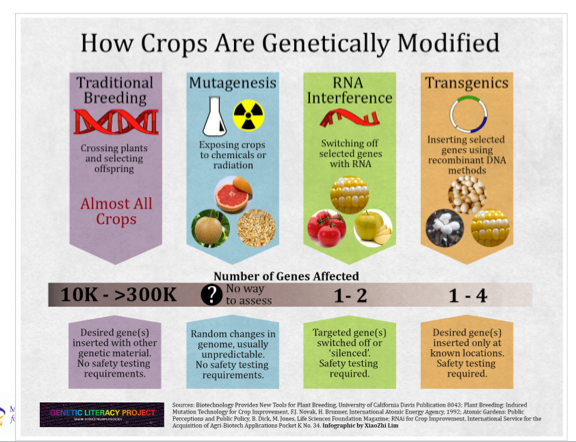
Why Newer Techniques (Genetic Engineering) Are Safer: Fewer Genes Affected Than Traditional Breeding and Mutagenesis along with Required Safety Testing
In the slide above, the first column shows traditional breeding of crops and how this can introduce thousands of changes into the crop. The second column illustrates the use of chemicals and radiation (mutagenesis) to change crops; this type of crop engineering preceded genetic engineering and has not required the rigorous testing of the final two columns which depict modern biotechnology with either RNA interference of transgenetics. Both of the later two methods are precise and undergo ~6-10 years of testing before introduction.

The above slide is one example of the safety of genetically modified tomatoes.

BT Corn (insect resistant) is Safer with Less Liver Cancer and Fewer Birth Defects
Key points:
- Genetic change in foods is as old as agriculture. Lots of vegetables/crops were not found in nature, including corn and wheat.
- Why is it false to talk about genetic modification as a special category? It’s all DNA which is undergoing constant change. Traditional breeding allows selection of random multiple genes and then selecting plant we like. Biotechnology is more precise and safer (eg. only the gene for sweetness for corn is transferred).
- 240 Agencies from across the globe have confirmed that biotechnology is safe because of the extensive testing that show these agents are at least as safe as ‘natural’ products. 2500 studies of GMO products from across the globe (not just Monsanto!) have proven the safety of these products.
- Other examples of beneficial biotechnology: a) BT Corn — safer, less liver cancer, less birth defects (myelomeningocele) b) Golden Rice –can solve iron & vitamin A deficiency. Vitamin A deficiency contributes >1 million deaths/yr due to increased susceptibility to infections. Golden Rice in normal quantities provides RDA of Vit A. This is a lot more effective and less expensive than a supplement.
More tomorrow…


 gutsandgrowth