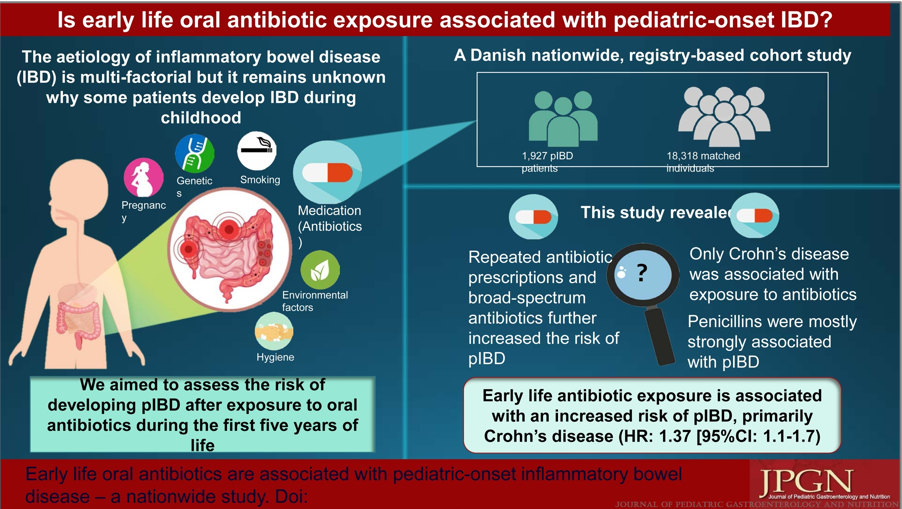
AB Jawad et al. JPGN 2023; 77: 366-372.Early Life Oral Antibiotics Are Associated With Pediatric-Onset Inflammatory Bowel Disease-A Nationwide Study
Key findings:
- Oral antibiotic exposure during the first 5 years of life was associated with a higher risk of developing pIBD (HR = 1.33, P <0.0001). The risk was also increased if patients had ≥4 antibiotic prescriptions compared to no antibiotics (HR = 1.33, P <0.0001).
- Broad-spectrum antibiotics increased the risk of pIBD compared to narrow-spectrum antibiotics (HR = 1.29, P < 0.0001).
- When stratified by IBD subtypes, only Crohn disease was significantly associated with exposure to antibiotics (HR = 1.37, P = 0.002).
My take: This study indicates that antibiotics (and/or serious infections) are associated with an increased the risk of pediatric Crohn’s disease but the absolute risk is very low. We still have a lot to learn about how environmental exposures, including diet, infections, antibiotics, and pollution, contribute to the increasing prevalence of inflammatory bowel disease.
Related blog posts:
- Early Antibiotics -Minimal Risk for Crohn’s Disease The cumulative risk of CD at the 11th birthday for children exposed to antibiotics in their first year of life was 0.16% compared to 0.11% for children unexposed to antibiotics in their first year of life.
- Early antibiotic use and the development of inflammatory bowel disease