
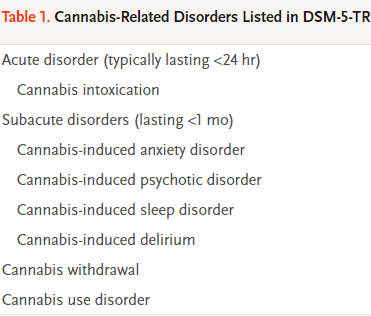
Two recent articles review cannabis-related disorders:
DA Gorelik. NEJM 2023; 389: 2267-2275. Cannabis-Related Disorders and Toxic Effects
Background: “In the United States, an estimated 52.4 million persons 12 years of age or older used cannabis in 2021, representing 18.7% of the community-dwelling population in that age group,5 and 16.2 million persons met the diagnostic criteria for cannabis use disorder, which has as its core feature the use of cannabis despite adverse consequences…Cannabis use poses a global disease burden, albeit substantially less than that posed by other psychoactive substances such as alcohol, tobacco (nicotine), opioids, and stimulants.10 The Global Burden of Disease project calculated that cannabis use in 2016 was responsible for an estimated 646,000 years of healthy life lost to disability.”
Key points:
- “Cross-sectional surveys suggest that recent cannabis use increases the risk of motor vehicle crashes by 30 to 40%.26 By comparison, a blood alcohol concentration of 0.08% increases the risk of crashes by 250 to 300%.26“
- “Cannabis use disorder, like other substance use disorders, is a chronic, relapsing condition.”
- “A substantial reduction or a cessation of cannabis use after heavy or long-term use results in a withdrawal syndrome that is usually mild and self-limiting.39…Common psychological symptoms of cannabis withdrawal include depressed mood, anxiety, restlessness, irritability, decreased appetite, and sleep disturbance. Physical signs and symptoms are less common and include abdominal cramps, muscle aches, tremor, headache, sweating, chills, and weight loss. These signs and symptoms typically begin within 1 to 2 days, peak within 2 to 6 days, and last for several weeks…The prevalence of any withdrawal symptoms is almost 50% in persons who were using cannabis daily.”
- Neonatal cannabis exposure: “Pregnant persons who use cannabis expose their neonates to cannabis. Such in utero exposure is associated with increased risk among newborns of having low birth weight, being small for gestational age, and being admitted to the neonatal intensive care unit.”
- “Cannabinoid hyperemesis syndrome, a form of cyclic vomiting syndrome that is often accompanied by abdominal pain, occurs during or within 48 hours after frequent and heavy cannabis use.75 Cannabinoid hyperemesis syndrome is a major reason for cannabis-related visits to emergency departments, and it accounts for about 10% of patients with cyclic vomiting syndrome.76 Cannabinoid hyperemesis syndrome is distinguished from cyclic vomiting syndrome by its temporal association with cannabis use, relief with hot baths or showers, and resolution with extended abstinence from cannabis…The symptoms of cannabinoid hyperemesis syndrome are treated with benzodiazepines, haloperidol, and topical capsaicin. “
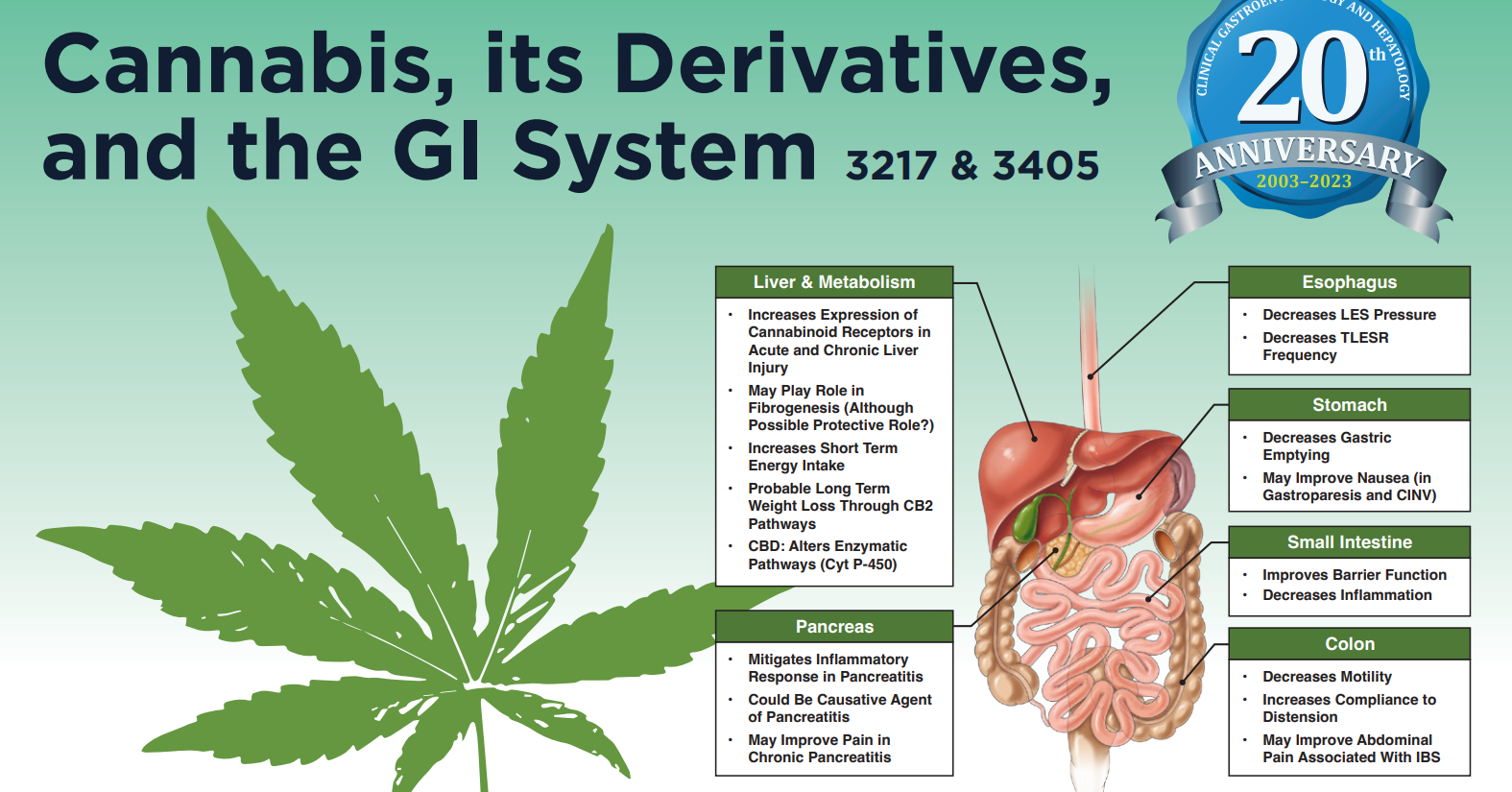
M Camilleri, T Zheng. Clin Gastroenterol Hepatol 2023; 21: 3217-3229. Cannabinoids and the Gastrointestinal Tract This article focuses more on the GI tract effects of cannabinoids.
Related blog posts:
 gutsandgrowth