
P Seika et al. Clin Gastroenterol Hepatol 2026; 24: 974-985. Glucagon-like Peptide-1 Receptor Agonists Are Associated With a Lower Risk of Peptic Ulcer Disease: A Nationwide Cohort Study
Background: “Emerging evidence suggests that GLP-1RAs may exhibit anti-inflammatory properties and could play a role in GI mucosal protection. Proposed mechanisms include the suppression of proinflammatory cytokines, attenuation of reactive oxygen species, and enhancement of mucosal defences, which may reduce susceptibility to PUD.”
Methods: This was a nationwide retrospective study of adults with T2DM (66,102 participants) using the “All of Us” National Institutes of Health database, including a sub-group analysis of adults who were newly initiated on GLP-1RAs or insulin as second-line therapy.
Key findings:
- After adjusting for possible confounders, GLP-1RAs were associated with significantly lower odds of PUD diagnosis (adjusted odds ratio 0.56; P < .001)
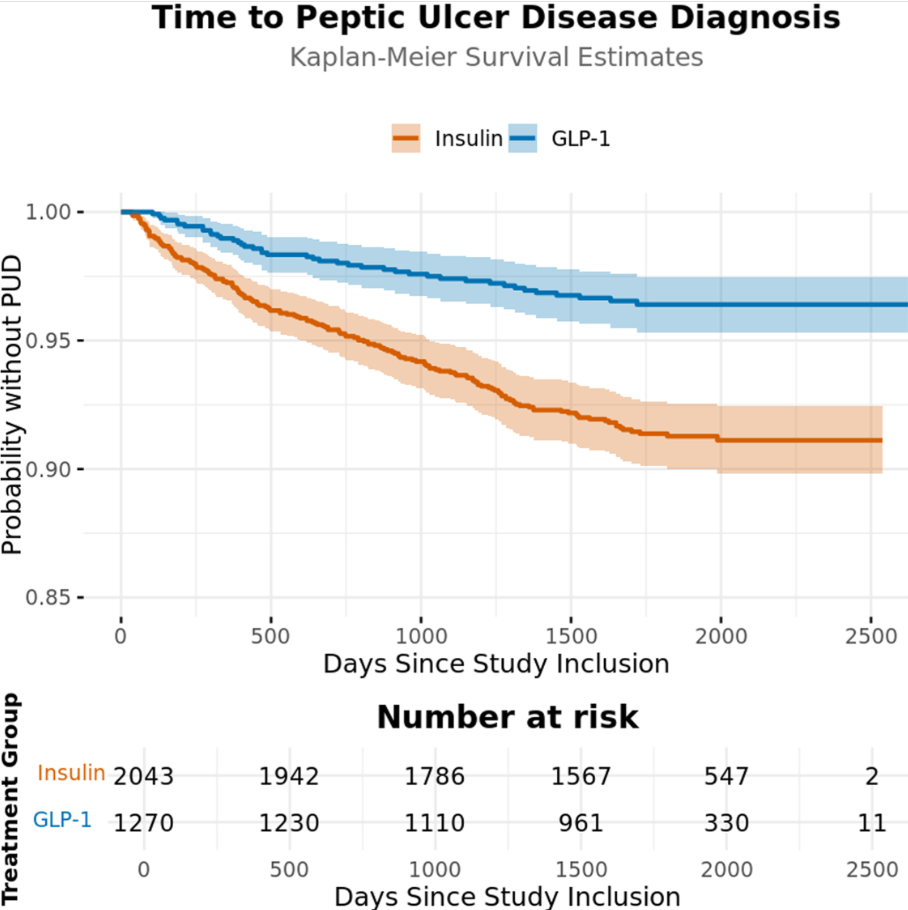
- Our subgroup included a total of 3313 patients (1270 new GLP-1RA users; 2043 new insulin users). In this analysis, switching to a GLP-1RA as second-line therapy was associated with a significantly lower hazard of PUD compared with switching to insulin (adjusted hazard ratio [HR], 0.44; P < .001)
My take:
- GLP-1 RAs are a remarkable advance. However, we need still more long-term data. Many times in healthcare, new treatments often receive a lot of favorable studies/good press. Over time and with more scrutiny, more adverse effects become evident.
- Though these medications can cause a lot GI symptoms, it is helpful to know that they are associated with a lower risk of peptic ulcer disease.
Related blog posts:
- In the News: FDA Approves 2nd Oral GLP-1, Another Vaccine Reduces Risk of Dementia, and Costs of Vaccine-Preventable Diseases (Includes summary table of conditions in which GLP-1 RAs are beneficial independent of weight loss)
- Reduced Dosing of GLP-1 RAs May Work for Maintenance Treatment of Obesity
- GLP-1 Use Associated with Lower Risk of Colon Cancer
- More Pediatric Data Supporting GLP-1 RA Efficacy for MASLD
- Two Pediatric MASLD Publications: Call for Action and Use of GLP-1 RAs
- The Risks and Absolute Risks of GLP-1 RAs and Gastrointestinal Adverse Events
- Bariatric Surgery Declines as GLP-1 Medications Rise

