Incidental Brain Imaging Findings

A recent study (PR Jansen et al. NEJM 2017; 377: 1593-5) provides some useful insight into the issue of incidental findings with pediatric brain MRIs.  Between 2013-2015, the authors examined 3966 children (mean age 10.1 years) prospectively in an effort to identify influences on development. Key findings:

  • At least one incidental finding was present in 25.6%
  • Most commonly: Pineal gland cysts 16.8% of cohort, Arachnoid cysts 2.17%, Venous anomalies 1.59%, Chiari I malformations 0.63%, subependymal heterotopia 0.48%, partial agenesis of the corpus callosum 0.05%
  • 7 children (0.18%) has suspected primary brain tumors; 2 had neurosurgical treatment
  • Imaging findings requiring clinical followup was only 0.43%

A study CT scans in asymptomatic adults, mean age 63 years, (NEJM 2007; 357: 1821) also found a high incidence of abnormalities, including 7.2% with asymptomatic infarcts, 1.8% with aneurysm, and 1.6% with benign tumors.

My take: The frequency of these incidental findings in the pediatric population is surprising to me.  Having anything reported as abnormal on an MRI is likely very unsettling for parents and often for providers due to uncertainty regarding the significance.

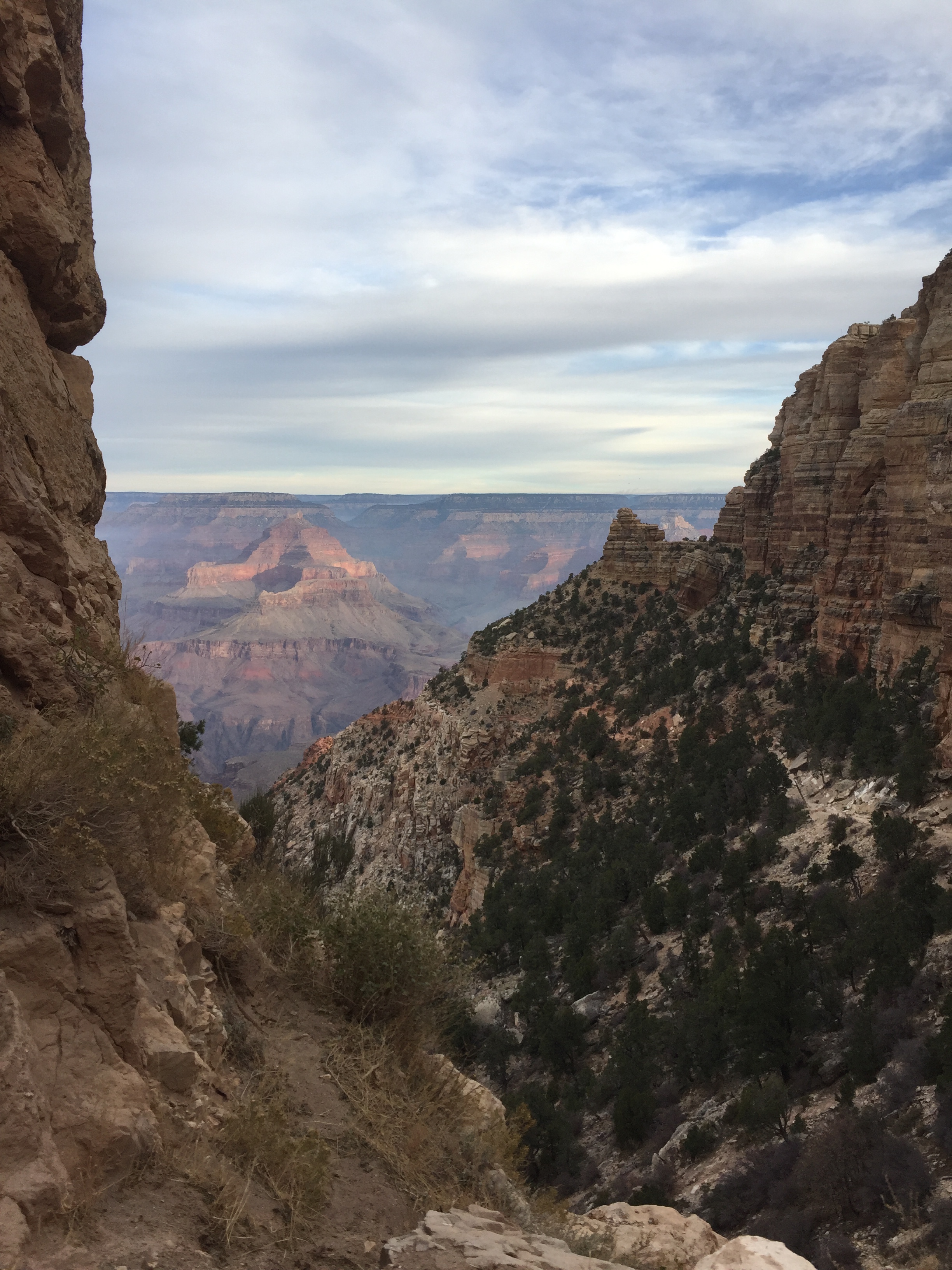
Grand Canyon Sunrise and  then to the South Kaibab Trail (below)

For Pediatric GI MDs: Imaging and Anecdote in Cockayne Syndrome

A brief article (J Pediatr 2014; 165: 416) discusses “susceptibility-weighted imaging” (SWI) for calcification in Cockayne syndrome.

SWI is a gradient-echo MRI sequence with a high sensitivity for blood, blood products, nonheme iron, and calcifications.

The reason why I highlighted this reference relates to a personal experience.  Several years ago I had a patient (about 8 years old at the time) who had mild GI symptoms along with very poor growth.  He had some mild neurologic features but extensive testing by several neurologists and a few well-qualified geneticists did not yield an answer.  Due to my concerns about his poor growth, I convinced the family to have their son admitted to our hospital before considering another trip out-of-town for further testing. As part of his evaluation, I reordered an MRI of his brain.  One of our radiologists (who is brilliant) called me up asking for clinical information and stated specifically that she was concerned about Cockayne syndrome.  After she mentioned the diagnosis, I questioned the family regarding some more specific features of Cockayne (e.g. photosensitivity).  Subsequently, genetic testing proved this child had Cockayne syndrome.

Cockayne syndrome is a rare autosomal recessive disorder that belongs to the family of damaged DNA repair disorders.  Besides photosensitivity and cachectic dwarfism, other features include neurosensory hearing loss, and progressive pigmentary retinopathy.  The physical features are quite characteristic –if you have seen a previous case!  The disease is rare enough that many experienced geneticists may not have seen a case.

Take-home message from this article: Careful MRI study of the brain, potentially with SWI, can help pinpoint the diagnosis of Cockayne syndrome.

On an unrelated matter, I wanted to thank Janet R for her note and let her know that she will be missed.