Microplastics Impact on Gastrointestinal Health

DA Johnson et al. Am J Gastroenterol 2025; DOI: 10.14309/ajg.0000000000003417. Plastics: Here, There, and Everywhere: Implications for Gastrointestinal Health and Disease

This article reviews the growing health concerns regarding microplastics and nanoplastics (MNPs) specifically regarding the GI tract.

Key points:

  • “As these [plastic] products degrade, they break down into smaller particles, forming microplastics (< 5 microm) and nanoplastics (<1 microm), collectively referred to as
    MNPs”
  • “Although many plastic products are deemed recyclable, in the United States, less than 10% are actually recycled…annual global production projected to reach 1.1 billion tons by 2025. Simultaneously, over 12 billion tons of plastic wastes are expected to accumulate in landfills”
  • “The average American ingests approximately 5g of plastic per week, equivalent to 1 credit card, and 39,000–50,000 particles annually”
  • Potential association of MNPs with metabolic-associated steatotic liver disease, liver and pancreatic cancer and inflammatory bowel disease. “Studies have reported
    significantly higher levels of MNPs in patients with IBD compared with healthy controls.”

In a related article in Gastroenterology and Endoscopy News (October 2025), Dr. Johnson noted that “reduction of plastic intake from bottled water to tap water in one study reduced microplastic intake, the number of particles within human tissues, from 90,000 to 4,000…Avoid heating food in plastics…the effect of microwave increased the evidence of microplastics by over 4.2 million and the nanoplastics, 2 billion, just in three minutes in the microwave.”

My take: Something that almost everyone could agree on – they would like less plastic in their food and environment. How to achieve this is much more difficult.

Related blog posts:

The Alarming Impact of Microplastics on Human Health

Yesterday’s post described the problems than pollution and chemicals are associated with in children.

Today’s post reviews data that microplastics accumulate in the brain and are associated with dementia in adults. A thorough review of this topic from Eric Topol 2/3/25: The Microplastic Concerns Elevate—To the Brain

Some excerpts:

Background: Last March a landmark prospective study of microplastics found nearly 60% of patients undergoing an artery operation (carotid endarterectomy) 58% had microplastics and nanoplastics (MNPs) in their plaque. Their presence was linked to a subsequent 4.5 -fold increase of the composite of all-cause mortality, heart attack and stroke…A multi-center study from China showed microplastics were present in the semen and urine of all 113 men assessed and were associated with reduced sperm count and semen quality The CDC data indicate they are likely present in the bodies of all Americans. As you know by now, MNPs are pervasive in our air and water, there’s currently an annual output of 400 million tons of plastics, and the burden of MNPs is expected to double by 2040 if nothing is done to change course.

The main sources of MNPs

The New Study

As reported in today’s Nature Medicine, Alexander Nihart and colleagues assessed concentrations of MNPs in the brain, liver and kidney…To emphasize, the MNP concentration in the brain was 7-30 times greater than the concentration in the liver or kidneys...the increased concentration of MNPs was considerably greater in the people with dementia. Even at the most recent, higher MNP concentration, the brains without dementia averaged ~5,000 μg g−1 whereas the brains from individuals with dementia has MNP concentrations that were 2 to 10-times higher…

Another study published on 22 January in Science Advances demonstrates, in the mouse model, that MNPs in the bloodstream cross the blood-brain-barrier, activate the immune system (schematic below) and result in stagnation of blood flow, culminating in blood clots, also resulting in neurological abnormalities…

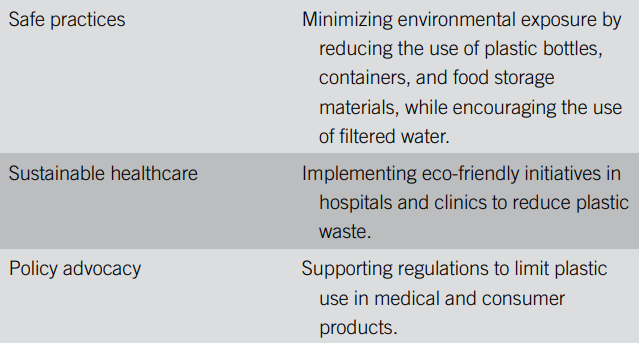
Some practical tips were, however, provided: “Reducing exposure to microplastics is feasible, by avoiding food and drinks packaged in plastics, using less synthetic fabric and cleaning up household dust. Heating plastic containers leaches lots of microplastics, so avoiding microwaved ready-meals and plastic kettles should help too.”

The essential point of this post is that the striking brain accumulation of MNPs is paralleled by the overwhelming accumulation of evidence for their toxicity to human health. 

Related blog posts:

Plastics and Cardiac Outcomes: “Plastics Are Neither As Safe Nor As Inexpensive As They Seem”

R Marfella et al. NEJM 2024; 390: 900-910. Microplastics and Nanoplastics in Atheromas and Cardiovascular Events

The authors conducted a prospective, multicenter, observational study involving patients who were undergoing carotid endarterectomy for asymptomatic carotid artery disease with 257 patients who completed a mean follow-up of 34 months.

Key findings:

  • Polyethylene was detected in carotid artery plaque of 150 patients (58.4%), with a mean level of 21.7±24.5 μg per milligram of plaque; 31 patients (12.1%) also had measurable amounts of polyvinyl chloride, with a mean level of 5.2±2.4 μg per milligram of plaque.
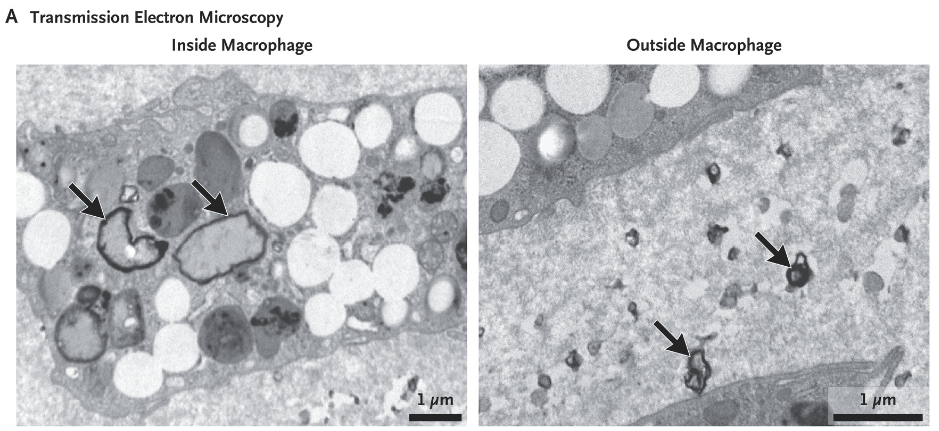
  • Electron microscopy revealed visible, jagged-edged foreign particles among plaque macrophages and scattered in the external debris.
  • There was a 4.5 -fold increase of the composite of all-cause mortality, heart attack and stroke in patients in whom microplastics and nanoplastics (MNPs) were detected within the atheroma than in those in whom these substances were not detected (hazard ratio, 4.53)
“Panel A shows transmission electron microscopy images of particles of high internal electron transparency contoured by a very thin electron opaque line. These particles do not resemble usual organic material owing to their particularly irregular shape. These particles (arrows) were detected inside living macrophages and outside in the amorphous material of the plaque (arrows).”

Discussion notes that “according to a World Health Organization statement, MNPs larger than 150 μm or 10 μm in diameter, respectively, are not absorbed into blood and do not penetrate blood vessels.25 Our findings suggest that nanoplastics, rather than microplastics, might accumulate in sites of atherosclerosis…Given the wide distribution and availability of MNPs, the attribution of all potential sources in humans is nearly impossible.”

“It is important to note that our results do not prove causality. The association between the presence of MNPs within plaque and the incidence of a composite of cardiovascular disease or death outcomes may also entail the risk from exposure to other residual, unmeasured confounding variables.”

Image available on X (formerly called twitter)

The associated editorial (PJ Landrigan. NEJM 2024; 390: 948-950) provides some additional context and notes the need for wide-scale transition form fossil carbon.

Key points:

  • “Plastics have enabled extraordinary advances in virtually every area of medicine and have made our lives immeasurably more convenient. Multiple lines of evidence now indicate, however, that plastics are neither as safe nor as inexpensive as they seem. The benefits of plastics come at great and increasingly visible costs to human health and the environment.”
  • “Plastics comprise a polymer matrix plus thousands of chemical additives that impart such properties as color, stability, flexibility, flame resistance, and water repellency. Many additives are toxic; these include carcinogens, neurotoxicants, and endocrine disruptors such as bisphenols and perfluorinated and polyfluorinated substances that can disrupt lipid metabolism and increase the risk of diabetes, cardiovascular disease, and stroke.2
  • “Worldwide, the annual output … to approximately 400 million tons today.3 This output is projected to double by 2040 and triple by 2060…Disposable, single-use items account for about 40% of current production and contribute disproportionately to the accumulation of plastic waste.”
  • ” Data from the National Biomonitoring Surveys of the Centers for Disease Control and Prevention (https://www.cdc.gov/biomonitoring/index.html. opens in new tab) suggest that plastic additive chemicals are present in the bodies of nearly all Americans. The Minderoo Monaco Commission has concluded that plastics endanger human health at every stage of the plastic life cycle.1

My take: This study provides further evidence that plastics, while incredibly important and convenient, take a huge toll on the environment and are increasingly recognized as having harmful effects on the the human body. In the same issue, is a review article “Health Effects of Fossil Fuel-Derived Endocrine Disrupters.” However, trying to reduce our dependence on plastics is not going to be easy.

Image available on X (formerly called twitter)

Related blog posts: