An Esophageal Coin with Moth Eaten Appearance

M Hook et al. JPGN 2025; DOI: 10.1002/jpn3.70221. Esophageal coin with moth eaten appearance: A cause for caution

This case report describes a penny ingestion by a 10 yo with autism that likely happened nine months before attempted retrieval. The coin was not able to be retrieved due to stricturing but was advanced into the stomach (the authors note advancement into duodenum would be better); in addition, there was an esophageal diverticulum that was identified likely secondary to the caustic damage.

In the discussion, the authors note that “the ‘moth eaten’ appearance is a rare finding that indicates prolonged foreign body retention and unforeseen mucosal injury…It is specific to post-1982 pennies, composed of 97.5% zinc.4 Hydrochloric acid exposure dissolves zinc, forming caustic zinc chloride.”

My take: Future generations will not see this radiologic finding. For now, if this finding is seen, it likely indicates a more difficult foreign body removal.

Related blog posts:

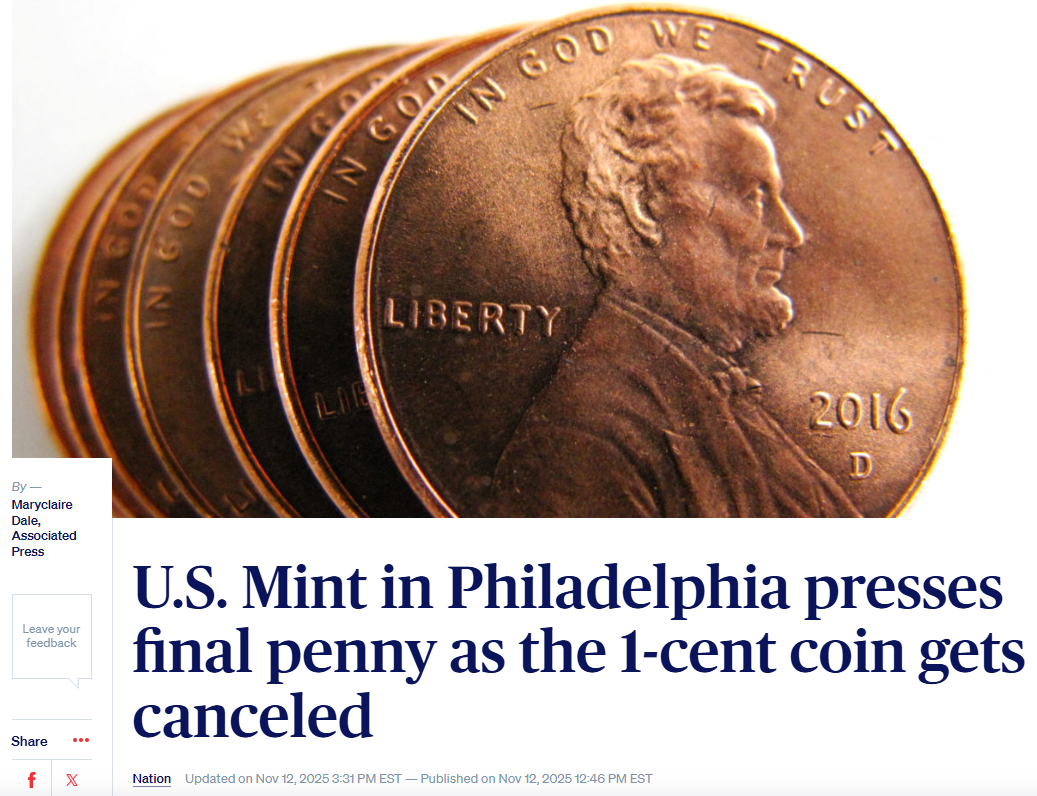
Ref: https://www.pbs.org/newshour/nation/u-s-mint-in-philadelphia-to-press-final-penny-as-the-1-cent-coin-gets-canceled

Personal Quest Update: The Beginning of the End for the Penny & World Button Battery Day

As I noted in a blog in 2012, I had advocated for removal of the penny due to frequent ingestions (starting more than 20 years ago) (link: “Watch for change in the stools”). Now it appears I will finally get my wish.

RP Jones, Reuters, 5/22/25: US Treasury unveils plan to end production of penny coin

An excerpt:

In recent weeks, Republican and Democratic lawmakers introduced separate bills in the House of Representatives and the Senate calling for an end to penny production. The change means that businesses will have to start rounding the prices of cash transactions up or down to the nearest five-cent nickel as the number of pennies in circulation dwindles.

The Treasury’s penny phase-out plan was first reported by the Wall Street Journal…The cost of producing the penny has risen from 1.3 cents per coin to 3.69 cents over the past 10 years, according to the Treasury. It said stopping production will lead to immediate annual savings of $56 million. The penny was first issued by the government in 1793

Related article:

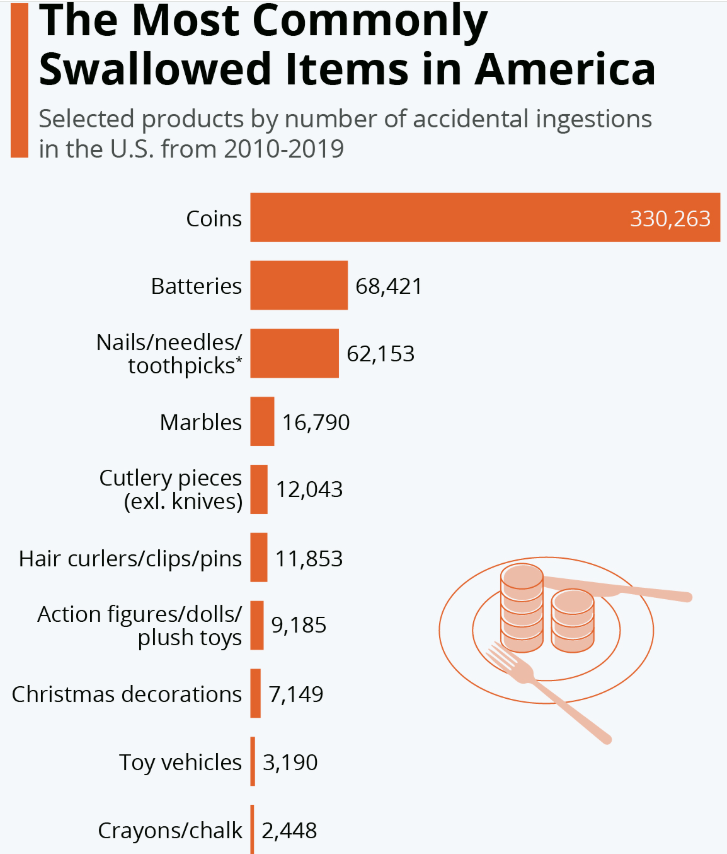
K Bucholtz, Statista 6/11/20: The Most Commonly Swallowed Objects in America

The following statistic will delight fans of obscure facts and overbearing bureaucracy: According to the U.S. Consumer Product Safety Commission, more than 850,000 accidental ingestions of everyday objects were recorded in the U.S. between 2010 and 2019. ..Coins topped the list of accidental ingestions, with around 33,000 being recorded each year (more might go unreported).

*According to the U.S. Consumer Product Safety Commission, 

My take: While this is a step in the right direction, there are still 114 billion pennies currently in circulation in the U.S. according to the Reuters article. Perhaps, other coins will be ingested less in the coming years too as so many business transactions are via smartphones and credit cards.


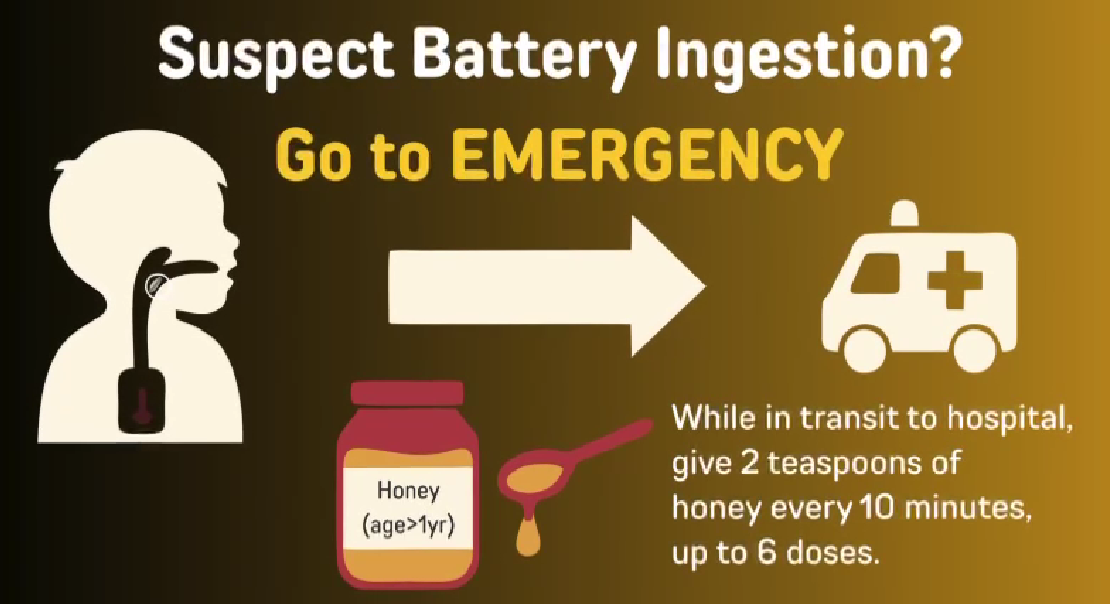
Button batteries are a much more serious ingestion than a coin. For World Button Battery Day, here’s a link to a 3 minute video from FISPGHAN. FISPGHAN Button Battery Video

The video provides a simple explanation of the problem though at times it is not certain who the target audience is. Particularly the first part feels like a video for kids rather than for parents. Thanks to Ben Gold for sharing this link.

Aso, Link: FISPGHAN Button Battery Website

Related blog posts: