Why Telehealth Will Not Solve Health Care Disparities: Liver Care Experience

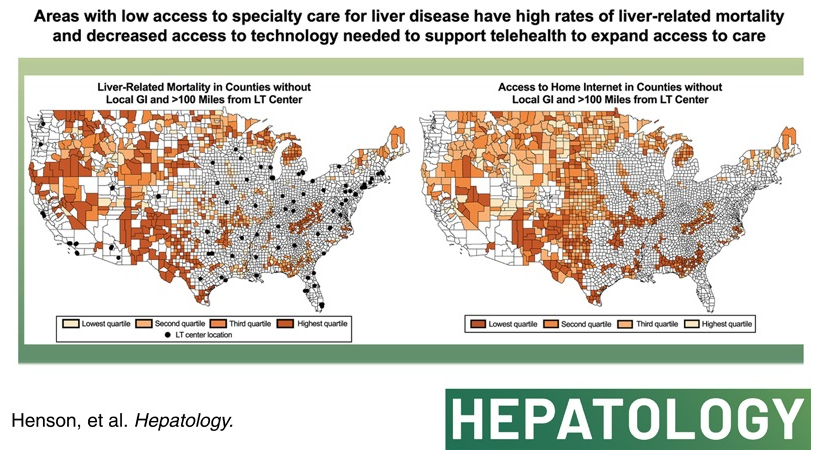
JB Henson et al. Hepatology 2023; 77: 176-185. Access to technology to support telehealth in areas without specialty care for liver disease

Key finding: Technology access was lowest in areas with low access to care and the highest burden of liver‐related mortality.

Editorial: S Wadhwani, JC Lai. Hepatology 2023; 77: 13-14. Open Access! The digital determinants of liver disease

An excerpt:

The authors found that counties with decreased access to gastroenterologists and liver transplant centers had increased county‐level liver‐related mortality. These counties tended to have residents who were more likely to be living in poverty, have lower educational attainment, have less access to primary care, and be living in a rural location. These same counties were less likely to have access to the high‐quality connectivity necessary to engage in telehealth appointments, demonstrating that telehealth in its current iteration will be unable to overcome health inequities in liver disease. For telehealth to be a viable solution to overcoming disparities in liver‐related mortality, the United States will need to tackle the “digital divide.”

My take: The same patients who have trouble seeing a liver specialist due to distance, transportation issues, and poverty are much less likely to have a good internet connection. Without this digital access, telehealth cannot help solve the disparity in care.

Related blog posts:

Summarizing the Plus and Minuses of Telemedicine

From The Doctor’s Company (an insurance company): Your Patient Is Logging on Now: The Risks and Benefits of Telehealth in the Future of Healthcare Thanks to John Pohl for sharing this link.

An excerpt:

Foreseeable Major Benefits

  • Increases access to care for most patients, including many patients in rural locations, patients who struggle to cover the peripheral costs of an in-person visit (transportation, childcare, time away from work, etc.), and patients with chronic conditions.
  • Enhances the ability to manage chronic conditions by making more frequent contact easier. This management is already supported by at-home devices that record blood pressure, blood sugar, and other essential data points.
  • Reduces infection risks, not just for COVID-19, but for post-op patients, patients who are immunosuppressed, etc.

Other benefits: Promotes patient satisfaction, and scheduling -fewer no shows

Foreseeable Major Risks

  • The remote exam’s inherent limitations mean physicians must know when to ask patients to come in to avoid missed diagnoses…[may be able to do] risk-stratifying patients with abdominal symptoms by, among other things, watching the patient jump up and down
  • Increases cyber liability, especially when providers are seeing patients from a variety of devices in a variety of locations.
  • Privacy issues come in high-tech forms: Is the video visit interface HIPAA compliant? And in low tech forms: Conversations may be interrupted by household members at either end.
  • Decreases access to care for some patients: … many communities do not have sufficient internet bandwidth; some patients are prevented by a language barrier or lack of technological savvy from accessing a telemedicine portal.
  • Reimbursement is uncertain: Pre-pandemic, “Low reimbursement for telehealth was viewed as a critical disincentive,” say the authors of an opinion piece in JAMA, because “Without payment, it would be difficult for clinicians to afford to provide the service, despite data from previous studies suggesting clinicians were broadly supportive about its use.”

Other drawbacks: Physician-patient relationship –glitches or delays in sound or video can impede the normal flow of conversation—a diagnostic risk, as well as a relational one.

Wired: When Health Care Moves Online, Many Patients Are Left Behind

Wired: When Health Care Moves Online, Many Patients Are Left Behind

An excerpt:
Amid the coronavirus pandemic, more of the nation’s medical care is being delivered by telephone or videoconference, as in-person care becomes a last resort for both doctors and patients. That’s a problem for tens of millions of Americans without smartphones or speedy home internet connections. For them, the digital divide is exacerbating preexisting disparities in access to health care…

Overall, as many as 157.3 million people in the US only have access to substandard download speeds. During the pandemic, roughly half of low-income American say they’re concerned about affording to pay their broadband and smartphone bills, according to April Pew Research data. In rural areas (where Pew figures suggest only 63 percent of residents have home broadband subscriptions), phone calls might be patients’ best option.

Related blog post: #NASPGHAN19 Impact of New Technology

#NASPGHAN19 Impact of New Technologies on Patient Health

Along with Ragh Varier, I had the privilege of moderating a session on new technologies on patient health.  Below I’ve included a few slides and some notes; my notes may have errors of omission or transcription.

Chicago


Dr. Mehta’s lecture focused on wearable health technologies. Key points:

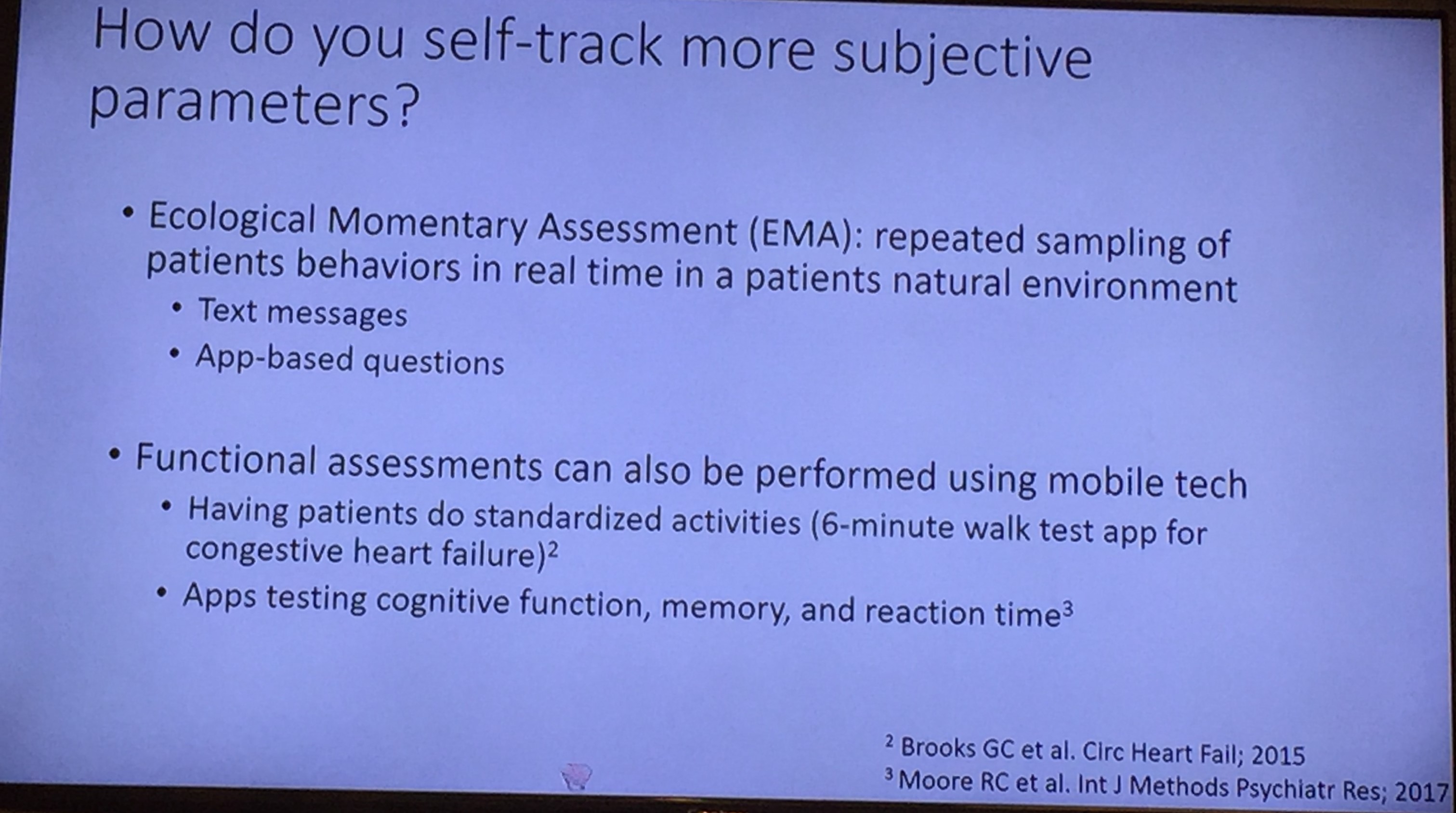
  • It is already in use in some areas (eg. continuous glucose monitoring for diabetes, ECG sensors).
  • She noted that wearable technology dates back to the 1600s with the abacus ring
  • Challenges: Accuracy, Actionability/outcome improvement, Reaching at-risk populations (not just the ‘worried well’ populations), regulation, sustainability (users may abandon quickly), and ethical/privacy concerns
  • Some families taking technology into their own hands, so to speak. #WeAreNotWaiting.  Example: artificial pancreas device system

Dr. Syed’s lecture focused on artificial intelligence in medical-decision making. Key points:

  • AI is already in use in areas like facial recognition
  • AI may be able to increase polyp detection rate in colonoscopy and improve histology reading
  • Her team has been working on using AI to help distinguishing enviromental enteropathy histology from other etiologies
  • Other potential uses: AI to help predict Crohn’s disease progression based on histology

Related study (not discussed in talk): Z Deng, H Shi et al. Gastroenterology 2019; 157: 1044-54. The authors collected more than 113 million images from 6970.  With a deep-learning algorithm, they found that video capsule endoscopy could have higher detection rates and improved reading time with a “CNN-based” reading system (CNN=convolutional neural network).  The mean reading time was reduced from 97 minutes with conventional reading to 6 minutes with CNN-based reading system.  The later had 99.88% sensitivity in per-patient analysis (vs. 74.57% with conventional reading).

The oral abstract presentation, by Sonja Swenson, detailed how machine learning was applied to try to improve transplantation selection/PELD scores.

  • The authors of this abstract (437) used data from 6273 patients with PELD scores and added additional variables to try to identify a more accurate model.
  • Link: All NASPGHAN 2019 Abstracts

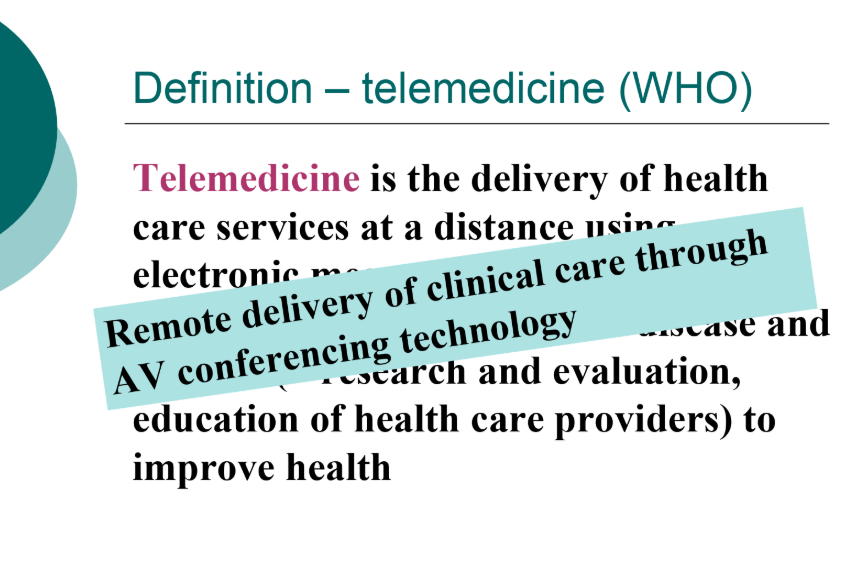
Dr. Li, known by some as the ’emperor of emesis,’ presented a lecture on telemedicine. His full slides: Telemedicine NASPGHAN Updated 2019 (B Li)

Key points:

  • When surveyed, patients/families prefer telemedicine over conventional medicine.  Key reason is convenience
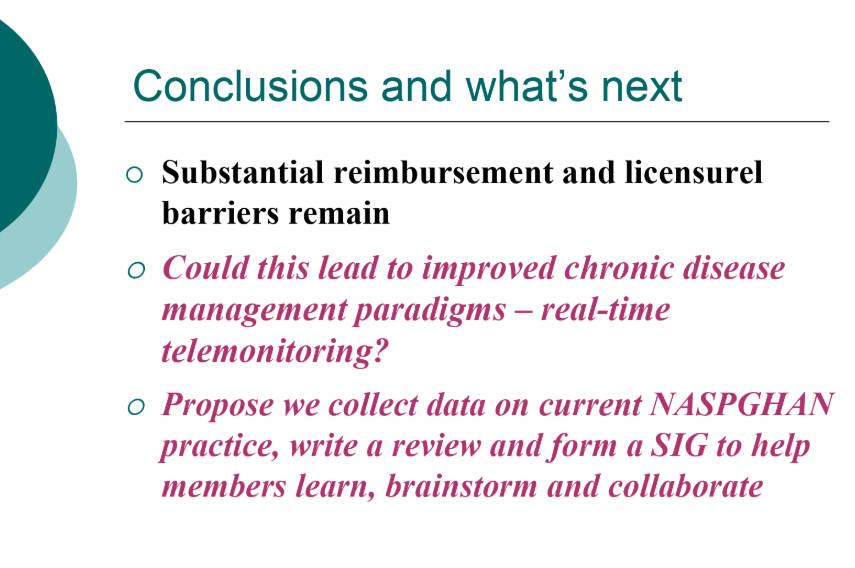
  • Lots of issues from health care provider viewpoint: reimbursement, licensing (improving), increased time
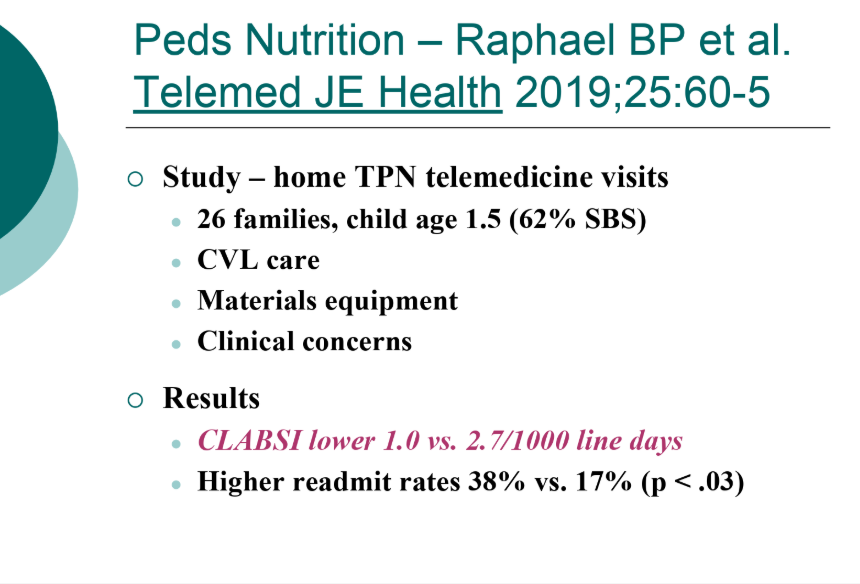
  • Many examples of telemedicine/telemonitoring that are ongoing
Disclaimer: NASPGHAN/gutsandgrowth assumes no responsibility for any use or operation of any method, product, instruction, concept or idea contained in the material herein or for any injury or damage to persons or property (whether products liability, negligence or otherwise) resulting from such use or operation. The discussion, views, and recommendations as to medical procedures, choice of drugs and drug dosages herein are the sole responsibility of the authors. Because of rapid advances in the medical sciences, the Society cautions that independent verification should be made of diagnosis and drug dosages. The reader is solely responsible for the conduct of any suggested test or procedure. Some of the slides reproduced in this syllabus contain animation in the power point version. This cannot be seen in the printed version.

 

Telemedicine -Still Not Popular

Several recent reports indicate that telemedicine is being adopted at a slow pace  –thanks to Ben Gold for these references.

AP: Telemedecine’s Challenge: Getting Patients to Click the App

An excerpt:

Widespread smartphone use, looser regulations and employer enthusiasm are helping to expand access to telemedicine, where patients interact with doctors and nurses from afar, often through a secure video connection…

Doctors have used telemedicine for years to monitor patients or reach those in remote locations. Now more employers are encouraging people covered under their health plans to seek care virtually for several reasons…

Telemedicine can reduce time spent away from the job, and it also can cost half the price of a doctor’s visit, which might top $100 for someone with a high-deductible plan…

Research firm IHS Markit estimates that telemedicine visits in the U.S. will soar from 23 million in 2017 to 105 million by 2022. But even then, they will probably amount to only about one out of every 10 doctor visits.

My take: Telemedicine can overcome geographical barriers. However, I worry about the person-to-person connection as this is hard even with face-to-face visits.

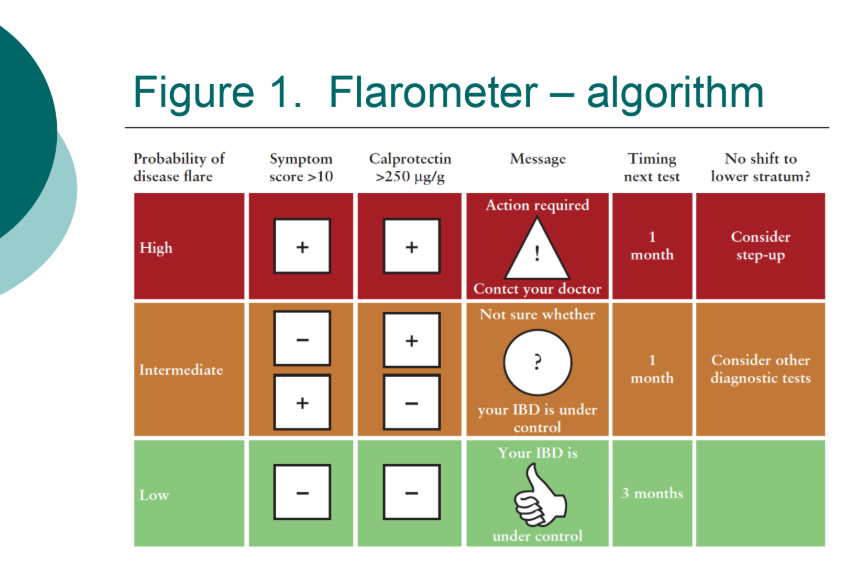
An unrelated article using telemedicine: IBD News Today: Remote Monitoring Offers Little Benefit to IBD Patient, Study Finds In this randomized study with 348 adult patients wtih IBD, telemedicine (in addition to clinic visits) did not improve patient confidence or management more than the control populaiton. 

Joshua Tree National Park