Unionization of Physicians, Pharmacists and Health Care Workers

NY Times 12/3/23: Why Doctors and Pharmacists Are in Revolt

The reasons for the recent labor actions appear straightforward. Doctors, nurses and pharmacists said they were being asked to do more as staffing dwindles, leading to exhaustion and anxiety about putting patients at risk…the explanation runs deeper: A longer-term consolidation of health care companies has left workers feeling powerless in big bureaucracies. They say the trend has left them with little room to exercise their professional judgment…

Professionals in a variety of fields have protested similar developments in recent years. Schoolteacherscollege instructors and journalists have gone on strike or unionized amid declining budgets and the rise of performance metrics that they feel are more suited to sales representatives than to guardians of certain norms and best practices.

But the trend is particularly pronounced in health care…Over time, however, consolidation and the rise of ever-larger health care corporations left workers with less influence…

Many health systems had increased tensions with doctors and nurses by failing to involve them more in developing and putting in place the system of metrics on which they are judged…

The breaking point came when the height of the pandemic passed, but conditions barely improved, according to many workers…

During an interview in October, while Dr. Smith [a pharmacist] and his colleagues were still awaiting the company’s response, he made clear that his patience had run out. “I’ve been asking and asking and asking for improvements for years,” he said. “Now we’re not asking any more — we’re demanding it.”

Related blog posts:

Pink Street in Lisbon

Do Health Care Workers Need Peace Agreements?

I have not paid close attention to the movement to unionize health care workers in the U.S. As such, I learned a few things in this past weekend NY Times article: Doctors and Nurses Shouldn’t Have to Strike (online version titled “When Health Care Workers Are Protected, Patients Are, Too”)

Excerpts:

Since the pandemic began, the health care work force — the country’s largest industry by employment — has shrunk by nearly 2 percent… Now, with astronomical turnover and rising demand as patients seek care that they may have put off during the height of the pandemic, hospitals, clinics, nursing homes and home care agencies across the country lack sufficient staff members to adequately care for patients…

Most hospitals might be private companies in their formal legal identity, but the reality is that government has shaped the health care system every step of the way of its modern existence…

Unionized health care workers all over the country are fighting back against untenable conditions in the health care industry, and they are often met with harsh treatment by employers for doing so…

Peace agreements are popular with unions because they help prevent the type of devastating reprisals that drive many workers out of their jobs, but employers often refuse to accept them…

By giving weight to workers’ on-the-job needs, while eliminating strikes, labor peace policies in health care facilities benefit patients because they give workers more power to manage their work environments. They also make establishing unions easier for workers, and data suggests that unionization in health care improves patient care.

My take: In our hospital system, recent staffing shortages have forced the hospital to close a significant number of intensive care unit beds. This will inevitably lead to postponement or cancellation (often at last minute) of needed surgical procedures (that often require availability of an ICU bed). The fix for some of the ills in our hospital system is going to be difficult. Adequate staffing with highly-trained health care workers needs to be the top priority.

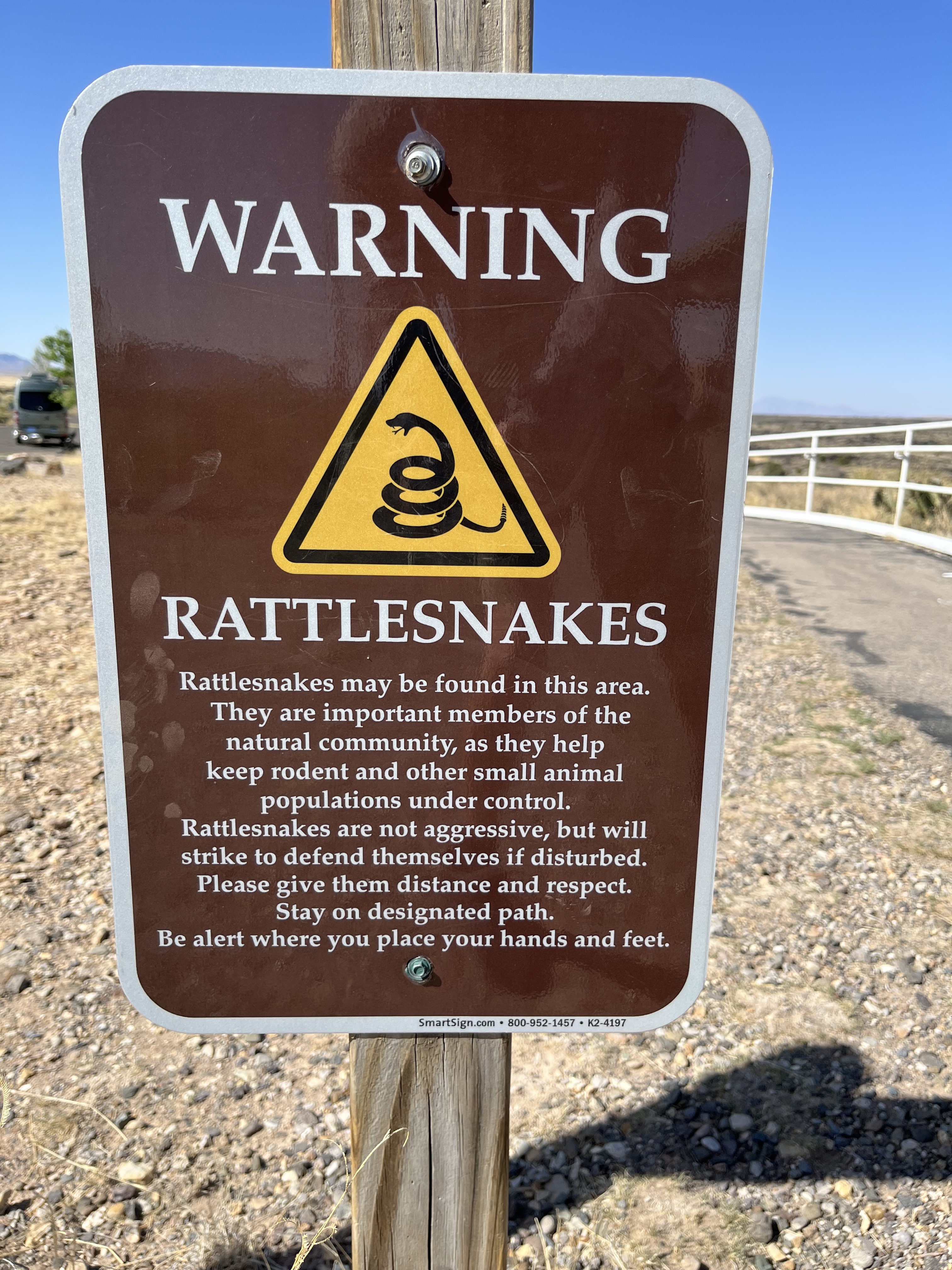
Another sign that helps keep folks on the designated walking areas
–this one was at the Valley of Fires State Park, NM

What Doctors Could Do Together (Organized)

A recent commentary (recommended by one of my sons) by Eric Topol discusses how doctors could be organized to advance the practice of medicine, address the deterioration in doctor-patient relationships, and focus on the needs of patients, whereas current medical organizations are mainly focused on the business interests of medical practice.

An excerpt from Why Doctors Should Organize:

“It’s possible to imagine a new organization of doctors that has nothing to do with the business of medicine and everything to do with promoting the health of patients and adroitly confronting the transformational challenges that lie ahead for the medical profession. Such an organization wouldn’t be a trade guild protecting the interests of doctors. It would be a doctors’ organization devoted to patients. Its top priority might be restoring the human factor—the essence of medicine—which has slipped away, taking with it the patient-doctor relationship. It might oppose anti-vaxxers; challenge drug pricing and direct-to-consumer advertisements; denounce predatory, unregulated stem-cell clinics; promote awareness of the health hazards of climate change; and call out the false health claims for products advocated by celebrities such as Gwyneth Paltrow and Mehmet Oz. This partial list provides a sense of how many momentous matters have been left unaddressed by the medical profession as a whole…

Because of the unique technological moment at which we live, we may not see an opportunity like this one for generations to come. We have a chance to affect the future of medicine; to advocate for patient interests; to restore the time doctors need to think, to listen, to establish trust, and build bonds, one encounter at a time. For these purposes, and in these times, an organization of all doctors is necessary. Rebuilding our relationships with our patients: that is our lane.

“Pistol Butt” Pine. Tree takes on this shape due to heavy snowfall leaning on tree at early stage. Crater Lake, Oregon.