
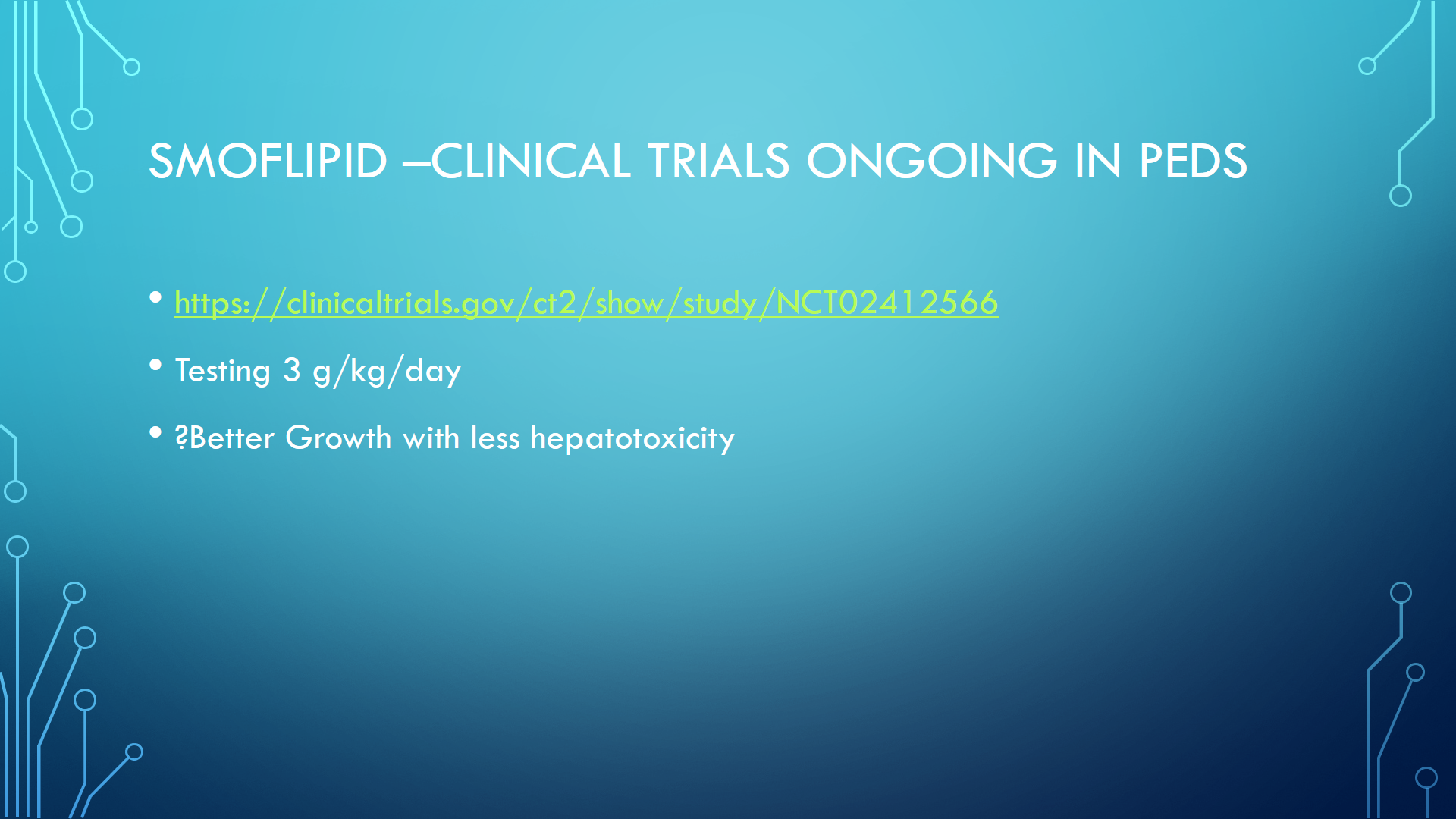
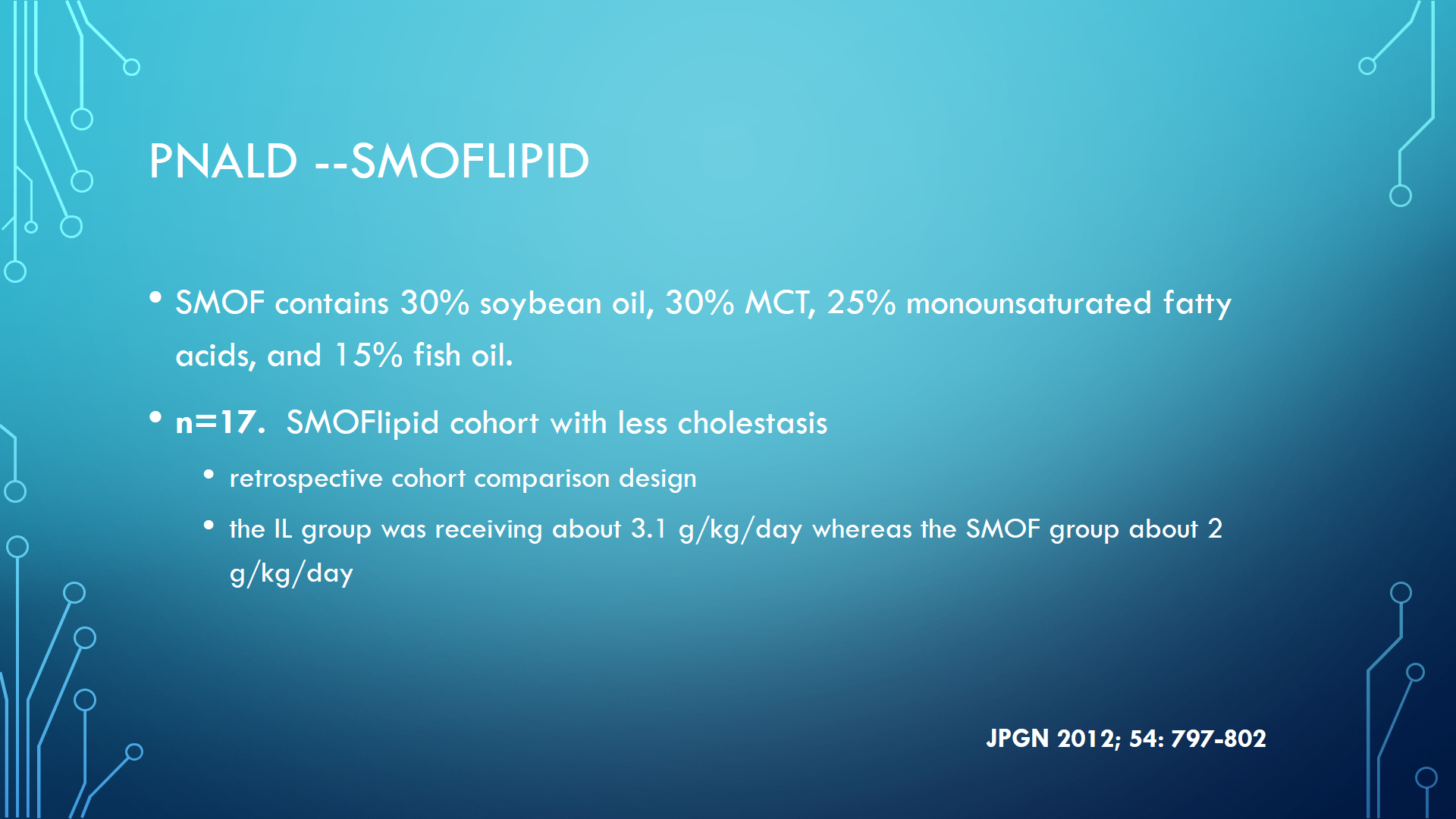
With newer lipid emulsions, there is the potential to give more lipids and have less liver injury. A recent report by Diamond et al (JPEN J Parenter Enteral Nutr. 2016 Feb 2. pii: 014860711562692) provides some of the best data for the use of SMOFlipid in infants: Preventing the Progression of Intestinal Failure-Associated Liver Disease in Infants Using a Composite Lipid Emulsion: A Pilot Randomized Controlled Trial of SMOFlipid.
Here’s the abstract: and afterwards some slides from a recent lecture that I gave regarding parenteral nutrition associated liver disease (and intestinal failure associated liver disease):
BACKGROUND:
To examine whether SMOFlipid prevents progression of intestinal failure-associated liver disease (IFALD) in parenteral nutrition (PN)-dependent infants with early IFALD (conjugated bilirubin 17-50 µmol/L, 1-3 mg/dL).
STUDY DESIGN:
Pilot multicenter blinded randomized controlled trial comparing SMOFlipid with Intralipid. Patients received the trial lipid for up to 12 weeks, unless they achieved full enteral tolerance sooner. The primary clinical outcome was the serum conjugated bilirubin.
RESULTS:
Twenty-four infants (mean age, 6 weeks) participated in the trial (13 Intralipid and 11 SMOFlipid). At the time of trial enrollment, patients in both groups were receiving 90% of their calories by PN. Mean duration on trial was 8 weeks and did not differ according to treatment (P = .99). At trial conclusion, patients who received SMOFlipid had a lower conjugated bilirubin than those who received Intralipid (mean difference, -59 µmol/L; P = .03). Patients receiving SMOFlipid were also more likely to have a decrease in serum conjugated bilirubin to 0 µmol/L than those in the Intralipid group over the entire observation period (hazard ratio, 10.6; 95%; P = .03). The time to achievement of full enteral tolerance did not differ statistically (hazard ratio, 1.3; P = .59) between the groups. There was no significant difference in safety outcomes between the groups.
CONCLUSIONS:
Compared with Intralipid, SMOFlipid reduces the risk of progressive IFALD in children with intestinal failure. This trial was registered at clinicaltrials.gov as NCT00793195.
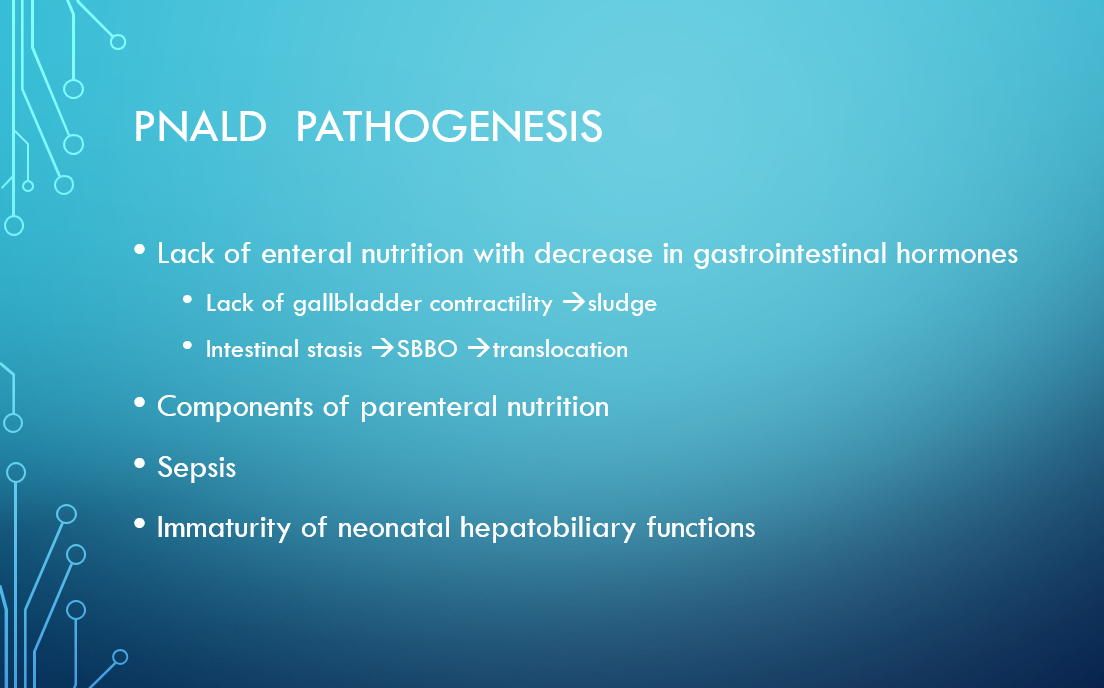
Here are a few more slides from my recent lecture on PNALD/IFALD:
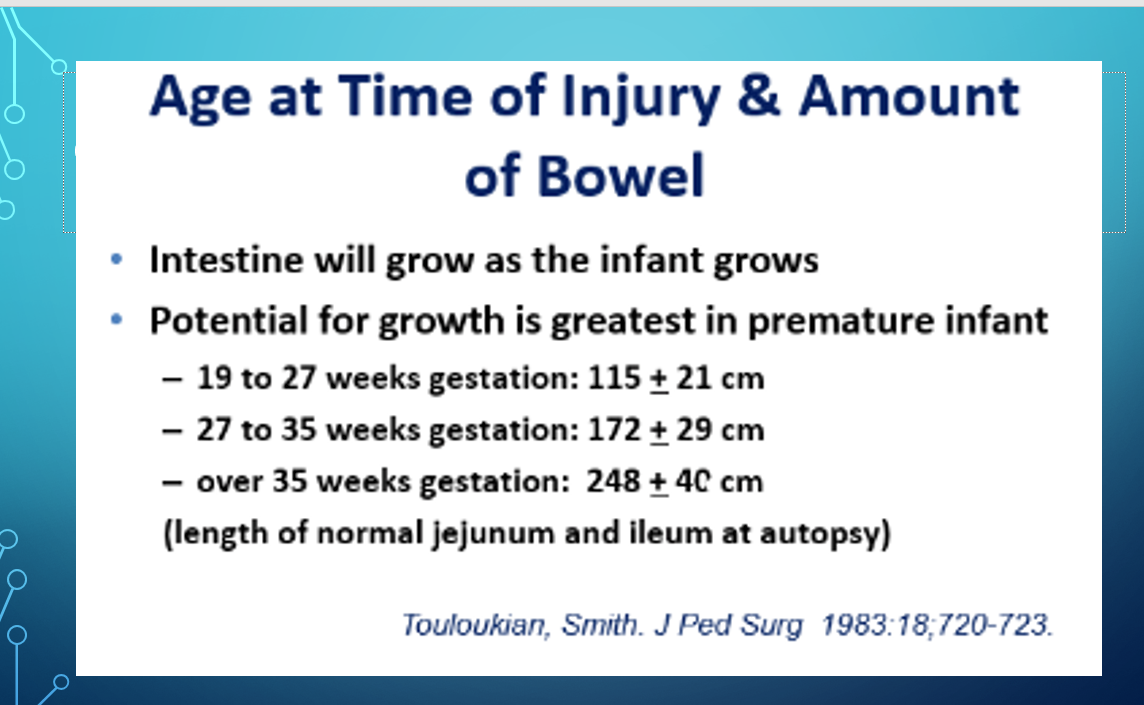
The above slide was borrowed from a talk by Dr. Conrad Cole on short bowel syndrome (available online via the Pediatric Nutritionist blog).
Related blog posts:
- Neonatal Nutrition Lecture -What We Know Right Now …
- Improving Outlook in Neonatal Nutrition (Part 1)
- Current Mortality from Being Born Premature | gutsandgrowth
- Visual Acuity and LCPUFA | gutsandgrowth
- Weight Gain in Preemies, Neurodevelopmental Outcomes, and Reverse Causation
- New lipid emulsions — lacking data to support usage | gutsandgrowth
- Long-chain polyunsaturated fatty acids, breastmilk… | gutsandgrowth
- Low levels of LCPUFA in Premature Infants Associated with Intravenous Lipids
- Optimizing lipids to minimize cholestasis
 gutsandgrowth
Pingback: Favorable Fish Oil Outcomes in High Risk Preterm Infants | gutsandgrowth
Pingback: SMOFlipid vs. Intralipid for Intestinal Failure Patients | gutsandgrowth
Pingback: Neurocognitive Function with Pediatric Intestinal Failure | gutsandgrowth
Pingback: Does SMOFlipid Improve Neurocognitive Outcomes? | gutsandgrowth
Pingback: Parenteral Nutrition: “The Scar Remains” | gutsandgrowth