
A concise and useful review of nonalcoholic steatohepatitis (NASH): AM Diehl, C Day. NEJM 2017; 377: 2063-72
A couple points:
- About 25% of adults have fatty livers in the absence of excessive alcohol consumption
- NASH is strongly associated with obesity/overweight which occur in >80% of patients
- NASH comorbidities in adults: 72% with dyslipidemia, 44% with type 2 diabetes mellitus
- In a typical patient with NASH, liver fibrosis progresses “at a rate of approximately one stage per decade, suggesting that F2 fibrosis will progress to cirrhosis within 20 years.” However, there is considerable variability.
- It is expected that NASH will be the leading reason for liver transplantation by 2020.
- Cirrhosis related to NASH increases the risk of hepatocellular carcinoma with this occuring in 1-2% per year of patients with cirrhosis.
- NASH is estimated to cost >$100 billion currently in annual direct medical costs
- Staging of NASH and differentiation from isoloated steatosis identifies those at high risk for sequelae.
- In Table 2, the authors list more than 10 pharmacologic agents in phase 2/3 studies
Current lifestyle treatment recommendations (for adults):
- Lose 7% of body weight if overweight or obese
- Limit consumption of fructose-enriched beverages
- Limit consumption of alcohol (no more than 1 drink/day for women and 2 drinks/day for men)
- Drink two or more cups of caffeinated coffee daily
Related blog entries:
- Pediatric NAFLD Guidelines
- NASH: What Helps Beyond Weight Loss?
- 12 year Data: Pros and Cons with Bariatric Surgery
- Concise Review: Fatty Liver in Pediatrics
- Ultrasound Unreliable to Exclude Fatty Liver
- Fatty Liver Disease improved with Exercise
- When Will MRI Obviate the Need for a Liver Biopsy in … – gutsandgrowth
- A liver disease tsunami
- Reaching Consensus on Bariatric Intervention in Children and Adolescents | gutsandgrowth
- Bariatric Surgery and Reversal of NASH | gutsandgrowth
- Eliminating sweetened beverages to help obesity | gutsandgrowth
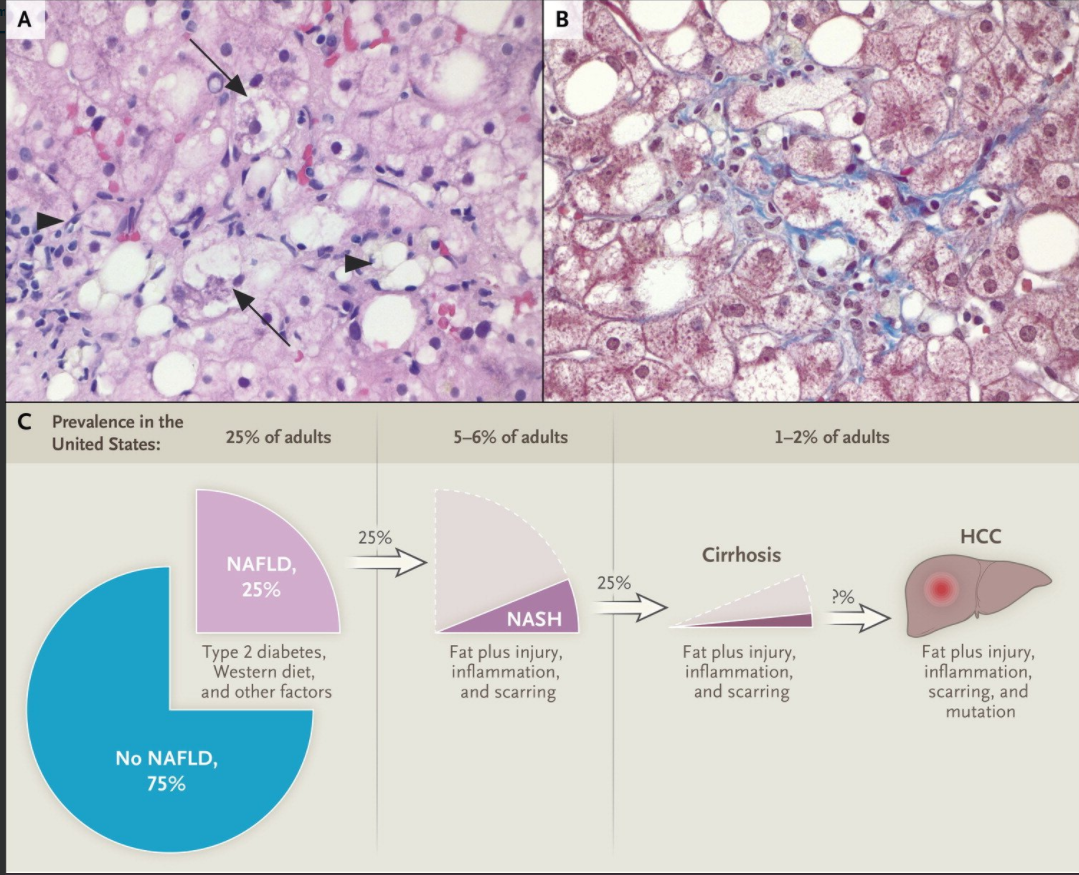
Panels A & B show typical histologic findings: ballooned hepatocytes (arrows), inflammatory infiltrates (arrowheads), and fibrosis Panel C shows the relative distribution of NASH, cirrhosis, and hepatocellular carcinoma in U.S. Adults.
 gutsandgrowth