
DA Carlson et al. Gastroenterol 2023; 165: 552-563. Open Access! A PhysioMechanical Model of Esophageal Function in Eosinophilic Esophagitis
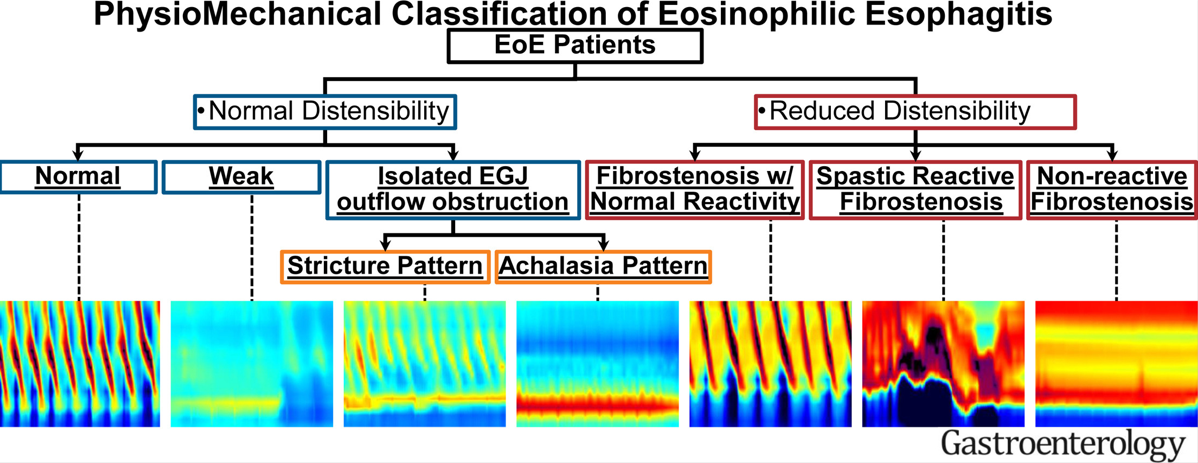
215 adults with EoE who completed FLIP during endoscopy were included in a cross-sectional study. FLIP helped separate the physiomechanical properties of esophageal function in this cohort. The criteria used to define the PhysioMechanical classification in EoE with a representative FLIP panometry image for each classification. Normal compliance was defined as a DP >17 mm and body compliance >450 mm3/mm Hg; reduced compliance (fibrostenosis) was defined by DP ≤17 mm or compliance ≤450 mm3/mm Hg. Normal EGJ opening was defined as a maximum EGJ diameter ≥16 mm; reduced as maximum EGJ diameter <16 mm. ∗Spastic-reactive contractile response (SRCR) with normal body distensibility and normal EGJ opening was assigned as “achalasia pattern” (n = 1 in this cohort).
Key findings:
- FLIP was normal in 50 (23%), weak pattern in 7 (3%), IsoEGJOO stricture pattern in 27 (13%), IsoEGJOO achalasia pattern in 26 (12%), Fibrostenosis with normal reactivity in 61 (28%), spastic reactive fibrostenosis with normal reactivity in 30 (14%), and noreactive fibrostenosis in 14 (7%)
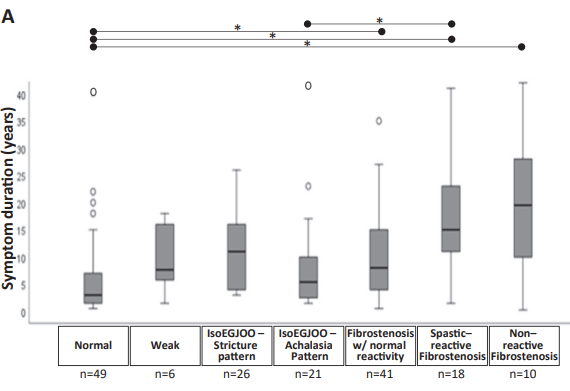
My take: FLIP testing helps define the mechanism of esophageal dysfunction in patients with EoE. Longer duration of symptoms was associated with more severe esophageal dysfunction.
Related blog posts:
- Practical Guide to Dietary Therapy for Eosinophilic Esophagitis
- Shorts: Hep E in Urine, Genetics in Autoimmune Enteropathy, EndoFlip Findings in EoE
- “Tug” Sign For Eosinophilic Esophagitis and EoE Bowel Sounds Tips
- Eat More Chicken? (for EoE)
- Long-Term Treatment of Eosinophilic Esophagitis with Budesonide
- Using FLIP
- Dupilumab: FDA Approval for Eosinophilic Esophagitis
- Expecting Change in Eosinophilic Esophagitis Treatment
- 4-14-4 Rule: More Biopsies Recommended for EoE
- Too Good To Be True: Two Lessons For Eosinophilic Esophagitis
- Eosinophilic Guidelines (AGA)
- Eosinophilic Esophagitis -FAQs
- EoE Update 2018 (Dr. Seth Marcus)
- Eosinophilic Esophagitis -Up to Date Dietary Management Review
 gutsandgrowth