
P Hartmann et al. Hepatology 2023; 78: 1168-1181. Open Access! Global and national prevalence of nonalcoholic fatty liver disease in adolescents: An analysis of the global burden of disease study 2019
The authors analyzed data from the Global Burden of Disease Study 2019 to compare global, continental, and national prevalence rates of adolescent (15-19 yrs of age) NAFLD.
Key finding:
- The global NAFLD prevalence in adolescents increased from 3.73% in 1990 to 4.71% in 2019 (a relative increase of 26.27%). NAFLD is now termed metabolic dysfunction-associated steatotic liver disease (MASLD).
- High body mass index and not type 2 diabetes mellitus correlated with NAFLD prevalence in adolescents globally.
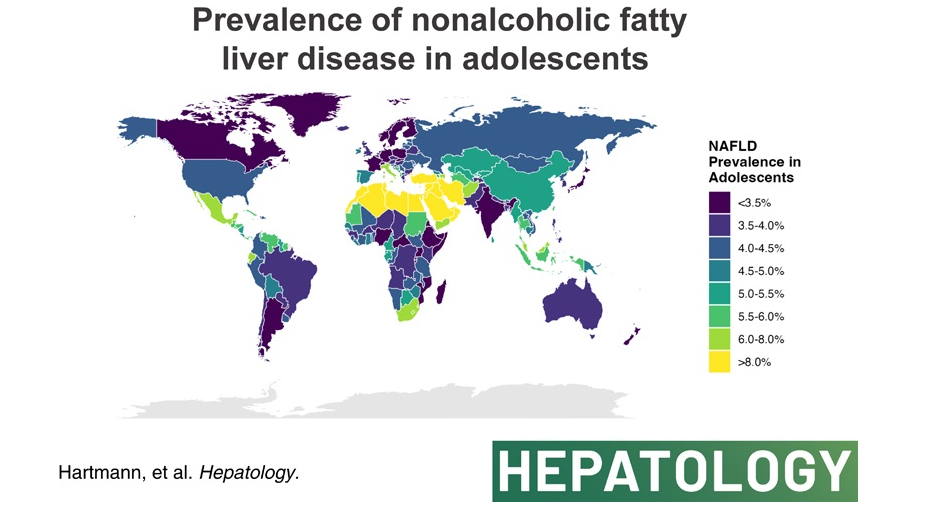
In the associated editorial (S Xanthakos, Hepatology 78(4):p 1017-1019, October 2023, Rising tide of NAFLD in youth: A warning bell and call to action), some of the key points:
- “The Global Burden of Disease (GBD) Study is the most comprehensive and long-standing effort to systematically and scientifically collate data on hundreds of diseases and injuries across the globe, including related clinical outcomes. Beginning in 1990, the GBD Study initially collected data on 106 conditions and 10 risk factors, across 5 age groups.1 Over time, the GBD Study has expanded through serial iterations to involve >9000 international researchers collecting data on 369 diseases and injuries across 204 countries and territories in the most recent 2019 report.1“
- ” From the GBD Study, we learned that NAFLD is the most rapidly rising cause of chronic liver disease in adolescents and adults,2 and the fastest-growing contributor to cirrhosis, liver cancer, and liver-related deaths globally.”
- “The global prevalence of NAFLD in adolescents shows no sign of abating, rather has continued to increase steadily from 3.7% in 1990 to 4.7% in 2019.”
- “As with all epidemiological research, the GBD study faces the primary limitation of relying on data sources that employ varying and less accurate measures of NAFLD prevalence (alanine aminotransferase and/or ultrasound primarily). However, the rigorous methodological approach employed by the GBD including frequent assessment of face validity, and the tremendous input of data sources (>80,000 in 2019) nonetheless results in the most comprehensive global data set available.”
My take (borrowed from editorial): Without intervention, “the increase in adolescent NAFLD certainly portends a future increase in NAFLD-related cirrhosis and liver-related deaths in young adults in the coming decades, and a likely escalation in cardiovascular and diabetes-related morbidity.
Related blog posts:
- Sad Truth: Job Security in Hepatology
- You No Longer Have Fatty Liver Disease-You Have Steatotic Liver Disease!
- How Often Do Children with Obesity Have a Fatty Liver?
- Briefly Noted: Progression of Fatty Liver Disease on MRI
- Pediatric Fatty Liver Disease Study: New York City
- Pediatric NAFLD: You Don’t Have to be Obese/Overweight to Have Fatty Liver Disease (but it helps)
- ACG Review (Zobair Younassi, MD): NAFLD and NASH
- Ethnicity and Fatty Liver Disease
- Childhood Obesity and Consensus Recommendations
- Bad Fatty Liver Disease Can Get Worse Quickly
- A liver disease tsunami
- How Much Testing Is Needed In Children with Suspected Fatty Liver?
 gutsandgrowth