
Recently, Sheila McBrayer SLP gave our group a terrific update on swallow dysfunction and swallow studies in infants. She is a nationally-certified speech-language pathologist with more than 20 years of experience at Children’s Healthcare of Atlanta. She has led initiatives in advanced swallowing assessment, worked to standardize instrumental swallowing assessments across the hospital campuses, and presented at regional and national conferences on NICU feeding topics. My notes below may contain errors in transcription and in omission. Along with my notes, I have included many of her slides.

Key points:
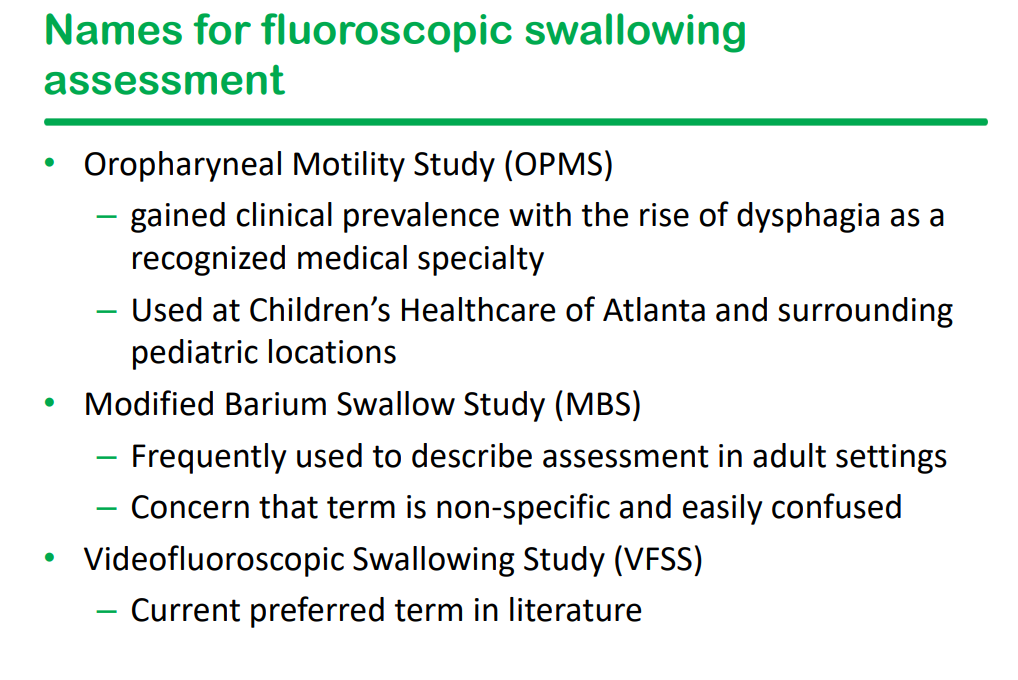
- Video fluoroscopic swallow study )VFSS) is preferred nomenclature over modified barium swallow (MBS) or oral pharyngeal motility study (OPMS)
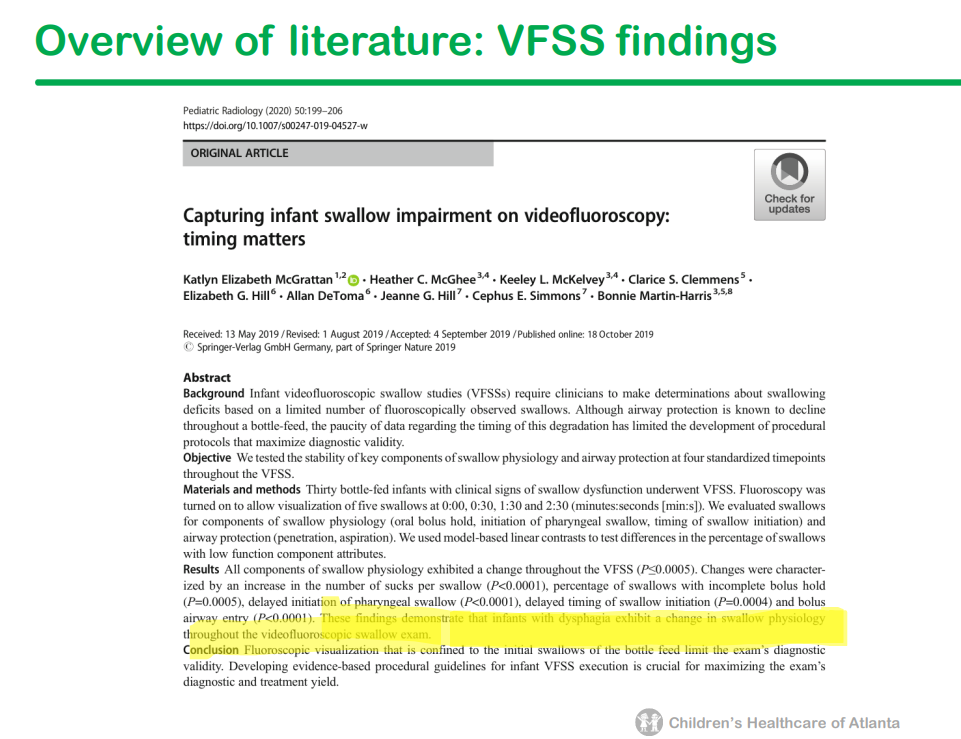
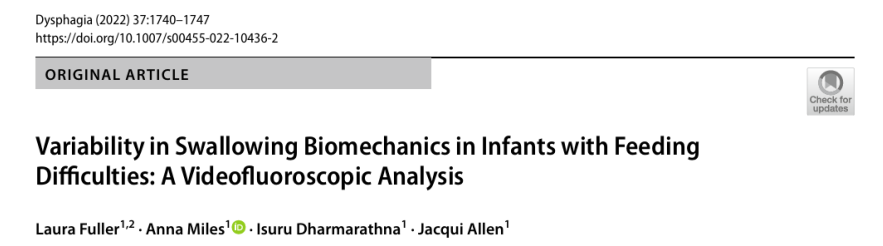
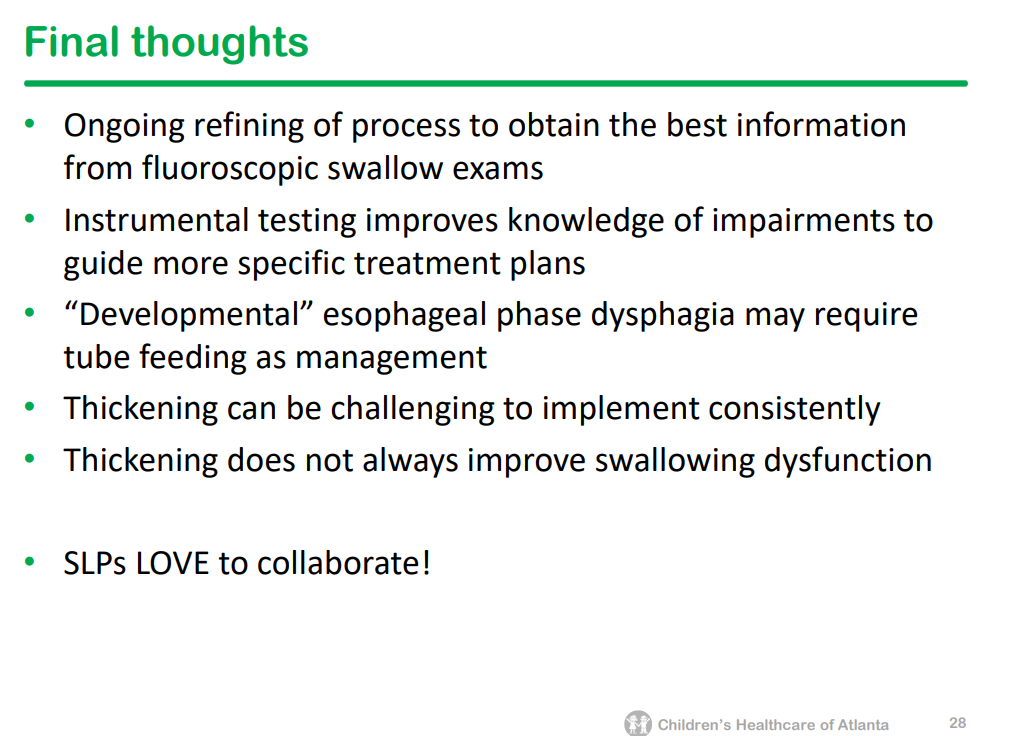
- Study duration is important. Watch swallow for 2:30 minutes if feasible (KE McGrattan, et al Ped Radiology 2020; 50: 199-206)
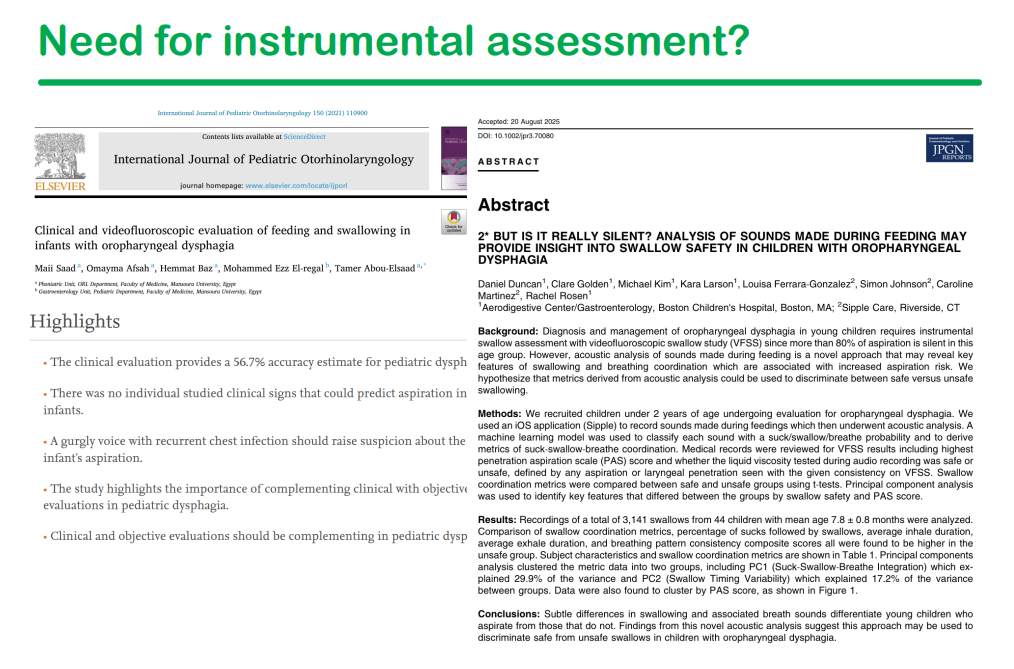
- Clinical evaluation accurately identifies aspiration in 56.7% in one study (may be better in a lower risk population). Thus, if concerned about aspiration, an objective study (e.g. VFSS) is needed
- Analysis of sounds during feeding may provide insight into risk of aspiration
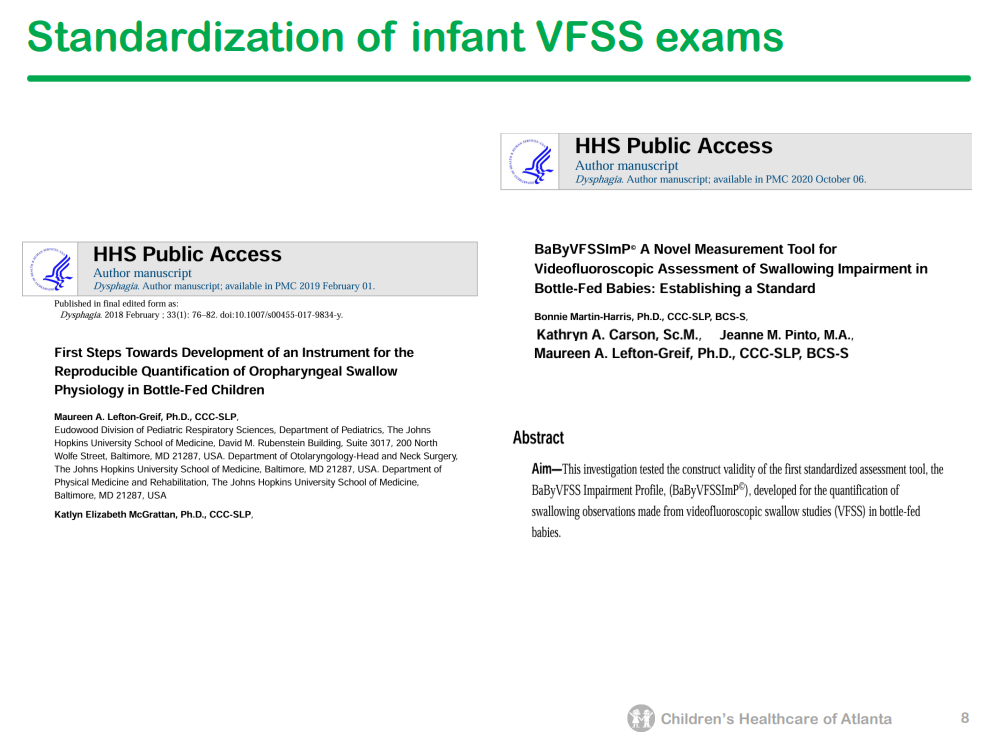
- Ongoing efforts to standardize evaluation protocol. BaByVFSSimP tool (for bottle feeding)
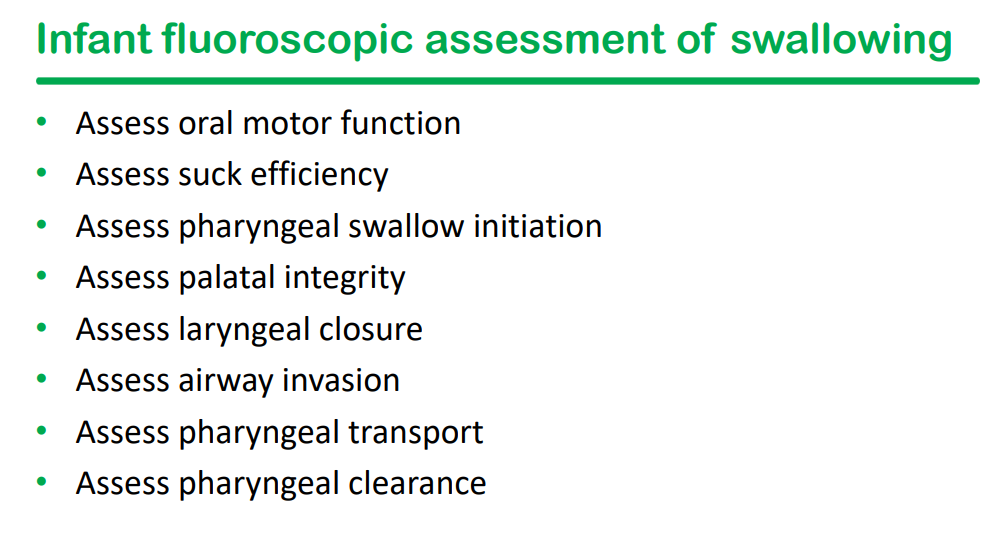
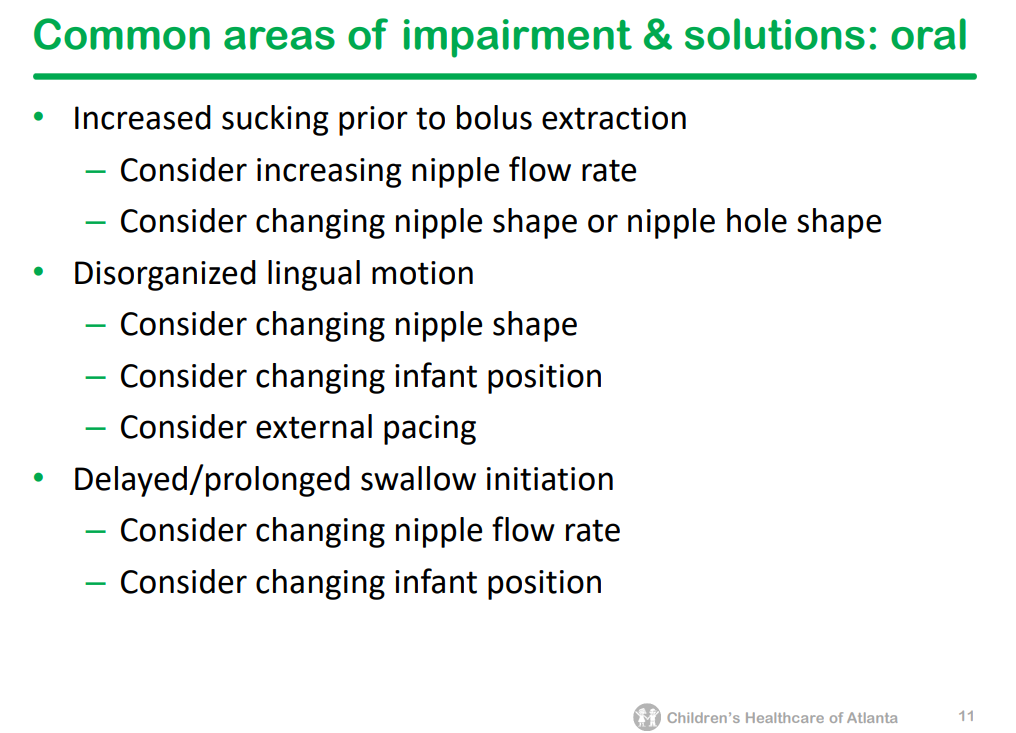
- Common impairments: increased sucking prior to bolus movement, disorganized lingual motion, late/incomplete laryngeal closure, disorganized or decreased pharyngeal transport, esophageal retention, and suck-swallow ratio variability
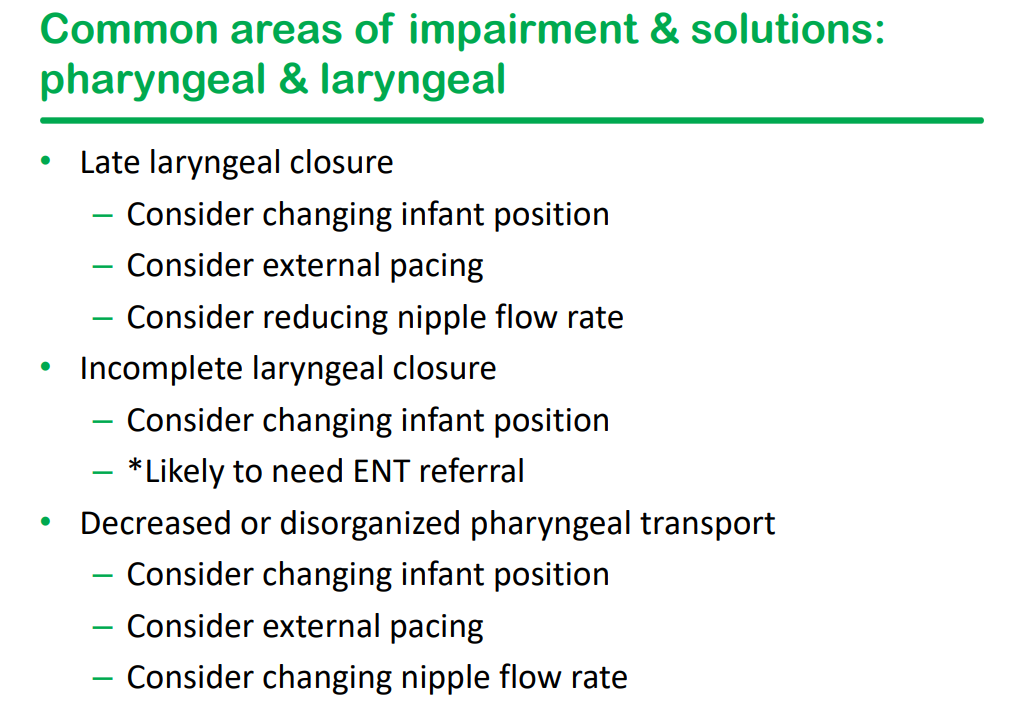
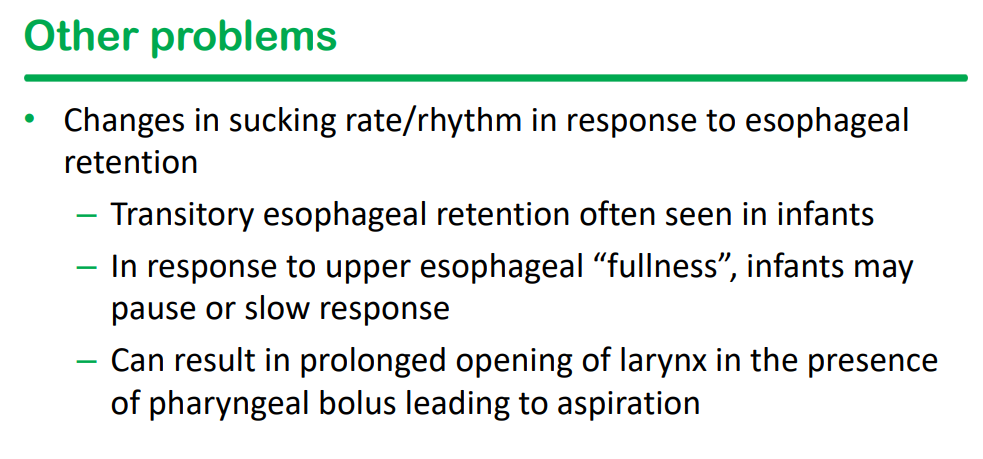
- If unilateral cord dysfunction, feed infant with position to allow the better functioning vocal cord to be lower
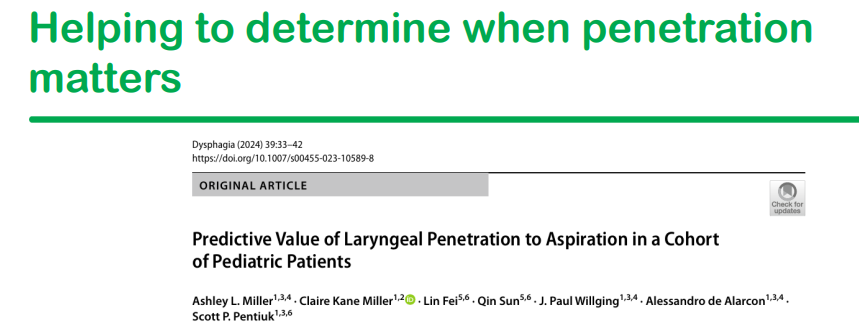
- When to care about penetration: deeper (e.g. touching vocal folds) and more frequent penetration. Deeper penetration should be considered as similar risk as aspiration on swallow study
- Review article is a useful reference: R Kamity et al. Children (Basel). 2021 Dec 8;8(12):1158. DOI: 10.3390/children8121158. Open Access! Feeding Problems and Long-Term Outcomes in Preterm Infants-A Systematic Approach to Evaluation and Management
- Thickeners: Gelmix, cereal and purees. Gelmix is suitable to mix with breastmilk. Rice cereal is generally more consistent as a thickener compared to oatmeal cereal
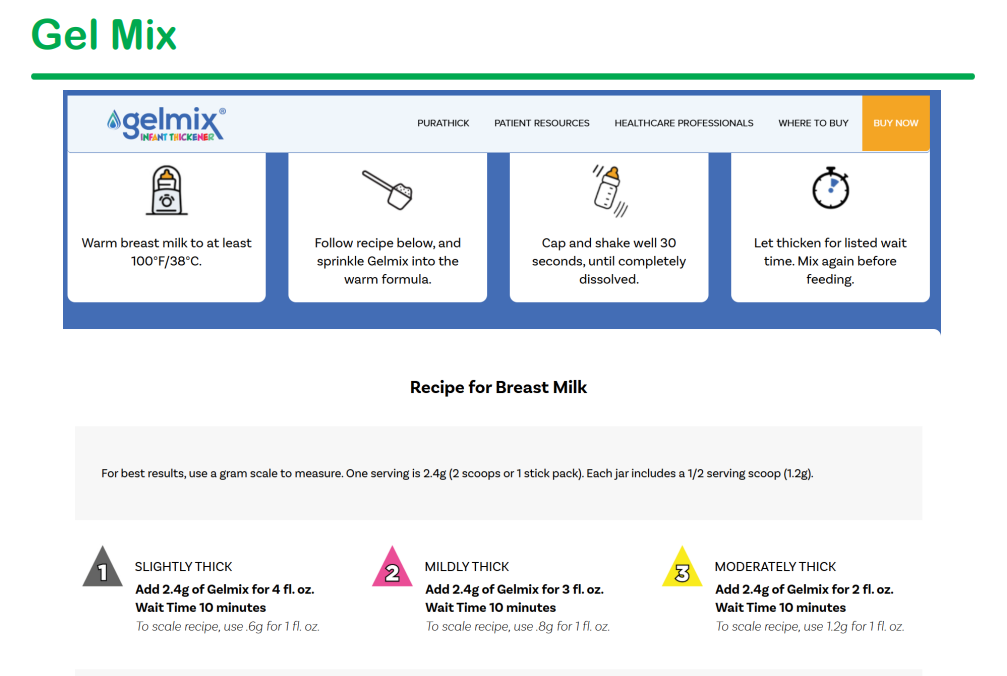
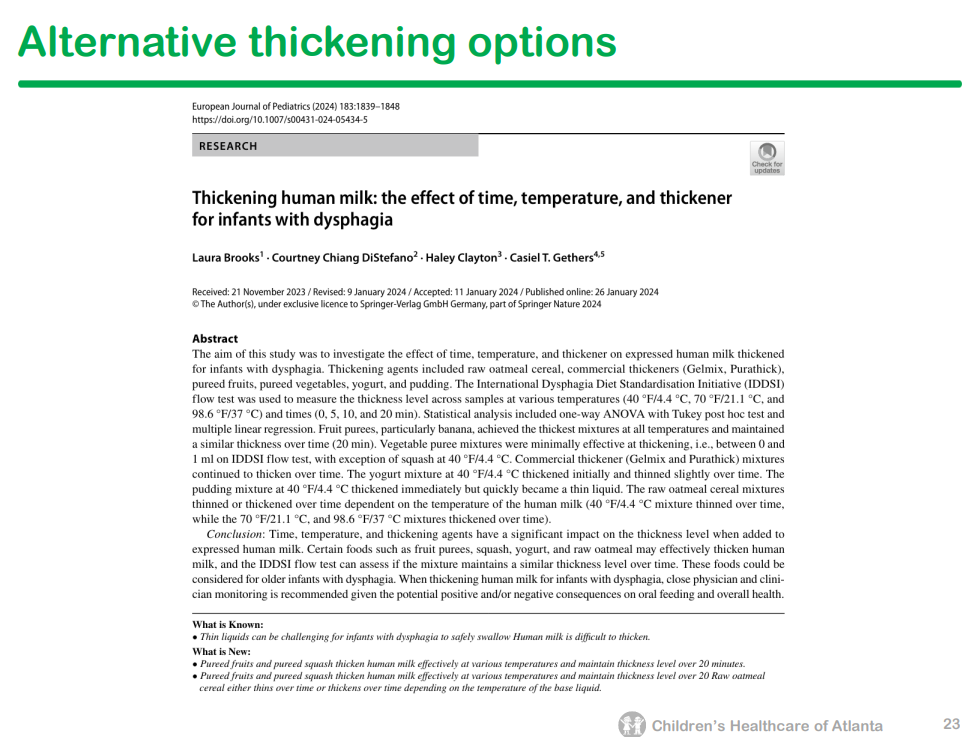
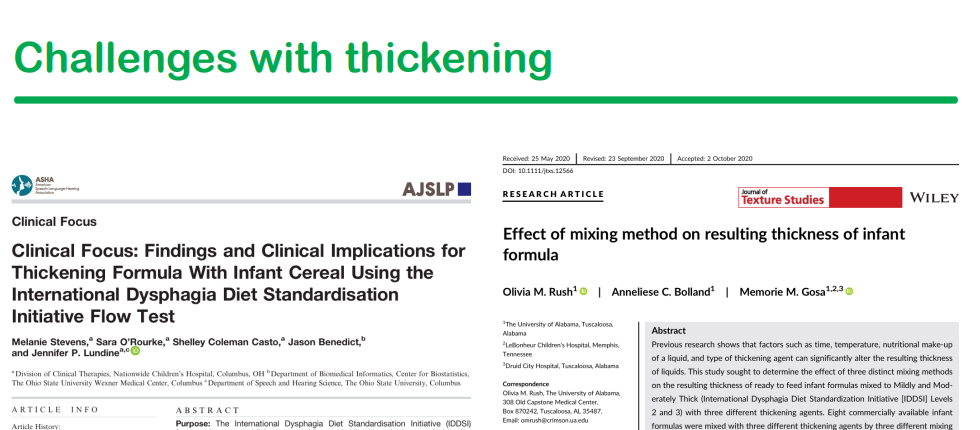
- Thickening feeds can be difficult
Related blog posts:
- When Is It OK To Ignore Laryngeal Penetration?
- NASPGHAN Dysphagia Webinar: Dr. Khalil El-Chammas, Dr. Peter Osgood, and Dr. Jose Garza
- BRUEs in Boston –Two Punch Study (2024)
- Acid Suppression for Laryngomalacia -Handed This Article to My ENT Colleagues
- Clinical Evaluation Not Sensitive for Aspiration
- Something Useful for Apparent Life-Threatening Events (ALTEs)
- Which kids who aspirate need a gastrostomy tube?
- Can We Ignore Laryngeal Penetration?
- Blaming Reflux for BRUEs -Not Changing Despite Guideline Recommendations (2019)
- Arching in Infants Not Due to Reflux
- Incredible Review of GERD, BRUE, Aspiration, and Gastroparesis (2023)
Disclaimer: This blog, gutsandgrowth, assumes no responsibility for any use or operation of any method, product, instruction, concept or idea contained in the material herein or for any injury or damage to persons or property (whether products liability, negligence or otherwise) resulting from such use or operation. These blog posts are for educational purposes only. Specific dosing of medications (along with potential adverse effects) should be confirmed by prescribing physician. Because of rapid advances in the medical sciences, the gutsandgrowth blog cautions that independent verification should be made of diagnosis and drug dosages. The reader is solely responsible for the conduct of any suggested test or procedure. This content is not a substitute for medical advice, diagnosis or treatment provided by a qualified healthcare provider. Always seek the advice of your physician or other qualified health provider with any questions you may have regarding a condition

