Sheila McBrayer: Swallow Dysfunction and Swallow Evaluation in Infants

Recently, Sheila McBrayer SLP gave our group a terrific update on swallow dysfunction and swallow studies in infants. She is a nationally-certified speech-language pathologist with more than 20 years of experience at Children’s Healthcare of Atlanta. She has led initiatives in advanced swallowing assessment, worked to standardize instrumental swallowing assessments across the hospital campuses, and presented at regional and national conferences on NICU feeding topics. My notes below may contain errors in transcription and in omission. Along with my notes, I have included many of her slides.

Key points:

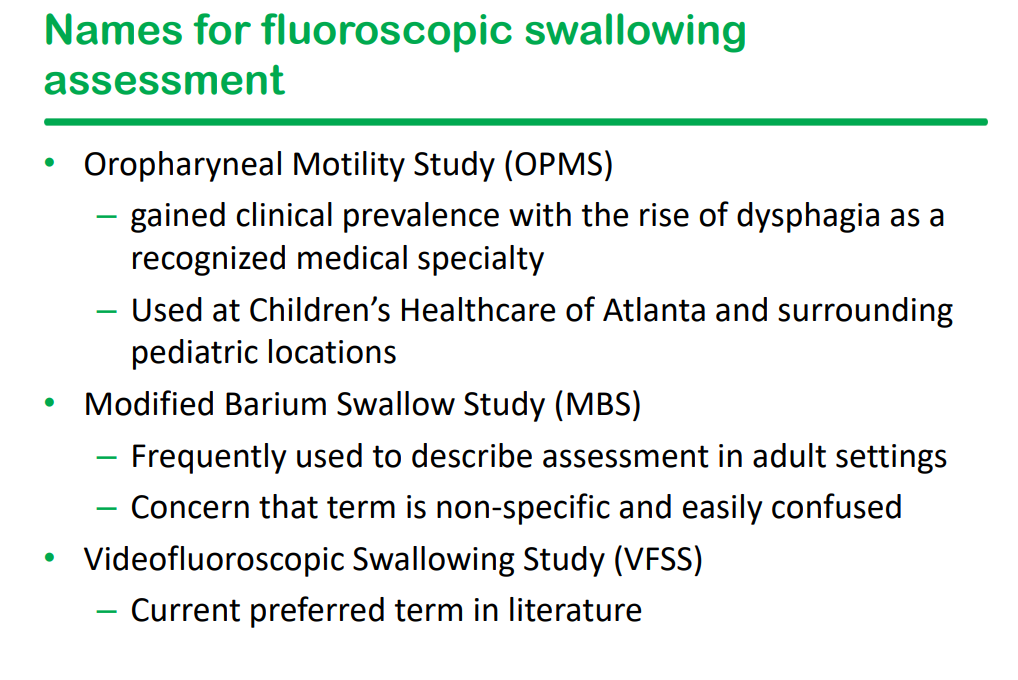
  • Video fluoroscopic swallow study )VFSS) is preferred nomenclature over modified barium swallow (MBS) or oral pharyngeal motility study (OPMS)
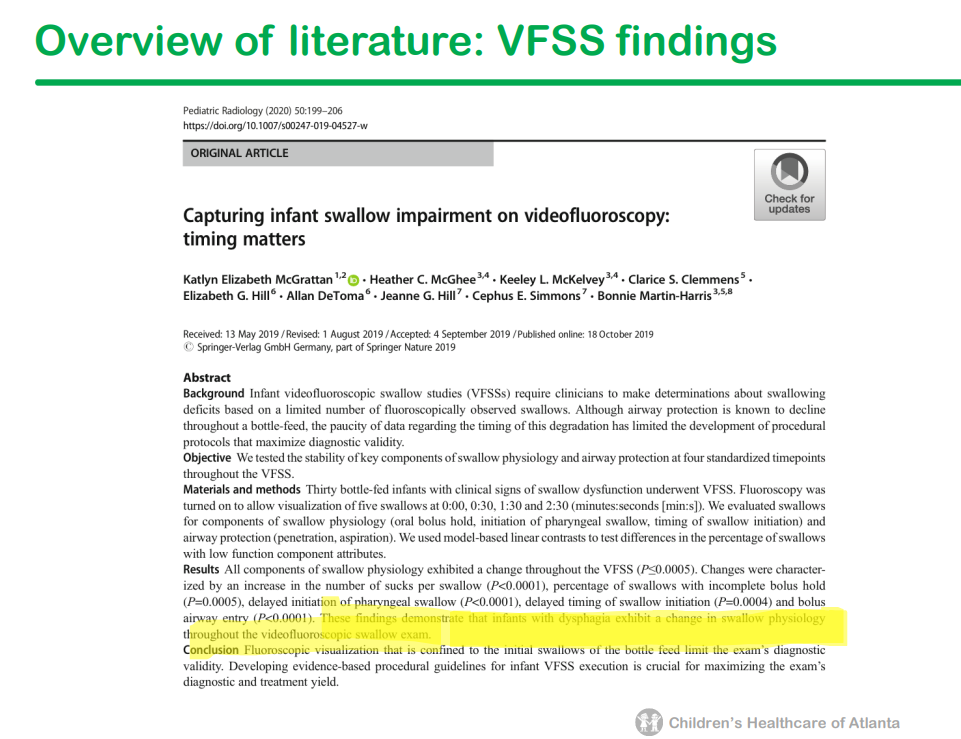
  • Study duration is important.  Watch swallow for 2:30 minutes if feasible (KE McGrattan, et al Ped Radiology 2020; 50: 199-206)
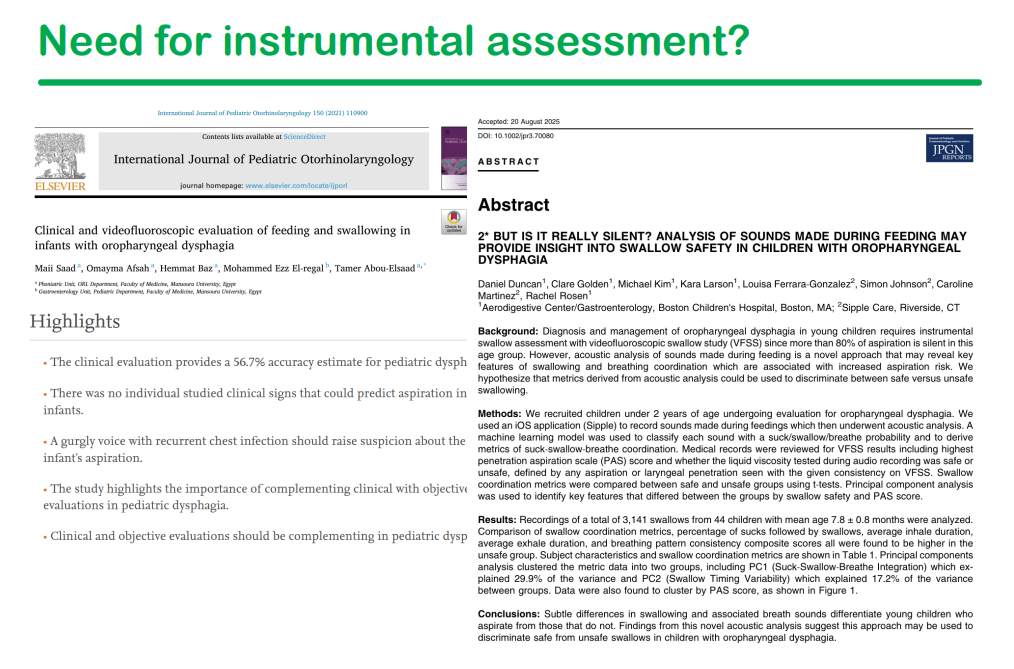
  • Clinical evaluation accurately identifies aspiration in 56.7% in one study (may be better in a lower risk population).  Thus, if concerned about aspiration, an objective study (e.g. VFSS) is needed
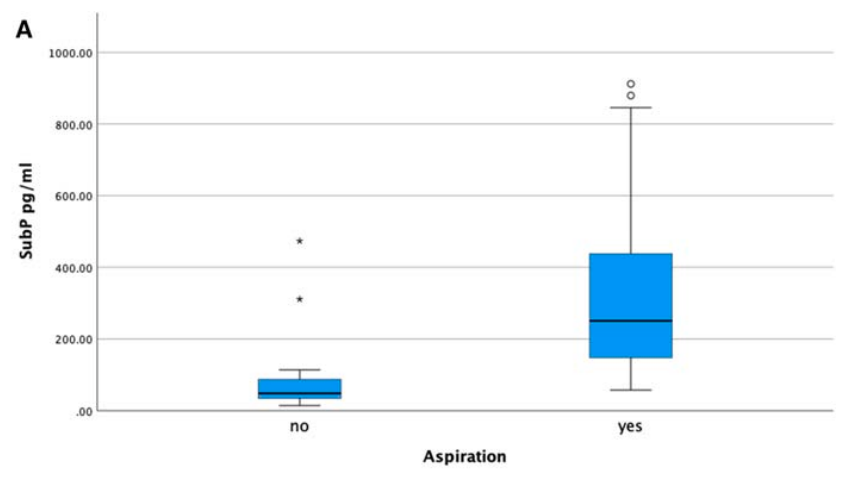
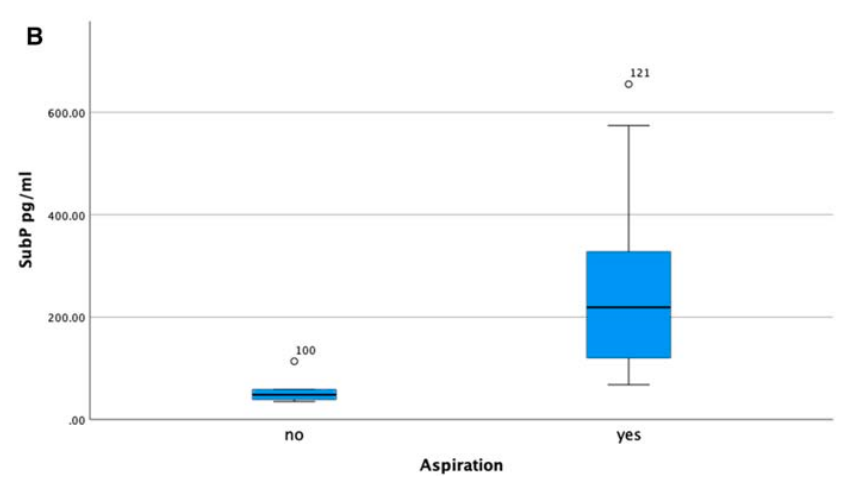
  • Analysis of sounds during feeding may provide insight into risk of aspiration
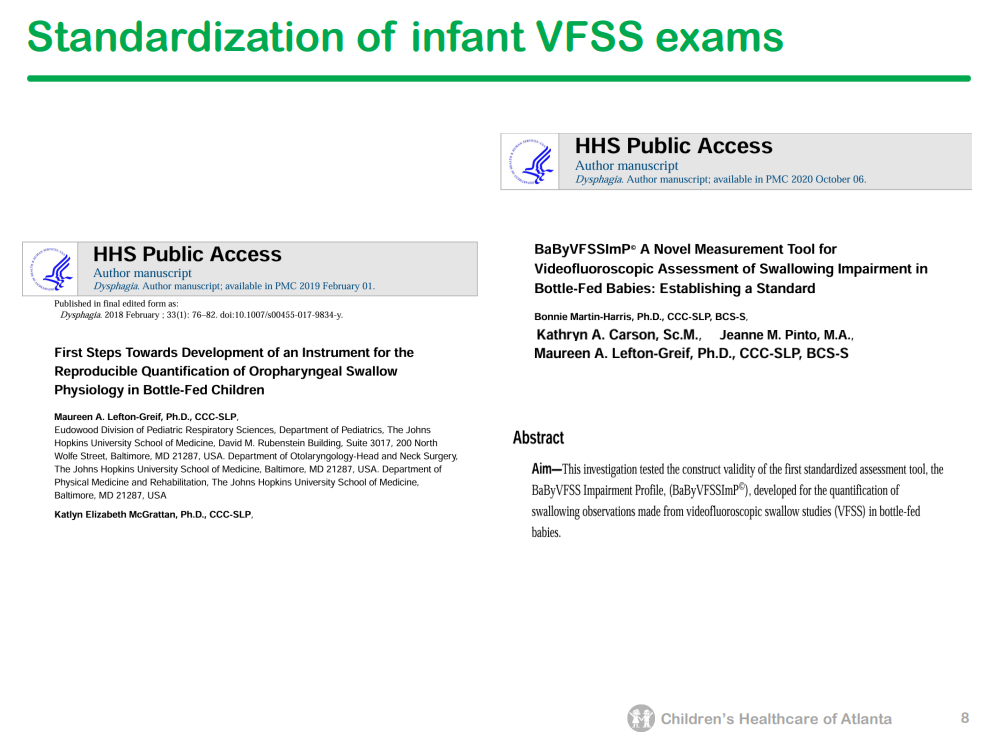
  • Ongoing efforts to standardize evaluation protocol.  BaByVFSSimP tool (for bottle feeding)
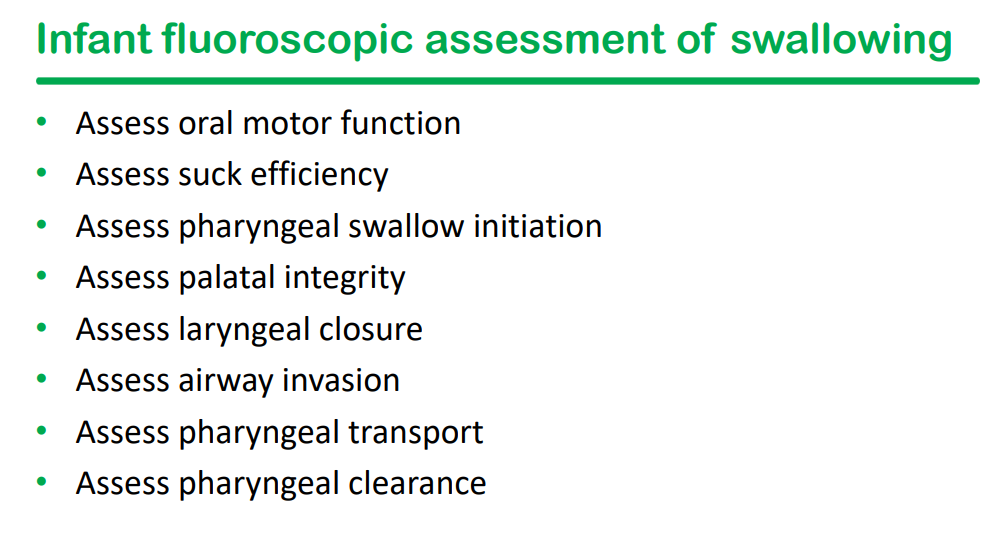
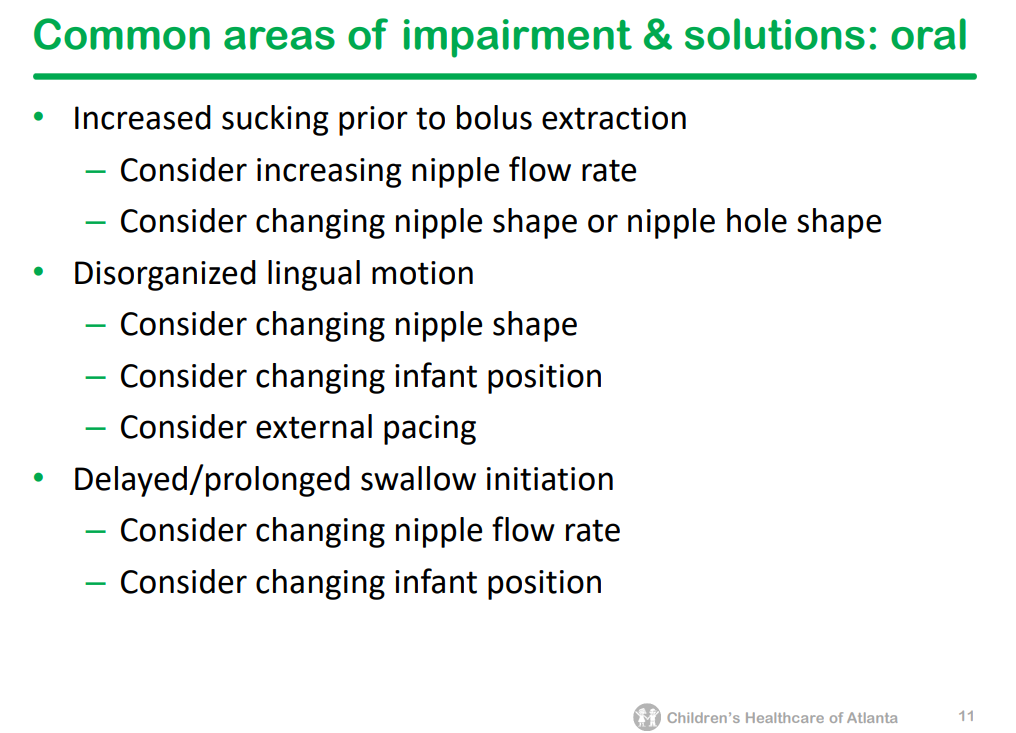
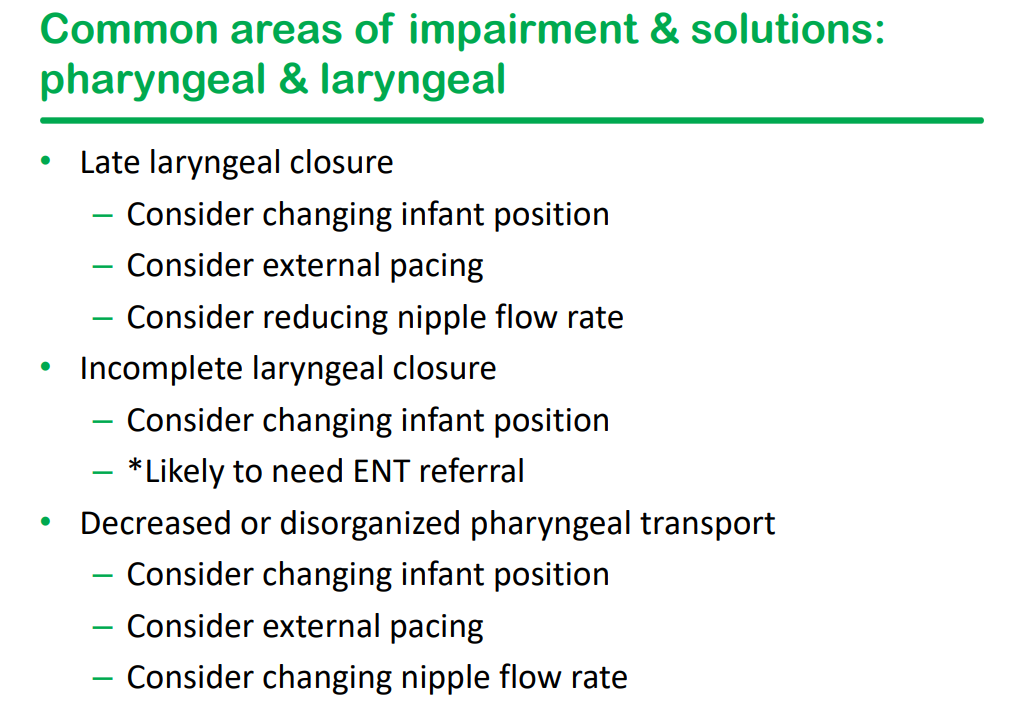
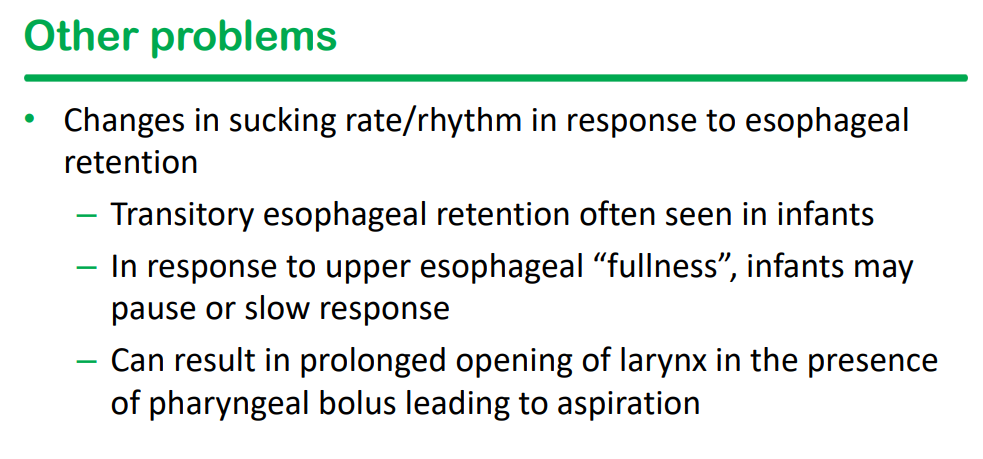
  • Common impairments: increased sucking prior to bolus movement, disorganized lingual motion, late/incomplete laryngeal closure, disorganized or decreased pharyngeal transport, esophageal retention, and suck-swallow ratio variability
  • If unilateral cord dysfunction, feed infant with position to allow the better functioning vocal cord to be lower
  • When to care about penetration: deeper (e.g. touching vocal folds) and more frequent penetration.  Deeper penetration should be considered as similar risk as aspiration on swallow study
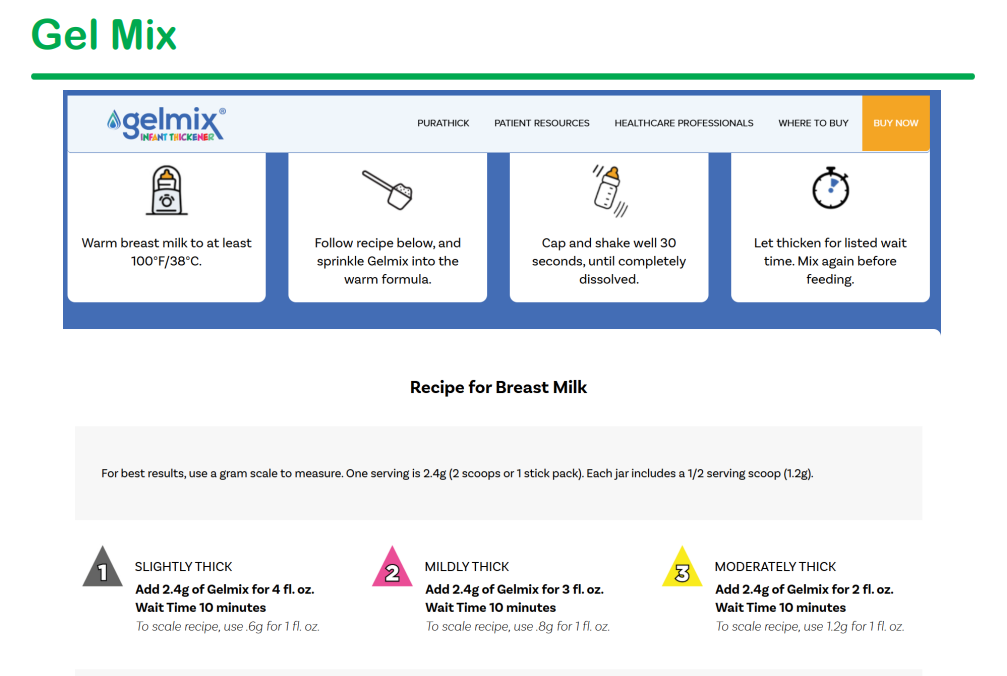
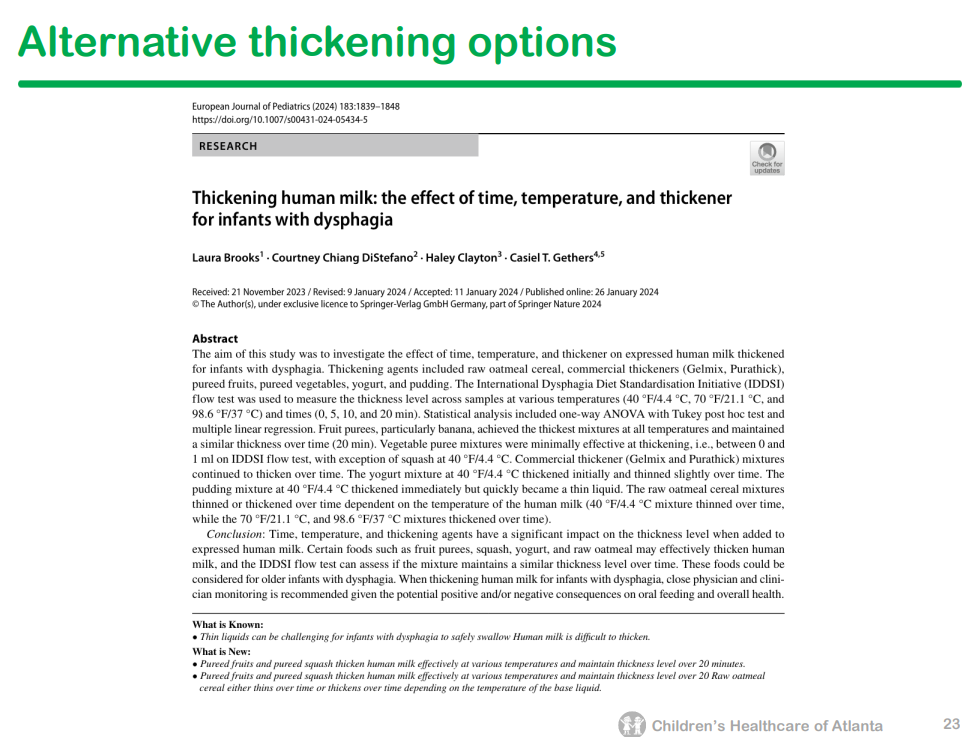
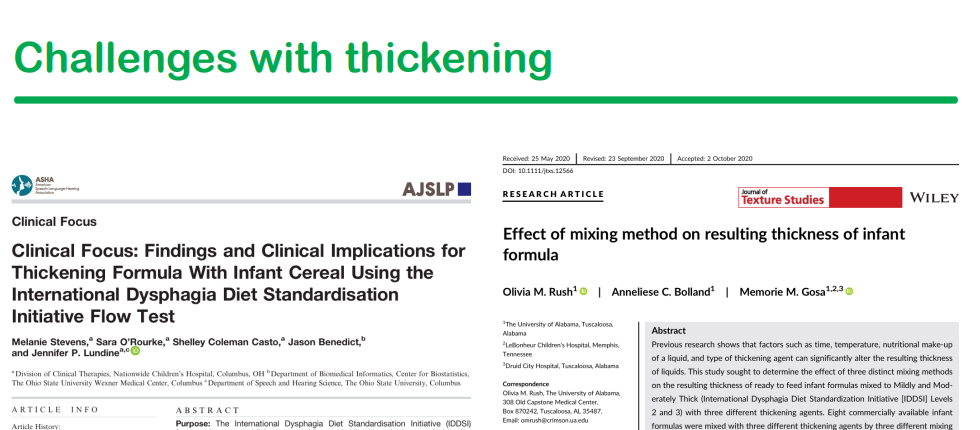
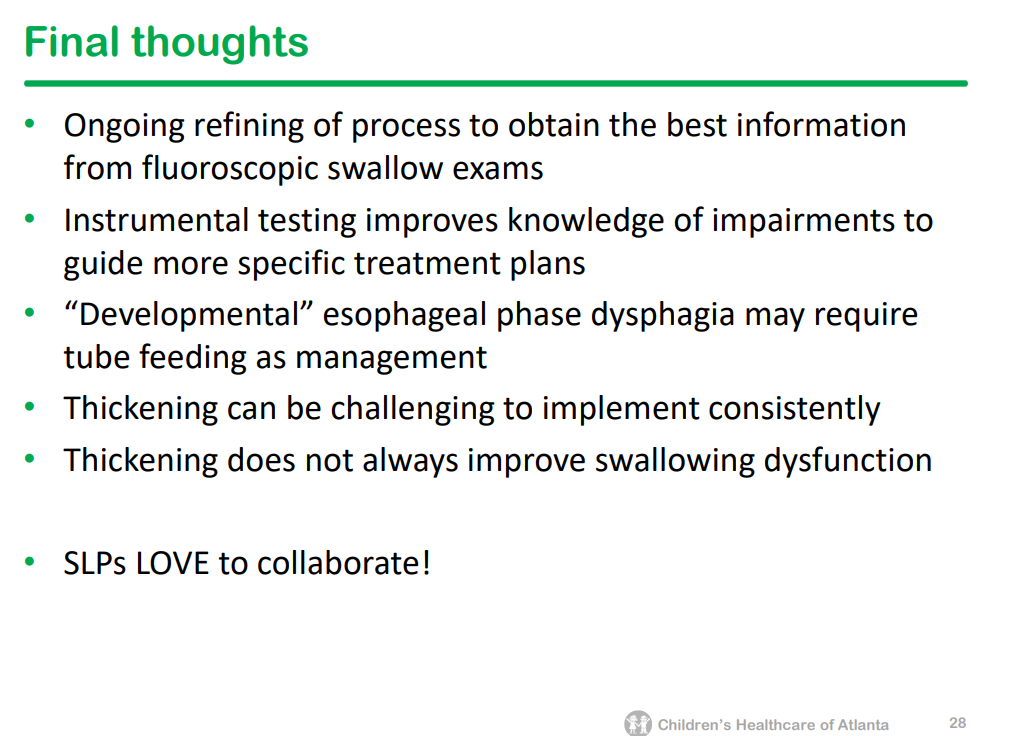
  • Thickening feeds can be difficult

Related blog posts:

Disclaimer: This blog, gutsandgrowth, assumes no responsibility for any use or operation of any method, product, instruction, concept or idea contained in the material herein or for any injury or damage to persons or property (whether products liability, negligence or otherwise) resulting from such use or operation. These blog posts are for educational purposes only. Specific dosing of medications (along with potential adverse effects) should be confirmed by prescribing physician. Because of rapid advances in the medical sciences, the gutsandgrowth blog cautions that independent verification should be made of diagnosis and drug dosages. The reader is solely responsible for the conduct of any suggested test or procedure. This content is not a substitute for medical advice, diagnosis or treatment provided by a qualified healthcare provider. Always seek the advice of your physician or other qualified health provider with any questions you may have regarding a condition

When Is It OK To Ignore Laryngeal Penetration?

AL Miller et al. Dysphagia 2024; 39: 33-42. Predictive Value of Laryngeal Penetration to Aspiration in a Cohort of Pediatric Patients

This was a retrospective study with 97 patients over a 6 month period in 2018. The authors note that “there is no universally accepted protocol for pediatric video swallows across ages and conditions.”

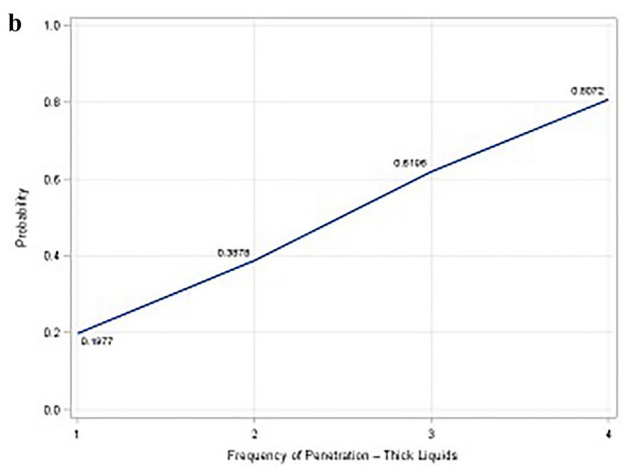
Methods: Depth of penetration and/or aspiration and reaction were classified according to the 8-point Penetration–Aspiration scale [JC Rosenbek, et al. Dysphagia 11, 93–98 (1996). https://doi.org/10.1007/BF00417897]. The frequency of penetration events and aspiration was grouped into categories: none (1); infrequent or occasional episodes (at least 1 event to less than 30%) (2); intermittent episodes (30–40% of total swallows) (3); frequent episodes
(50% or greater of total swallows) (4). Data for all swallowing parameters was stratified by bolus type (thin liquid, thickened liquid, puree solid). All VFSS were independently
scored by two speech-language pathologists and two radiologists.

Key findings:

  • Aspiration was seen in 21% of patients (n=20 of 97).
  • Penetration events were more frequent and occurred in 64% of participants (n=62 of 97). . Of patients with any penetration events, 30% also had documented aspiration
  • Frequency of penetration and aspiration: 80% of patients showing frequent penetration [frequency 4] demonstrating aspiration compared to 2.3% of patients with isolated penetration [frequency 1]. There was a higher risk of aspiration at lower frequency penetration if this occurred with thicker liquids (see below)
  • Depth of penetration and aspiration:. For patients with penetration contacting the vocal folds [depth 5], nearly 95% demonstrated documented aspiration within the same study; however, those with depths 1-3 had minimal risk of aspiration (see below). There was a higher risk of aspiration at shallow depths with thicker liquids.


My take
(borrowed from authors): “children with shallow, intermittent penetration events
without associated aspiration are likely to be demonstrating clinically insignificant events. Such children are therefore not appropriate candidates for compensatory or alternative feeding strategies such as changes in mode of delivery (e.g., gastrostomy tube), alteration of flow rate, or modification of liquid viscosity, such as thickened feedings.”

Related blog posts:

Something Useful for Apparent Life-Threatening Events (ALTEs)

In many cases of Apparent Life-Threatening Events (ALTEs) (also called Brief Resolved Unexplained Events, BRUEs) in infants, the exact reasons are unclear.  Sometimes these events are blamed on reflux despite studies indicating this is unlikely in the vast majority (see links at bottom of post).

A recent study (DR Duncan, J Amirault, PD Mitchell, K Larson, RL Rosen. JPGN 2017; 65: 168-73) finds that oropharyngeal dysphagia is correlated with ALTEs.

In this retrospective study which took place between 2012-15, the authors reviewed all patients admitted with ALTE.  They excluded infants with underlying diseases that included known neurologic impairment, congenital heart disease, and other congenital anomalies.

Demographics:

  • Median age 49 days
  • Color change: blue 65%, pale 8%, red 10%, none 17%
  • URI symptoms: 23%
  • Relationship to feeds: during 20%, after 35%, none 45%
  • Appeared well in ED 86%

Key findings:

  • Video fluoroscopic swallow study (VFSS) [also called oropharyngeal motility swallow study] was obtained in 29%.  In this group, 73% (n=40) had evidence of aspiration or penetration.
  • 26% of patients who had clinical feeding evaluation and VFSS were ascribed as having no oropharyngeal dysphagia prior to detecting aspiration on VFSS.
  • “Of all of the diagnostic tests ordered on patients with  ALTEs, the VFSS had the highest rate of abnormalities.”

Conclusion (from authors): “Oropharyngeal dysphagia with aspiration is the most common diagnosis identified in infants presenting with ALTEs.  The algorithm for ALTE should be revised to include an assessment of VFSS as clinical feeding evaluations are inadequate to assess for aspiration.”

Related blog post: What to do with ALTEs

Also, an except and link from NASPGHAN Consensus guidelines on GERD (2009)

  • In premature infants, a relationship between GER (i.e. reflux) and pathologic apnea and/or bradycardia has not been established. Despite a lack of convincing evidence, if pathological apnea occurs in the face of pre- existing reflux, then the following two statements are the most common features:
  • Although reflux causes physiologic apnea, it causes pathologic apneic episodes in only a very small number of newborns and infants.
  • When reflux causes pathological apnea, the infant is more likely to be awake and the apnea is more likely to be obstructive in nature.
  • A diagnosis of an acute life-threatening event (ALTE) warrants consideration of causes other than GER (i.e. reflux).Reflux of gastric acid seems to be related to ALTEs (episodes of combinations of apnea, color change, change in muscle tone, choking, and gagging) in < 5 % of infants with ALTE. 
  • Link: Gastroesophageal Reflux Disease in the Pediatric  – NASPGHAN.o

Dry Falls, Highlands, NC