
L Balsiger et al. Gastroenterology, 2026. Individualized Targeted Exclusion Diet Based on Confocal Laser Endomicroscopy Does Not Improve Irritable Bowel Syndrome Symptoms: A Randomized Controlled Crossover Trial
While foods often trigger IBS symptoms, there has not been a simple way to identify these foods with objective testing. Previous small studies have indicated that confocal laser endomicroscopy has the potential to identify these triggers (See prior post: Is There a Way to Prove Which Dietary Factors Trigger Irritable Bowel Syndrome?).
“The advent of confocal laser endomicroscopy (CLE) has enabled in vivo real-time visualization of the gastrointestinal mucosa.9 Using this approach, researchers have demonstrated acute food-induced mucosal alterations in the duodenum of patients with IBS.10,11 …The reliable identification of foods responsible for symptoms in individual patients with IBS is of great interest. Not only would it streamline the current trial-and-error approach, but it could also potentially avoid overly restrictive dietary patterns, which potentially can lead to avoidant restrictive food intake disorder.”
Methods: “This was a double-blind, controlled, crossover study in patients with IBS. After CLE, patients excluded up to 2 foods that did (= real diet) and up to 2 foods that did not (= sham diet) cause alterations in a randomized order. Diets were followed for 4 weeks each. Clinical response was defined as improving ≥50 points on the IBS Symptom Severity Score. Healthy controls underwent the same CLE protocol as patients with IBS.” 31 patients (median age 33 years) completed both phases of dietary interventions.
Key findings:
- Clinical response rates were not different between real and sham diet (42% vs 36%; odds ratio, 1.33; P = .6). Symptoms improved both on the real and the sham diet (−30 vs −20; P = .7).
- In 15 healthy volunteers, altered mucosa was visualized in 100% of the examinations either at baseline (13%) or after food administration.
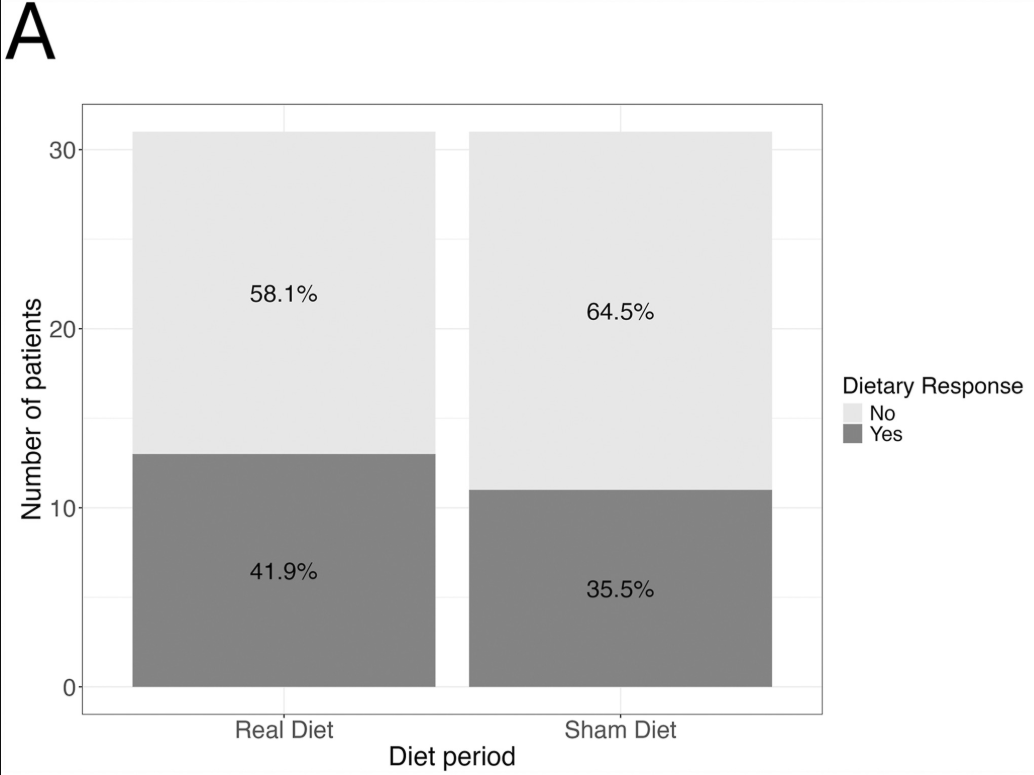
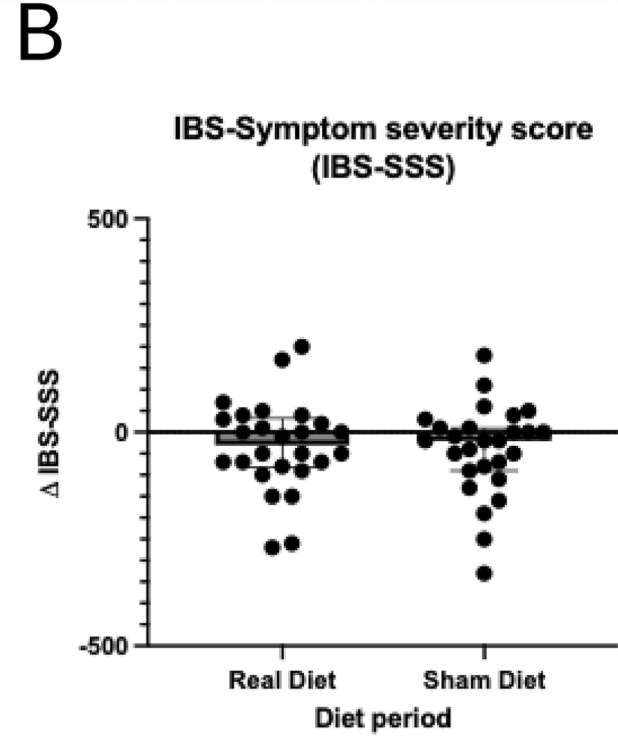
My take: CLE-based tailored diet was not beneficial compared to a sham diet. In addition, CLE changes were present in all of the healthy volunteers indicating that altered mucosa is a nonspecific reaction rather than pathognomonic IBS reaction. Thus, there remains no proven way to identify trigger foods in IBS. Exclusion diets can improve symptoms but require careful monitoring.
Related blog posts:
- Is There a Way to Prove Which Dietary Factors Trigger Irritable Bowel Syndrome?
- Craig Friesen: Understanding Food Allergies and Food Intolerance in DGBIs
- Treatment Guidelines for Pediatric Irritable Bowel Syndrome
- Pilot Study: Mediterranean Diet vs Low FODMAP for Irritable Bowel Syndrome
- Which Diet is Best for Irritable Bowel Syndrome? A Randomized Trial
- Looking More Closely at a Persistent Problem
- Food for Thought: Studies of Food Intake and IBS and DGBI
- “Leaky Gut Syndrome: Myths and Management”
- Another Study: Low FODMAPs Diet for Irritable Bowel Syndrome
- IBS Impact: Survey Reveals Daily Life Struggles

