
PH Johnsen et al. The Lancet, 2026 (published online September 24, 2026) https://doi.org/10.1016/S0140-6736(26)01424-8 Faecal microbiota transplantation in irritable bowel syndrome (REFIT2): a randomised, double-blind, placebo-controlled, phase 3 trial
Methods: This was a randomised, double-blind, multicentre study at five hospitals in Norway. Participants (median age 36 years, 65% women) were randomly assigned 2:1 to faecal microbiota transplantation (FMT) with faeces samples from either healthy donors (intervention, n=298) or the participants themselves (placebo group, n=150). All participants had baseline screening including prior colonoscopy. At baseline, the intervention group had 38% receiving a low FODMAP diet compared to 39% in the placebo group. There was also a similar degree of IBS severity: 93% and 96% had moderate-to-severe IBS, respectively. Each participant received one retention enema (60 g faeces); in the intervention group, the enema consisted of faeces from one of three donors.
Key findings:
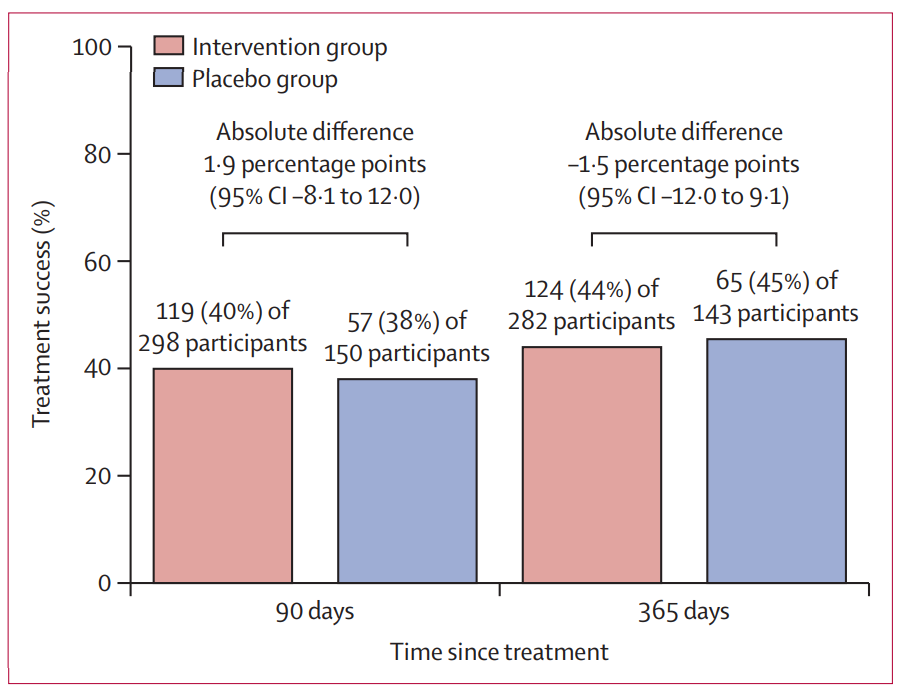
- 119 (40%) participants in the donor FMT group and 57 (38%) in the placebo group showed an improvement of at least 75 points on the IBS-SSS at 90 days after treatment.
- The proportion of participants with adverse events was similar in the two study groups; however, the six serious adverse events all occurred in the donor FMT group; these included diverticulitis, cholecystitis, escalation of psychiatric condition, and appendicitis.
- At 90 days after treatment, recipients of donor faecal microbiota transplantation showed a significant change in relative microbial abundance compared with baseline, and both relative microbial abundance and alpha diversity were significantly different in the intervention and placebo groups.
Discussion points:
- “Some earlier trials have reported clinical benefits of faecal microbiota transplantation in IBS; however, many studies have been limited by small sample sizes, single-donor designs, and less stringent endpoint definitions or did not allow for a robust assessment of donor-dependent effects… Although the gut microbiota might still contribute to IBS pathophysiology,
these findings indicate that non-specific microbiota replacement strategies are unlikely to provide consistent therapeutic benefit.” - “The strengths of the current trial were the large sample size, rigorous design with double-blinding, random assignment of participants by donor, and multicentre recruitment.”
- Limitations: “The reliance on patient-reported outcome measures is an inherent limitation in IBS trials, as few objective measures are available to assess clinical effects.”
My take (borrowed from the authors): “This phase 3 trial did not show any clinical benefit of
faecal microbiota transplantation for treating patients with moderate or severe IBS.”
Related blog posts:

