
DR Duncan et al. J Pediatr 2026; 297: 115212. Association Between Salivary Substance P and Aspiration on Videofluoroscopic Swallow Study in Infants and Toddlers
Background: Substance P (SP) is a neuropeptide signaling molecule that is secreted peripherally as a result of the activation of afferent neurons expressing TRPA1 and is involved in the pathogenesis of swallow dysfunction by (1) decreasing the activation
threshold of transient receptor potential channels, (2) enhancing the sensitivity of neurons in the pharynx, and (3) increasing cough reflex to improve airway protection. Pilot studies in adult populations have shown reduced SP levels in patients with neurologic causes of aspiration, including patients who are elderly and patients with stroke and Parkinson disease.
Methods: The authors recruited children younger than 2 years of age (n=50, mean age 8 months) who underwent VFSS within 3 months of study enrollment. Saliva samples were collected using absorbent saliva collection devices (salimetrics.com) and Substance P (SP) levels were measured by enzyme-linked immunosorbent immunoassays. Patients with laryngeal penetration but not aspiration were excluded.
Key findings:
- SP concentrations were 344.7 ± 42.9 pg/mL for patients with aspiration compared with 105.7 ± 40.5 pg/mL for those without aspiration (P < .001).
- A cutoff of 65 pg/mL provided 97% sensitivity and 75% specificity for predicting aspiration on VFSS.
- In a subgroup analysis with 29 subjects who had VFSS within 1 month of sample collection, a cutoff of 63.2 pg/mL provided 100% sensitivity and 83.3% specificity for predicting aspiration on VFSS. For this subgroup, the SP concentration was 250.9 ± 33 pg/mL for those with aspiration on VFSS compared with 57.1 ± 11.8 pg/mL for those without aspiration on VFSS (P < .001)
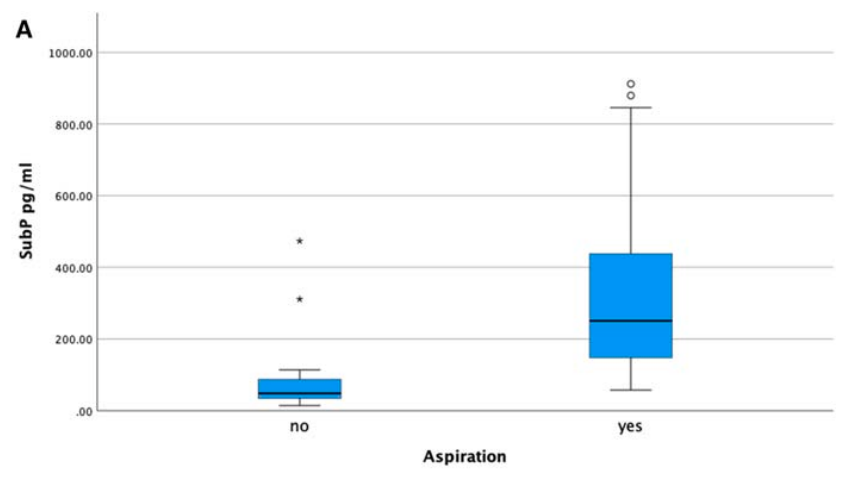
with and without aspiration on VFSS in the full cohort.
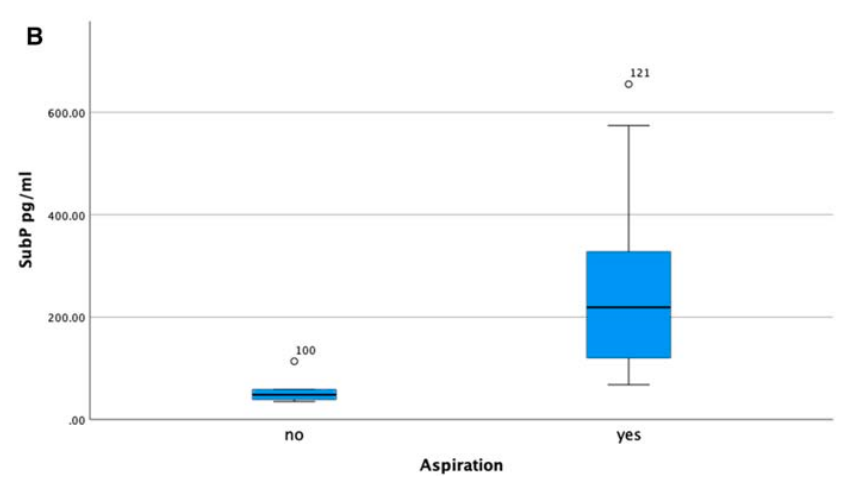
with saliva sample collection within 1 month of VFSS.
Discussion Points:
- “SP levels were not affected by comorbidities or acid suppression medications” in this cohort.
- “These data suggest that this test could be used to at least screen for who might need a VFSS or who might need thickening while the cause of aspiration is being evaluated.”
- “Testing of salivary SP is experimental and only limited to research studies and therefore not widely available at the present time.”
Disclosures: “The funders had no role in the design and conduct of the study. D.D. and R.R. are named inventors on U.S. Provisional Patent Application Serial No. 63/804876, DEVICES AND METHODS FOR DETECTING AND TREATING ASPIRATION IN CHILDREN.”
My take: While this is a pilot study, if the findings are confirmed, this would be a huge advance. It would help triage infants and young children who need VFSS evaluation. A normal value could help many infants avoid a VFSS evaluation. In those with ongoing abnormal values, it could allow fewer followup VFSS evaluations.
Related blog posts:
- Sheila McBrayer: Swallow Dysfunction and Swallow Evaluation in Infants
- Incredible Review of GERD, BRUE, Aspiration, and Gastroparesis
- When Is It OK To Ignore Laryngeal Penetration?
- Clinical Evaluation Not Sensitive for Aspiration
- Use of Proton Pump Inhibitors in Infants
- BRUEs in Boston –Two Punch Study
- Acid Suppression for Laryngomalacia -Handed This Article to My ENT Colleagues
- AAP & NASPGHAN: Practice Guideline for Faltering Weight

