
G Privitera et al. Clin Gastroenterol Hepatl 2026; 24: 2539-2550. Open Access! Ustekinumab and Janus Kinase Inhibitors Outperform Vedolizumab as Second-Line Therapy in Anti-Tumor Necrosis Factor-Experienced Patients With Ulcerative Colitis
Before reading this article, I had to research why it was called “The Podium Study.” The research directly stacks three competing second-line classes of advanced therapies against each other: vedolizumab, ustekinumab, and JAK inhibitors; this is similar to a sports podium (1st, 2nd, and 3rd place), as the ultimate clinical goal of the study was to “rank” which medication performed best in terms of efficacy and safety after a patient fails anti-TNFα therapy. Of historical interest, there was an older, unrelated PODIUM trial, which stood for Pentasa Once Daily in Ulcerative Colitis for Maintenance of Remission.
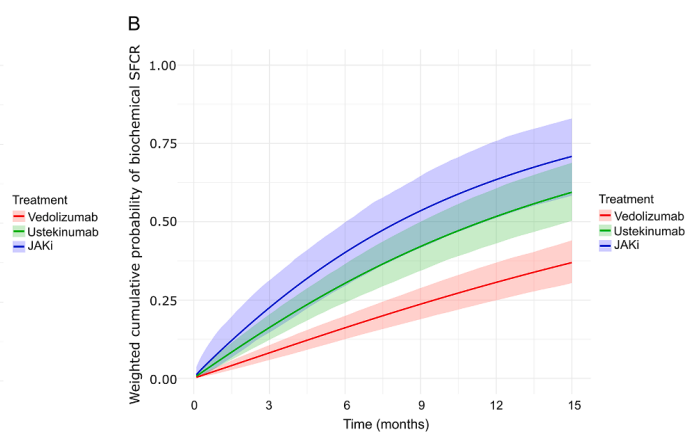
Methods: In this retrospective, multicenter European study, there were 596 patients were included (301 vedolizumab, 149 ustekinumab, 146 JAKi) with a mean age of 43.9 ± 15.5 years. JAKi included 114 with tofacitinib, 28 with upadacitinib, and 5 with filgotinib. Achievement of biochemical steroid-free clinical remission (SFCR) within 12 months was identified by having SFCR associated with biomarker normalization: FCP <250 μg/g or CRP <5 mg/L—if discordant, FCP was considered the reference biomarker.
Key findings:
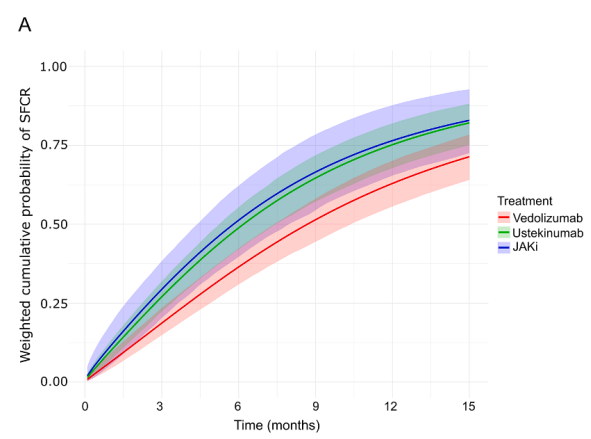
- Compared with vedolizumab, both ustekinumab and JAKi showed significantly higher probability of steroid-free clinical remission (SFCR) (aHR, 1.54 and aHR, 1.66, respectively) and biochemical SFCR (aHR, 2.26 and 3.37, respectively) at 12 months
- The crude incidence rate of SFCR at 12 months was 65.3% for vedolizumab, 87.0% for ustekinumab, and 80.2% for JAKi.
- From a safety standpoint, JAKi were associated with an approximately 4-fold increase in the incidence rate of treatment-related AEs—primarily infections—compared with both vedolizumab and ustekinumab.
Discussion Points:
“Optimal sequencing in UC after anti-TNF-α exposure remains an open issue, as direct comparisons are scarce. Overall, our findings are consistent with the network meta-analysis by Lasa et al, which reported superior efficacy of JAKi and ustekinumab compared with vedolizumab in inducing clinical remission and endoscopic improvement in anti-TNF-α-experienced patients.14 However, these conclusions derive from indirect comparisons across heterogeneous randomized trials.”
My take: Vedolizumab is a good choice as a 1st line agent for ulcerative colitis but has a lower success rate as a 2nd line agent. Also, this study likely underestimates the potential effectiveness of JAKi as most individuals received tofacitinib rather than upadacitinib.
Related blog posts:
- Prior Exposure to TNF Antagonists May Increase Response to JAK Inhibitors in Patients with Ulcerative Colitis
- Comparative Evidence and Positioning Advance Therapies for Inflammatory Bowel Disease
- Long-term Efficacy and Safety of Upadacitinib for Ulcerative Colitis
- Dr. Joel Rosh: Positioning Therapies for Pediatric Ulcerative Colitis
- Upadacitinib vs Ustekinumab for Ulcerative Colitis
- Comparative Safety of Advanced Therapies for Ulcerative Colitis
- Tofacitinib Outperformed Vedolizumab in Anti-TNF-experienced Ulcerative Colitis
- Upadacitinib for Pediatric Ulcerative Colitis
- Upadacitinib Works Quickly and with High Response
- IBD Updates: Preventing Inflammatory Bowel Disease with a Healthy Diet and Medication Safety Pyramid
- “Real-World” Experience: High Dose Upadacitinib Recaptures IBD Response
Disclaimer: This blog, gutsandgrowth, assumes no responsibility for any use or operation of any method, product, instruction, concept or idea contained in the material herein or for any injury or damage to persons or property (whether products liability, negligence or otherwise) resulting from such use or operation. These blog posts are for educational purposes only. Specific dosing of medications (along with potential adverse effects) should be confirmed by prescribing physician. Because of rapid advances in the medical sciences, the gutsandgrowth blog cautions that independent verification should be made of diagnosis and drug dosages. The reader is solely responsible for the conduct of any suggested test or procedure. This content is not a substitute for medical advice, diagnosis or treatment provided by a qualified healthcare provider. Always seek the advice of your physician or other qualified health provider with any questions you may have regarding a condition.

