
J Zheng et al. Clinical Gastroenterology Hepatology 2026; 24: 2168-2180. Open Access! Sugar Rationing in the First 1000 Days After Conception and Long-Term Risk of Metabolic Dysfunction-Associated Steatotic Liver Disease and Major Adverse Liver Outcomes: A Natural Experiment Study
A previous blog post (The Hidden Dangers of Early Sugar Exposure) reviewed the beneficial effects of sugar rationing in Britain around WWII. There were lower rates of type 2 diabetes and hypertension.
Today’s article, reviews the effects of sugar rationing on liver outcomes.
Methods:
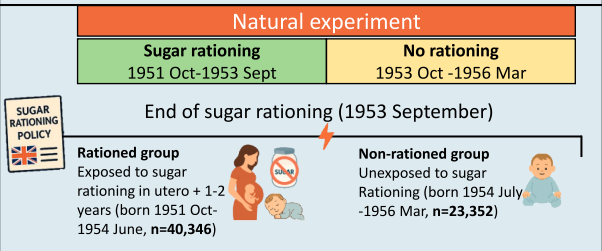
Key findings:
- Among 63,698 participants, early-life sugar rationing was associated with a 30% reduced risk of MASLD (hazard ratio, 0.70), 17% lower risk of metabolic dysfunction-associated steatotic liver disease with alcohol consumption, 35% for major adverse liver outcomes, and 32% for cirrhosis.
- The protective effect increased with longer exposure.
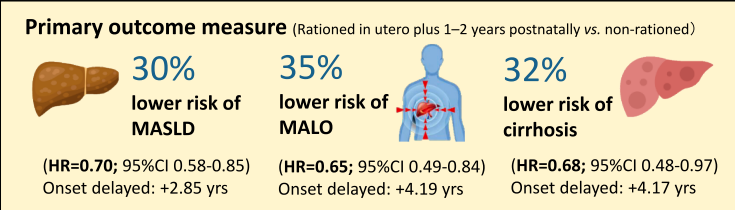
My take: Reducing sugar, including in the prenatal period, reduces the risk of adverse liver outcomes in addition to type 2 diabetes and hypertension.
Related blog posts:
- The Hidden Dangers of Early Sugar Exposure
- Worldwide Increase in Sugar-Sweetened Beverage Intake
- Sugary Beverage and Liver Stiffness in Healthy Adults
- Low Free Sugar Diet for Nonalcoholic Fatty Liver Disease in Adolescent Boys
- Deceptive Research: When Sugar Leaves A Bitter Taste
- NY Times: Cutting Sugar Improves Children’s Health in Just 10 Days
From AGA Today in Medicine on 8/19/26 – Ongoing Cyclospora Outbreak:


