
Yodoshi, T., Kuenzig, M. E., Tang, F., Kajiwara Saito, M., Zizzo, A., Ng, V. L., & Benchimol, E. I. Liver Transplantation 2026, 32(9), 1273–1284. Donor type, social deprivation, and long‑term outcomes in pediatric liver transplantation: A 30‑year population‑based cohort.
Background: Living donor liver transplantation (LDLT) reduces wait‑list mortality in children; this can be due to shorter waiting times, minimal cold ischemia, and healthier donor organs. However, its long‑term advantages over deceased donor liver transplantation (DDLT) and how socioeconomic context shapes outcomes in a universal healthcare system (Canada) remain uncertain. Families with socioeconomic disadvantages may have significant barriers to accessing living donor liver transplantation (LDLT). In additon, caregiver resources, neighborhood deprivation, and health literacy may negatively impact post-transplant outcomes.
Methods: From 1991 to 2021, clinical data was linked to provincial health administrative data, yielding 449 recipients who underwent their first transplant. There were 189 LDLT and 260 deceased donor liver transplantation (DDLT).
Key findings:
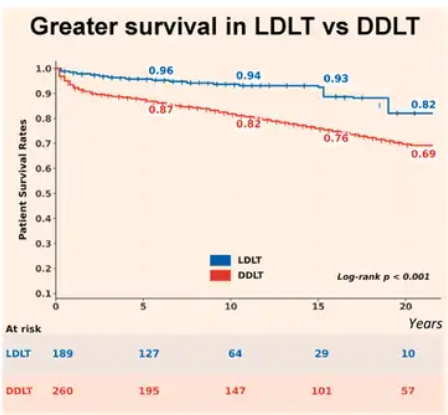
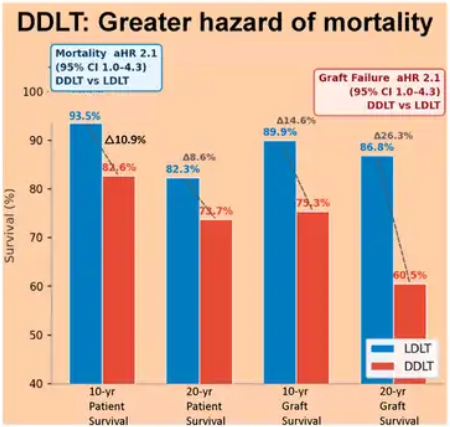
- LDLT recipients had superior patient and graft survival. DDLT was associated with a higher risk of mortality [adjusted hazard ratio (aHR) 2.1], graft failure (aHR 2.1), and chronic kidney disease (adjusted subdistribution HR 5.3), compared with LDLT.
- The absolute survival advantage of 10-15% at 10 years persisted into the third decade.
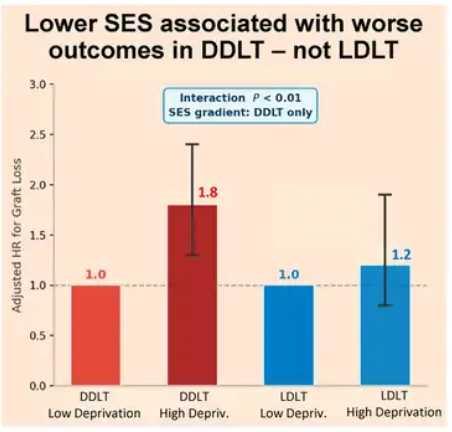
- LDLT outcomes were less impacted by the socioeconomic disadvantages, with recipients showing comparable outcomes regardless of their SES.
- The overall incidence of de novo cancer was low (2-3% at 10 years post-LT; most of these cancers were due to PTLD.
- Limitations: The survival advantage could be in part due to selection bias. Patients with more urgent conditions like PALF were more likely to be DDLT recipients. In addiiton, this study did not adjust severity of illness at time of transplantation.
My take: LDLT is underutilized. More use of LDLT will result in better outcomes.
Related blog posts:
- Living-Donor Transplant Availability Lifts All Boats
- PRO and CON: All Pediatric Transplant Centers Should Have Living Donor Liver Transplant Option
- Liver Update: Past Time to Split (2022) & Graft Fibrosis -Will the Liver Last?
- What Can Go Wrong with Living Liver Transplantation for the Donor
- How to Improve the Gift of Life
- How to Lower Pediatric Liver Transplantation Waitlist Mortality
- Liver Transplant Outcomes in Children: Two Studies
- What is Driving Racial Disparities in Access to Living Donor Liver Transplants
- More on Time to Split (2018)
- Long-Term Outcomes off Immunosuppression in Children After Liver Transplant
- Costs and Opportunity Costs in Pediatric Liver Transplantation

