
MA Nassif et al. J Pediatr Gastroenterol Nutr. 2026;83:397–403. Outcomes of surgical versus conservative treatment inpediatric median arcuate ligament syndrome
Methods: This was a retrospective pediatric study (n=34) evaluating surgical versus conservative management in pediatric MALS. Conservative therapy included the following: 100% pharmacologic, 80% behavioral, 30% botulinum toxin, 20% neurostimulation.
Key findings:
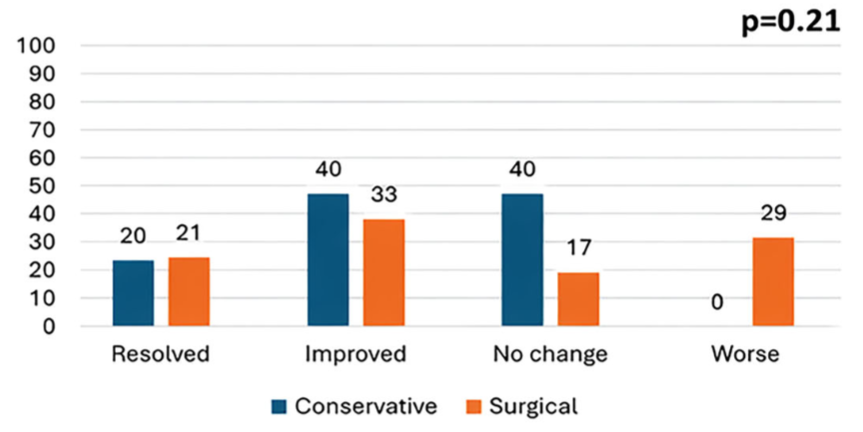
- Conservative therapy outcomes (n=10): resolution (20%), improvement (40%), unchanged (40%), and none worsened.
- Surgical therapy outcomes (n=24) resolution (21%), improvement (33%), unchanged (17%), worsened (29%); thus, these outcomes are not significantly different from the conservative group (p = 0.21). Median hospital stays: 4 days. Postoperative complications occurred in 21%. The one major complication was an intraoperative splenic artery injury in a patient with Ehlers-Danlos Syndrome.
- Overall, 60% of children with MALS improved with conservative DGBI‐directed therapy and 54% improved with decompression surgery at long‐term follow‐up (at median 9.8 months), despite a robust short‐term postoperative response (87%). At 20 days postop: 52% reported resolution, 35% improved.
Discussion points:
- Other studies have reported higher response rates for MALS surgery: “The newest and largest‐scale review suggests a 70% symptom relief rate in three of six pediatric studies, with follow‐ups of 6–62 months after laparoscopic MALS release.[28]”
- “A more recent study conducted in 2017 determined that only post‐exertional abdominal pain was a predictor of a good surgical outcome.[31]”
- “The lack of universally accepted diagnostic criteria for MALS remains a challenge.”
My take: In this study, surgery for MALS did not seem to improve long-term outcome more than DGBI therapy. If one finds celiac artery compression which may be identified in many healthy individuals (10-24% of population), it is unclear to me if an MALS operation is indicated and how to determine when it is indicated.
Related blog posts:

