
BJ Hoskins et al. J Gastroenterol Hepatol. 2026 Apr 24. Open Access! Incidental Colorectal Adenomas in Adolescents: Clinical Management, Genetic Evaluation, and Surveillance (Review article)
Key points:
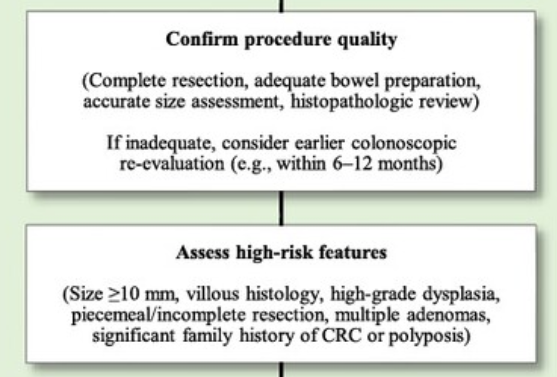
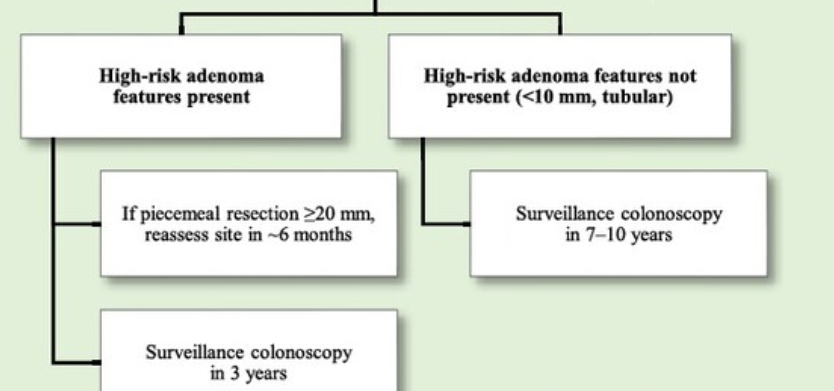
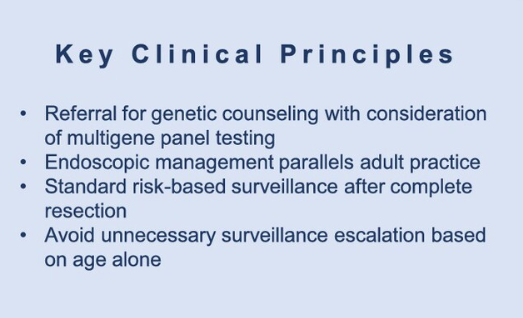
- “Although most isolated colorectal adenomas identified in adolescents are ultimately sporadic, their rarity at this age justifies a lower threshold for genetic evaluation—without routine shortening of surveillance intervals in the absence of hereditary disease”
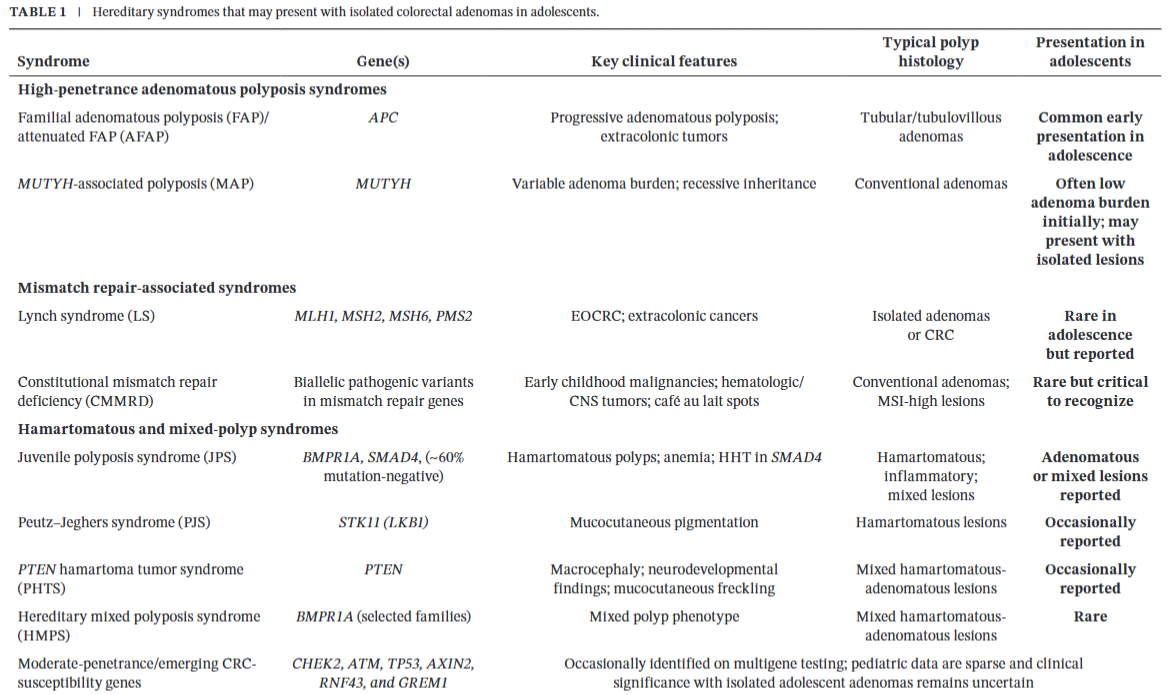
- “Current guidelines recommend initiating upper gastrointestinal surveillance at age 20–25 years for FAP and attenuated FAP [17]. Notably, a meta-analysis reported that 42% of children with FAP who underwent EGD had duodenal adenomas…, supporting the biological rationale for upper gastrointestinal screening once a polyposis syndrome is identified”
- Table 1 lists polyposis syndromes that can be associated with isolated adenomas in adolescents
- “All visible adenomas should be completely removed when technically feasible'”
My take: This review provides useful guidance when identifying an adenomatous polyp in the pediatric age group.
Related blog posts:
- ESPGHAN Juvenile Polyposis Position Paper While the polyps described are not tubular adenomatous polyps, it is noted that guidelines in adults recommend followup in 5-10 years for a single (non-serrated) adenomatous polyp (Polyps: Clinical Decision Tool).
- Updated Guidelines on Genetic Testing/management for Hereditary GI Cancer Syndromes
- Surprising Genetic Mutations in Polyposis Study
- Polyposis in Pediatric Patients -Review
- Consensus guidelines after polypectomy | gutsandgrowth
- Adenoma Detection Rate: Life or Death Quality Measure
- Cold vs Hot Polypectomy for Small Polyps (2023)
- How to Do a Colonoscopic Polypectomy & U.S. COVID-19 Tracker
- How Benign Are Juvenile Polyps?
- Adverse Events Following Pediatric Endoscopy -Previously Underestimated
Disclaimer: This blog, gutsandgrowth, assumes no responsibility for any use or operation of any method, product, instruction, concept or idea contained in the material herein or for any injury or damage to persons or property (whether products liability, negligence or otherwise) resulting from such use or operation. These blog posts are for educational purposes only. Specific dosing of medications (along with potential adverse effects) should be confirmed by prescribing physician. Because of rapid advances in the medical sciences, the gutsandgrowth blog cautions that independent verification should be made of diagnosis and drug dosages. The reader is solely responsible for the conduct of any suggested test or procedure. This content is not a substitute for medical advice, diagnosis or treatment provided by a qualified healthcare provider. Always seek the advice of your physician or other qualified health provider with any questions you may have regarding a condition

