Navigating Difficult Conversations in Children’s GI Healthcare

Recently, Dr. Laurie Jacobs from CHOA’s palliative care team gave our group a provocative update on communication strategies in children with severe illness.  My notes below may contain errors in transcription and in omission. Along with my notes, I have included many of her slides.

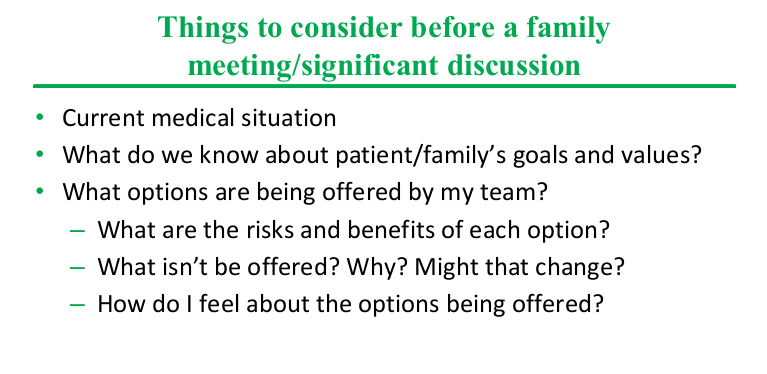
  • Having a pre-meeting with other members of health care team is a key part in setting up an effective meeting with parents
  • Delivering news: 1) Provide a straightforward Headline: ‘We are here to discuss xyz’ 2)Be clear. ‘To be clear is to be kind’ 3) Then STOP TALKING.  This let’s the family process
  • Sometimes even delivering bad news can be met with relief by families who have been waiting for a diagnosis
  • Respond to emotion with NURSE mnemonic: Name, Understand, Respect, Support, Explore
  • What if the ‘family doesn’t get it?’ Do they understand (can they repeat back)?  Most often the family has a different perspective; they may think we are wrong
  • Be careful to avoid offering decisions where there are not actual decisions to be made
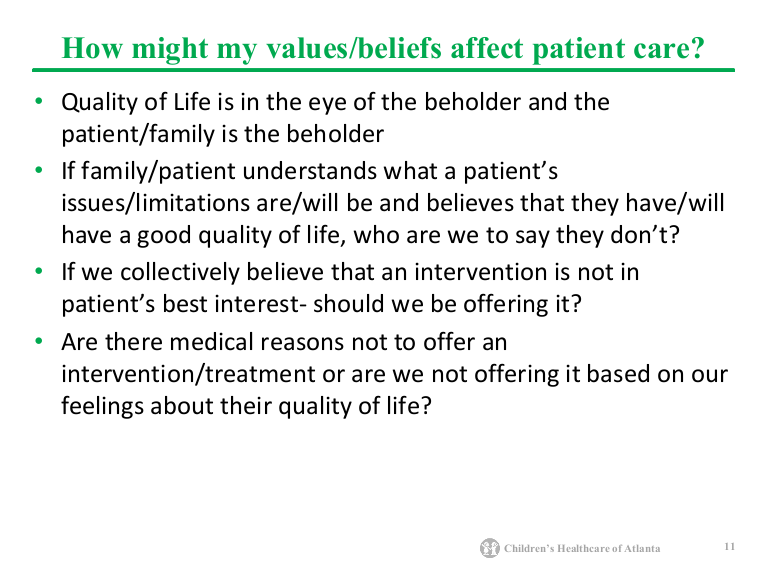
  • Our own values/beliefs are often introduced even though quality of life is in the eye of the beholder
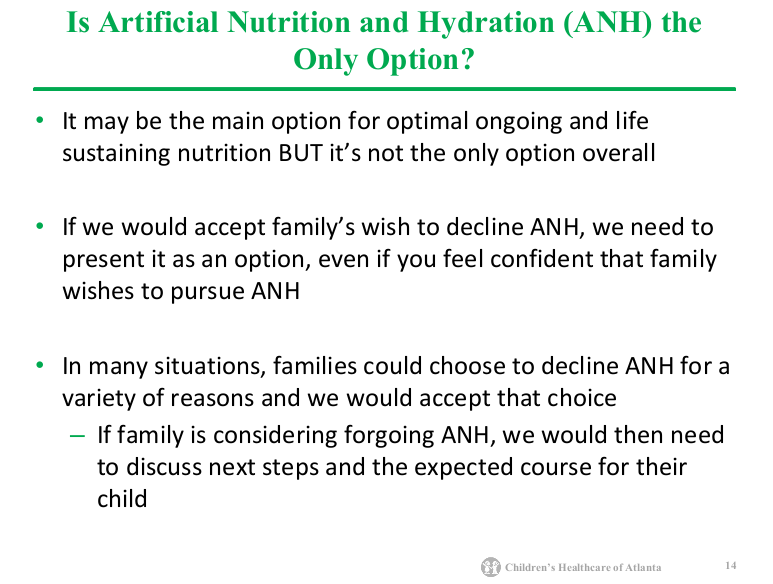
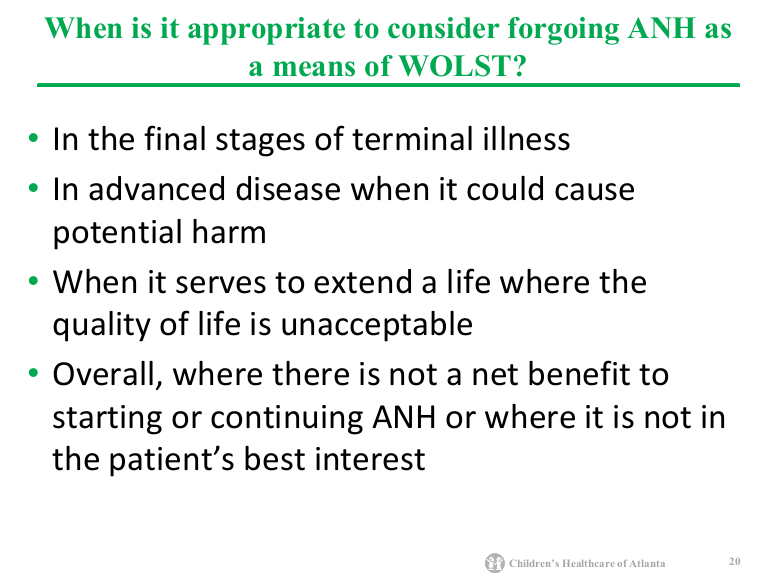
  • Tube feeds can be considered forms of ‘artificial nutrition.’  There are situations in which families need to know that it is not always required
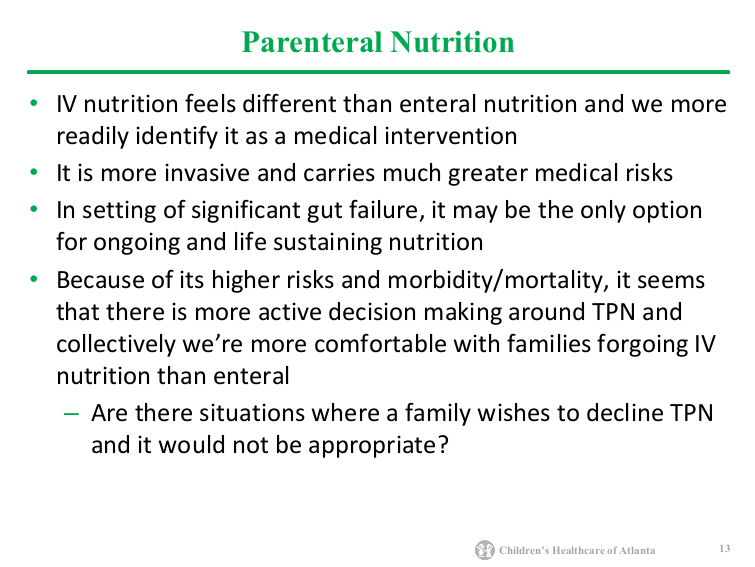
  • Parenteral nutrition is more invasive and associated with more active parental decision-making
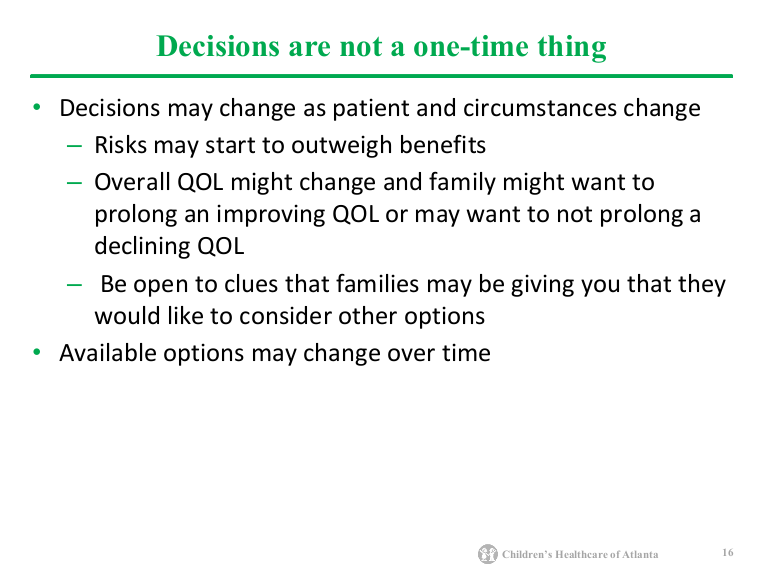
  • Decisions may change based on change in patient circumstances
  • There is not a single right answer with difficult decisions.  There are trade-offs between longevity and QOL
  • Anything that we would allow parents not to start, can be stopped at any time from an ethical standpoint
WOLST =withdrawal of life-sustaining therapies

Related blog posts:

“How to Remember What Your Doctor Says”

NY Times (October 26, 2021): How to Remember What Your Doctor Says

Key points:

  1. “When faced with someone in a white coat, don’t go mute. Assert yourself, particularly if you’re confused. Try repeating what you’re hearing”
  2. “People recalled less than half of what their doctors told them a week earlier”
  3. ”In practice, though, patients bring up as many as 15 different issues during a visit. Show up with a list of the three main things you want to talk about, and go over all three before your doctor starts talking.”
  4. “Communication onus should be on medical providers. Still, as a patient, you have agency. ‘When people participate, they remember better'”

My take: This article makes some good points. I think in this era, more written information (after visit instructions) are being provided which helps as well.

Related blog posts:

Also, briefly noted, U.S was rated as being in 54th place in its vaccine rates compared to other countries.

Financial Times: Global Vaccine Tracker

Less Litigation: Better Communication, Not More Testing

A recent NY Times articles sums up articles over more than two decades which show that better communication, rather than more testing, reduce malpractice lawsuits.

To Be Sued Less, Doctors Should Consider Talking to Patients More

An excerpt:

As far back as 1989, a study of obstetricians in Florida found that about 6 percent of obstetricians accounted for more than 70 percent of all malpractice-related expenses over a five-year period… Doctors who are sued are different in some way from those who aren’t…Some doctors were more likely to be sued, regardless of whether the cases against them were eventually found to have merit…

Doctors sued most often were complained about by patients twice as much as those who were not, and poor communication was the most common complaint…

At the University of Michigan about 15 years ago, a program was begun to improve communication around medical errors. When errors occurred, the program encouraged physicians to tell patients about them, how they happened, and what would be done to make them less likely to occur in the future. Doctors were also encouraged to apologize, and offer compensation for harm if it occurred.

study of the program published in 2010 found that in the years after it began claims dropped 36 percent, and lawsuits dropped 65 percent. The monthly cost of total liability and patient compensation dropped 59 percent, and legal costs dropped by 61 percent.

later study, published last year, looked at how the program affected gastroenterology claims and costs. It found that despite a 72 percent increase in clinical activity, the rate of claims per patient encounters dropped 58 percent…The total cost to the health care system of malpractice in gastroenterology decreased by 64 percent.

Related blog posts:

From Hammock

From Hammock