
NY Times (12/29/20): U.S. Diet Guidelines Sidestep Scientific Advice
An excerpt:
“Rejecting the advice of its scientific advisers, the federal government has released new dietary recommendations that sound a familiar nutritional refrain, advising Americans to “make every bite count” but dismissing experts’ specific recommendations to set new low targets for consumption of sugar and alcoholic beverages...
The dietary guidelines have an impact on Americans’ eating habits, influencing food stamp policies and school lunch menus and indirectly affecting how food manufacturers formulate their products…
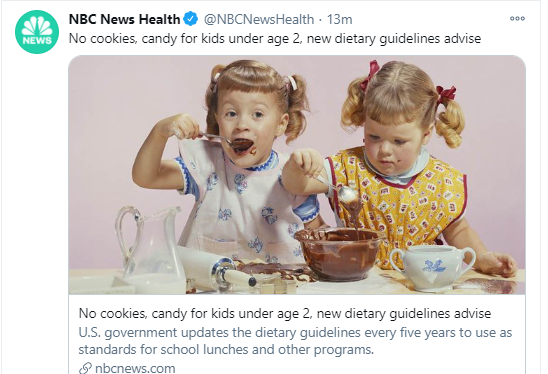
The new guidelines do say for the first time that children under 2 should avoid consuming any added sugars, which are found in many cereals and beverages.”
USDA Website: Dietary Guidelines for Americans
Related article: NY Times (Print edition 12/27/20) Obesity Rates Soar in China and Officials Take Action. Online (12/24/20): Influencers May Face Fines as China Tackles Obesity and Food Waste An excerpt:
“34.3 percent of adults were overweight and 16.4 percent were obese. It looked at a group of 600,000 Chinese residents between 2015 and 2019. By comparison, 30 percent of Chinese adults were overweight and 11.9 obese in 2012…obesity among American adults has increased 12.4 percent over the past 18 years, with 42.4 percent of adults in the United States now living with the condition.“
Related blog posts:
- Scrutiny Over Expertise with Dietary Guidelines (July 2020)
- USDA Changing School Rules -Policy Should Get an F
- Rolling Back School Lunch Standards
- Good Nutrition News in Our Schools –Why Not a Press Release?
- NY Times: “Our Food is Killing Too Many of Us”
- The Paramount Health Challenge for Humans in the 21st Century

 gutsandgrowth