
Dr. Michael Wilsey gave our group an excellent update on Endoscopy Pearls and Ergonomics. My notes below may contain errors in transcription and in omission. Along with my notes, I have included many of his slides.
Endoscopy Pearls:
- There is an upcoming endoscopy training session at NASPGHAN (not many spots left): Single Topic Symposium Link:: Advancing Pediatric Endoscopy: Bridging Gaps in Therapeutic Skills for Everyday Practice
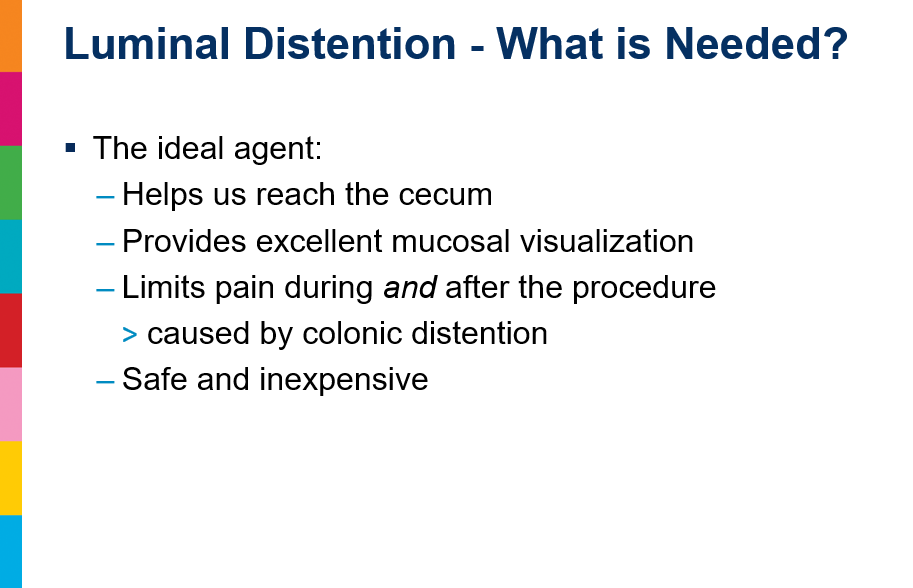
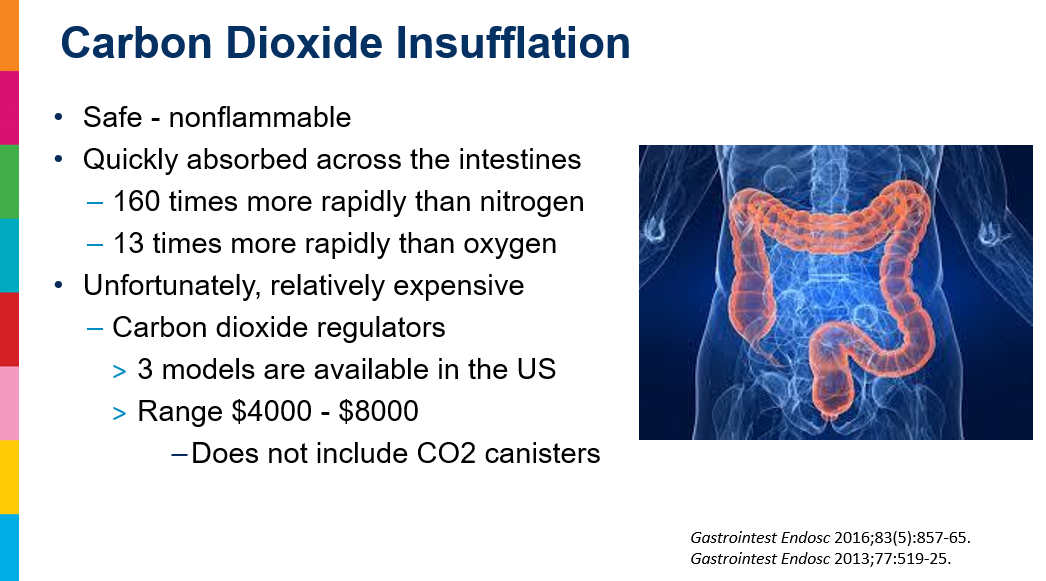
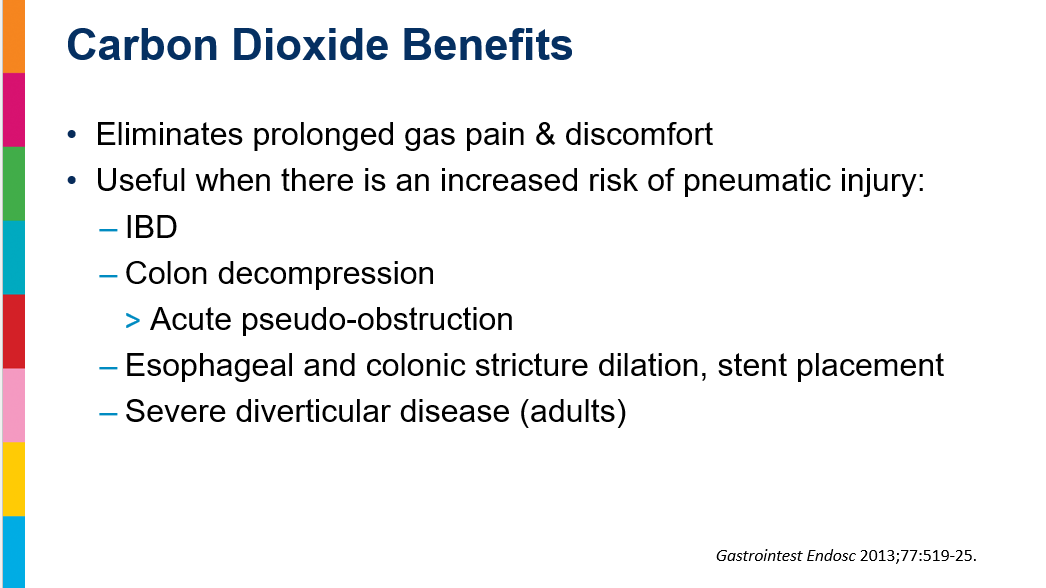
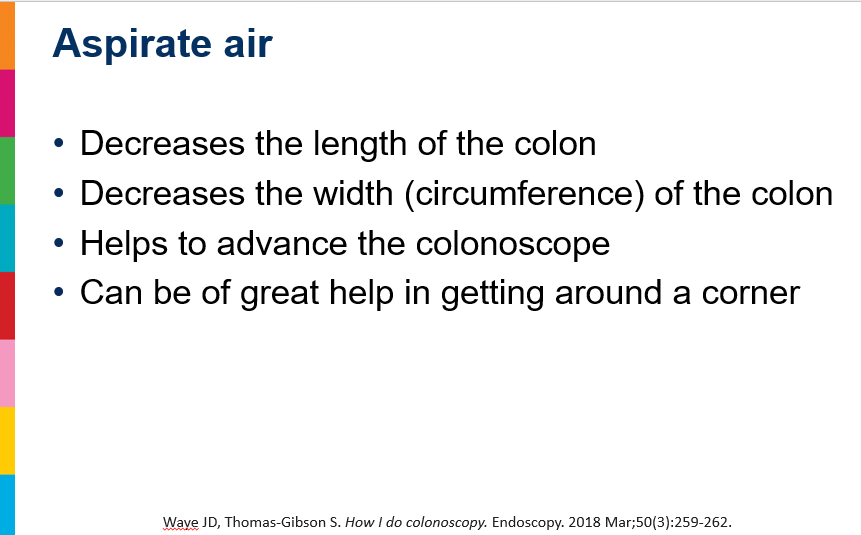
- Luminal distention – options include air, carbon dioxide, and water. CO2 especially helpful if higher risk for pneumatic injury (but more costly)
- Video Link to show techniques:
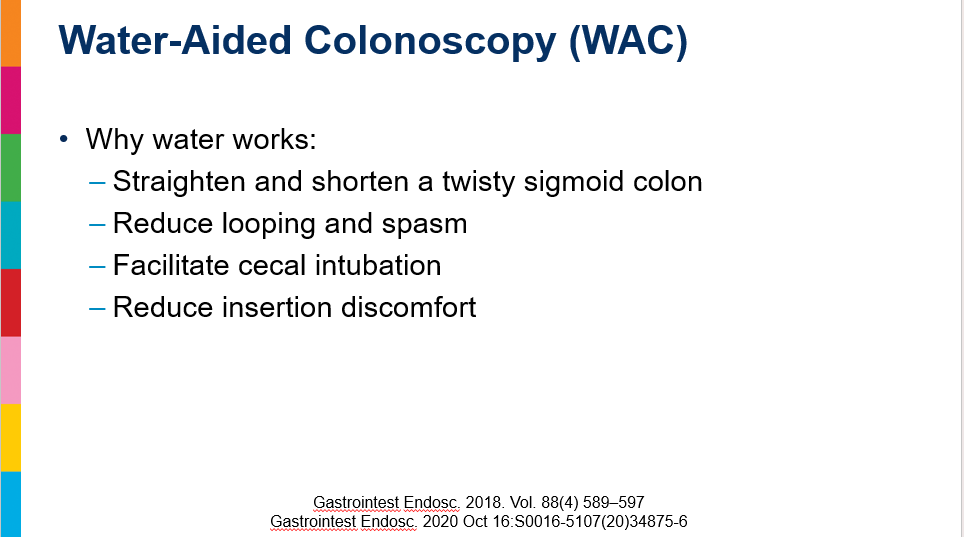
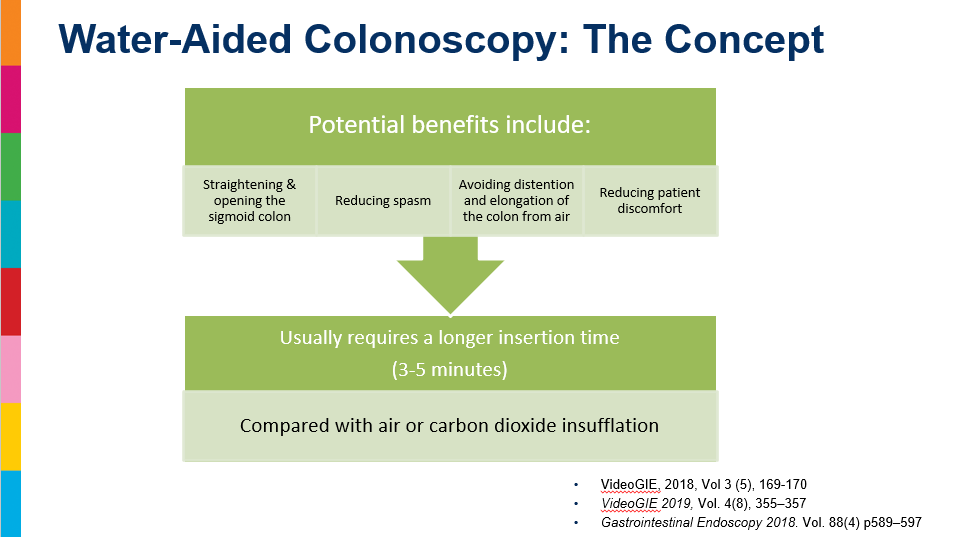
- YouTube (~6 minute): How to Perform a Water-aided colonoscopy. Sergio Cadoni, Sauid Ishaq, VideoGIE, Volume 3, Issue 5, 2018; Pages 169-170.
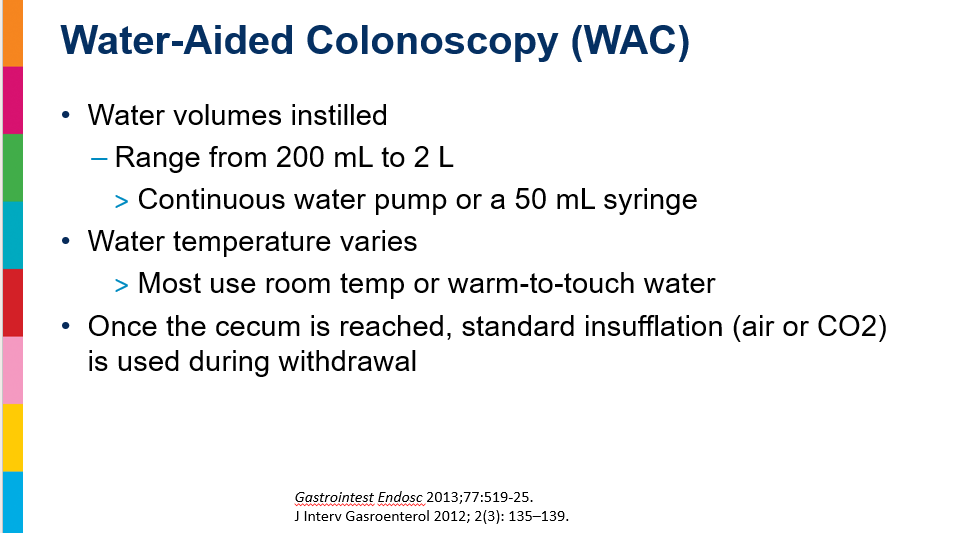
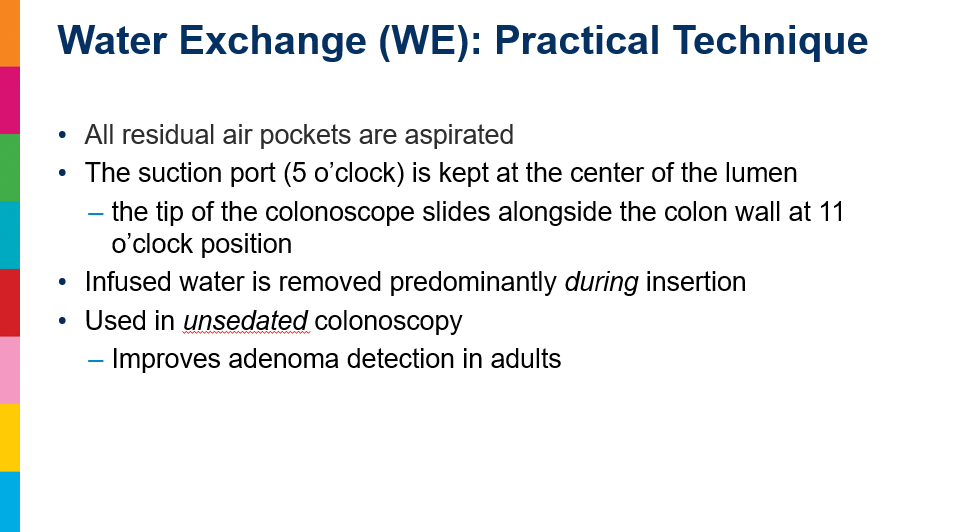
- Residue can be suctioned while infusing more water, which helps to clean the colon, but if there is too much residue, it is very difficult to see clearly enough to insert the colonoscope properly.
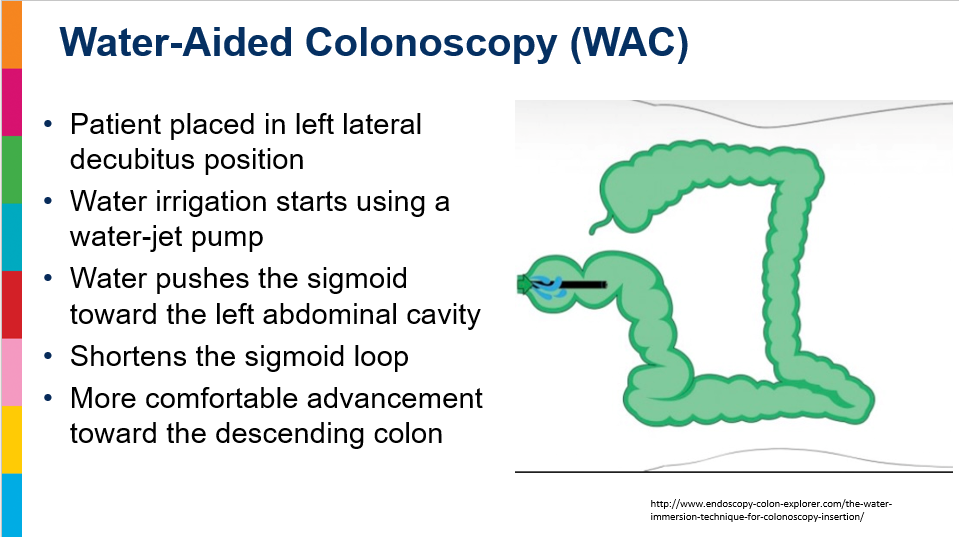
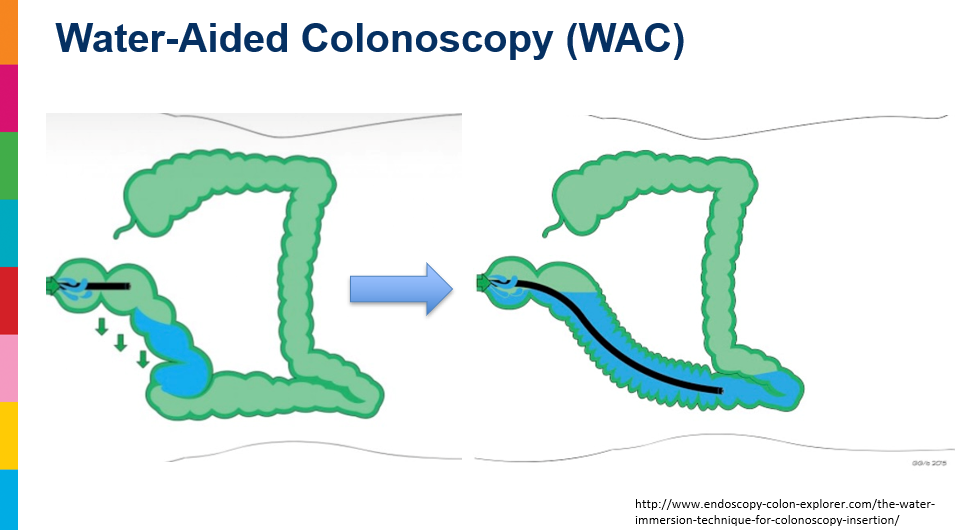
- The water immersion technique starts with the patient in the left lateral position so that the progressive irrigation of water eases down the sigmoid by gravity on the left abdominal quadrant. Instead of syringes, the use of water flushing pumps allows one to better adjust the quantity of water needed according to the morphology of the sigmoid and does not delay the maneuvers of scope progression.
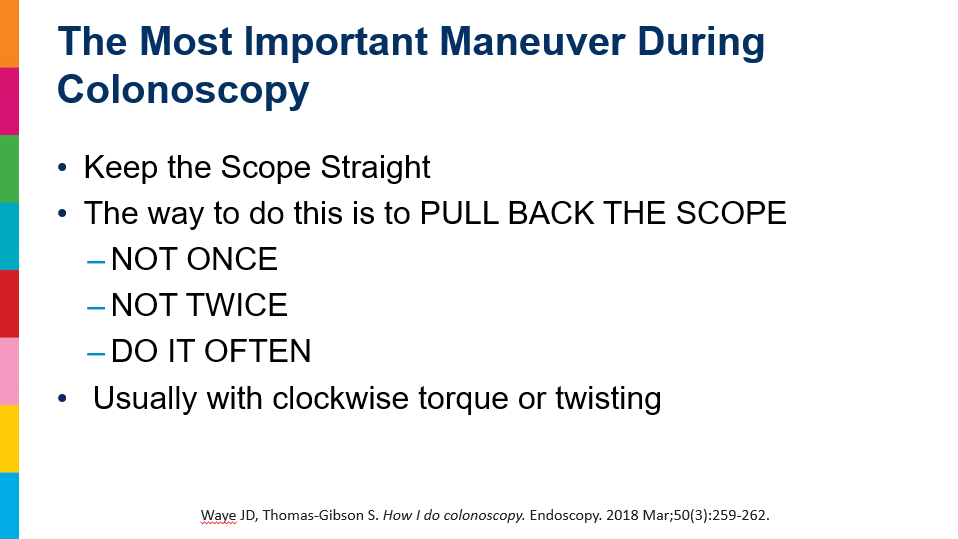
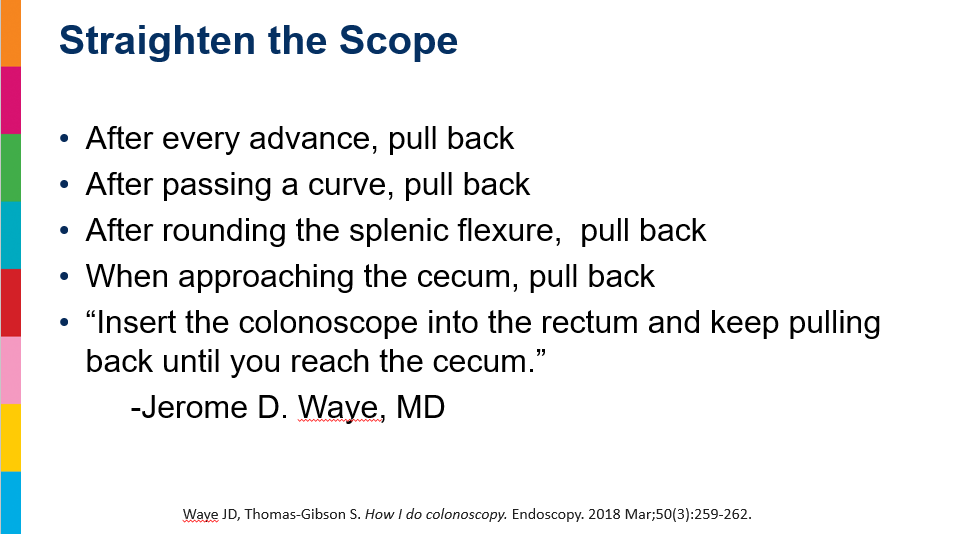
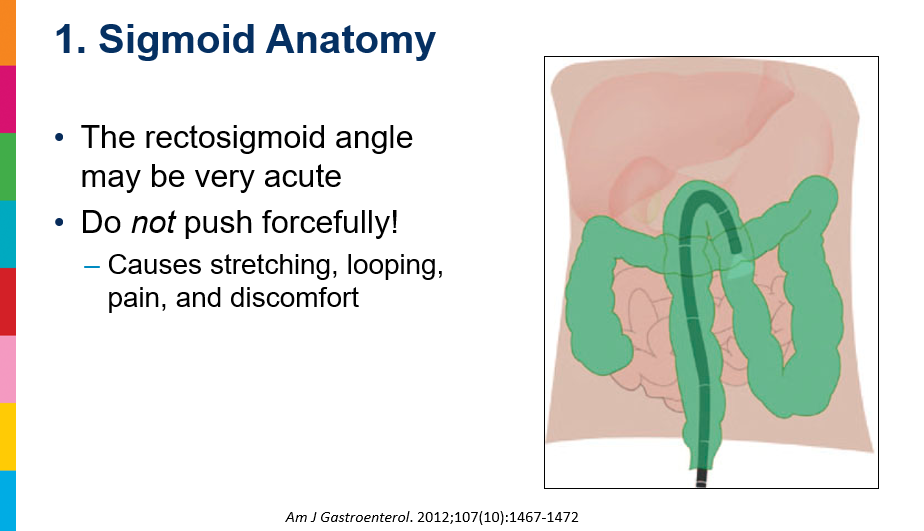
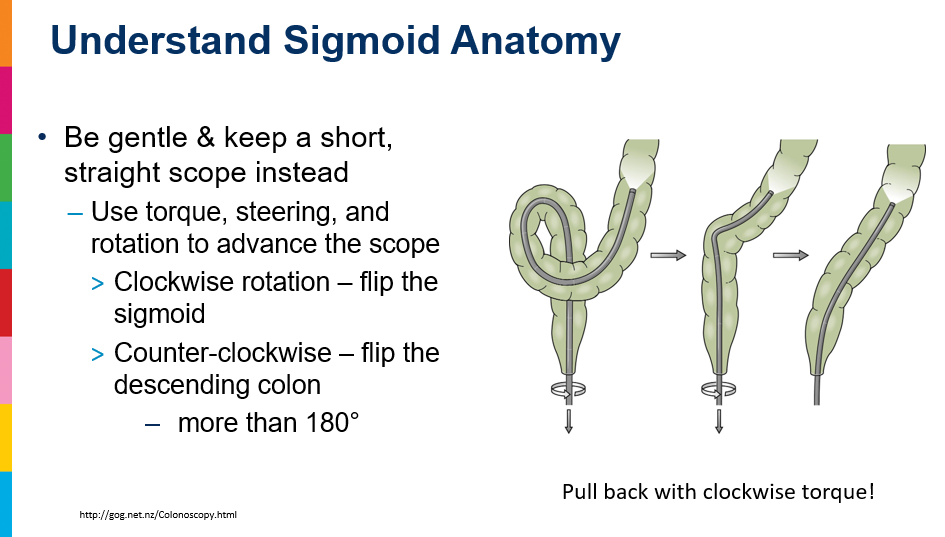
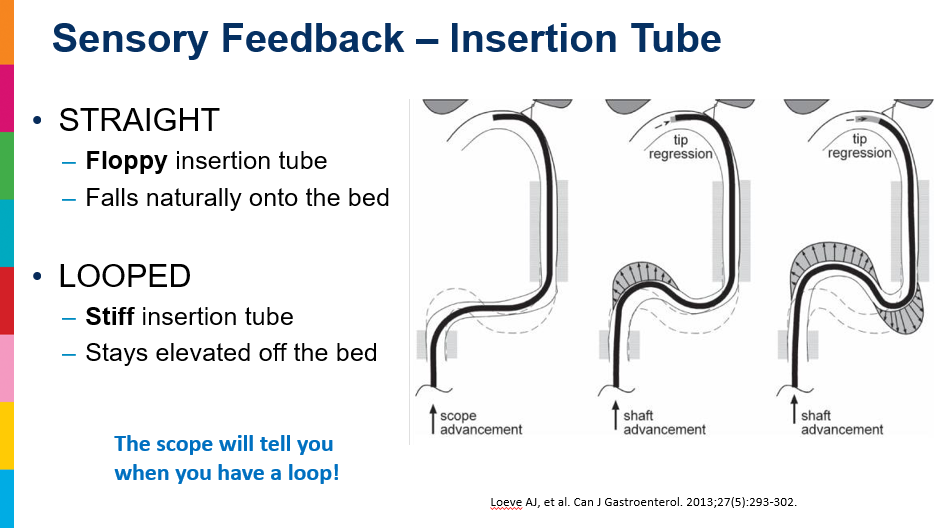
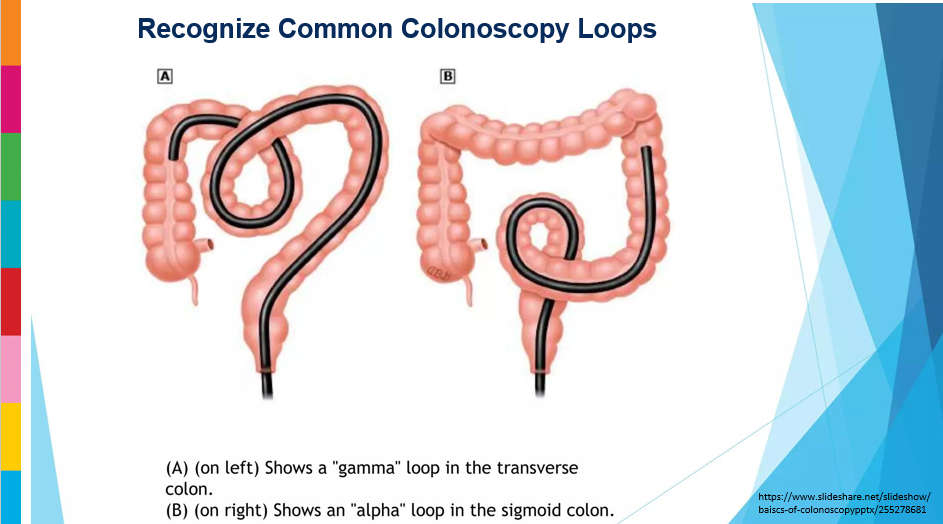
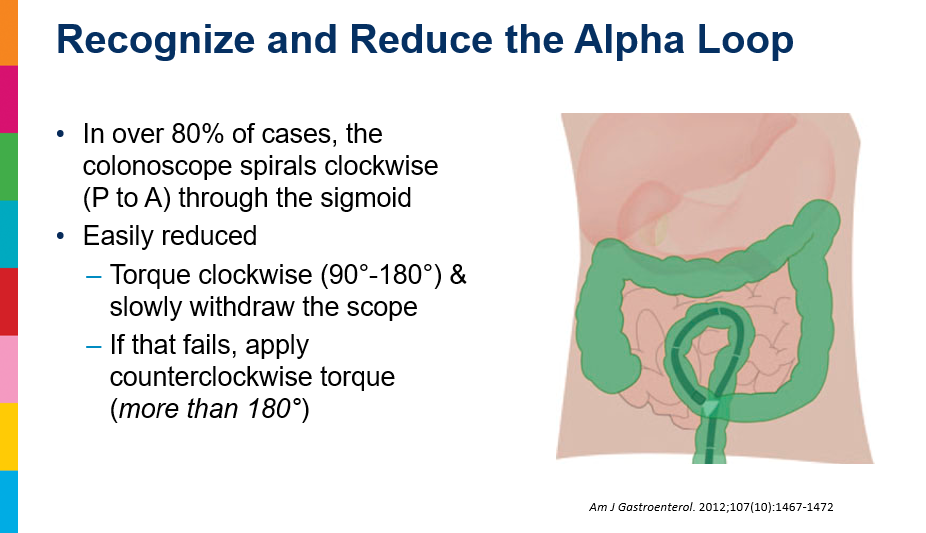
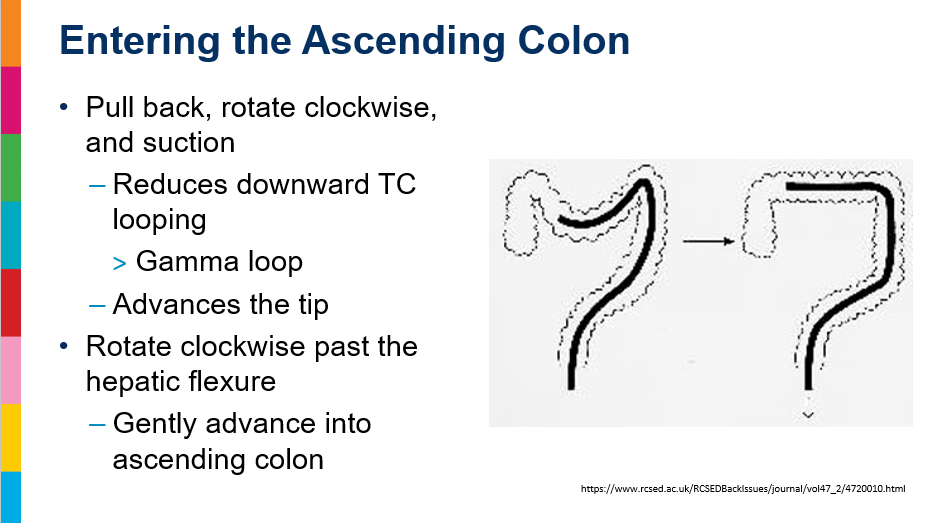
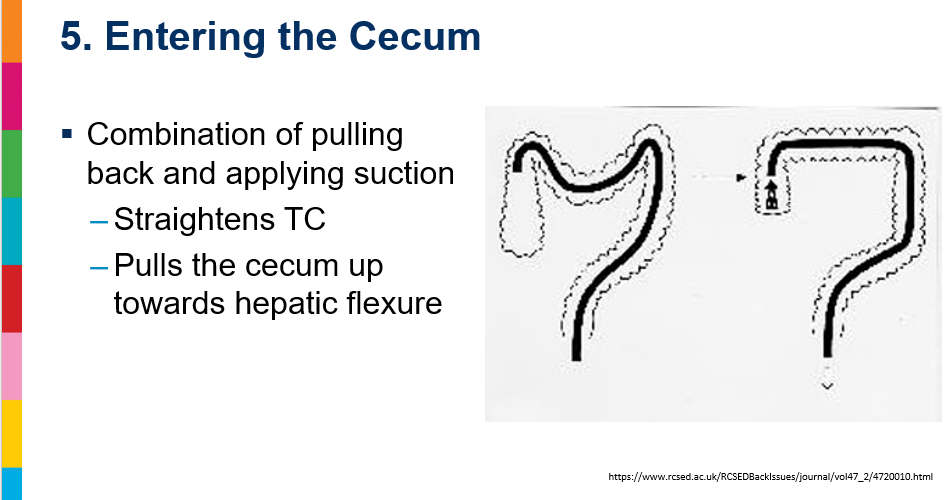
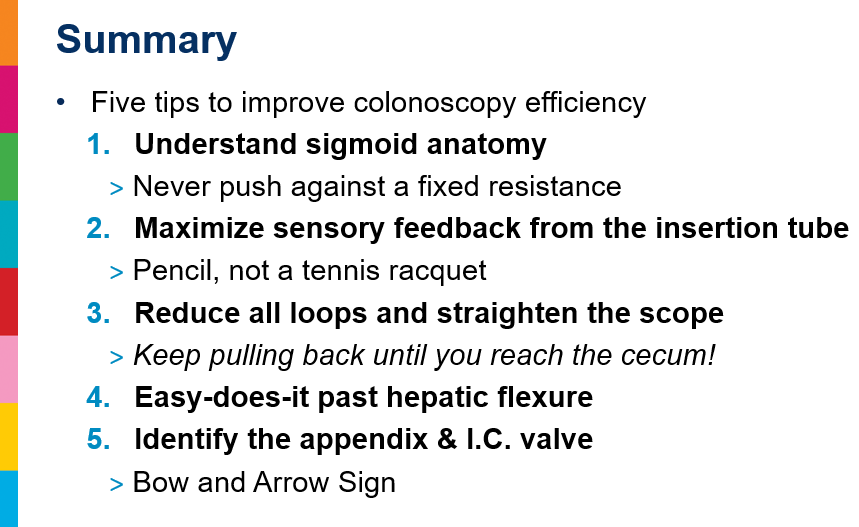
- Frequently pull back on scope to minimize looping
- Link: Axis-keeping shortening technique for colonic intubation (article) and ~ 8 min video: Video (151.42 MB) (access from article in supplementary data just above references)
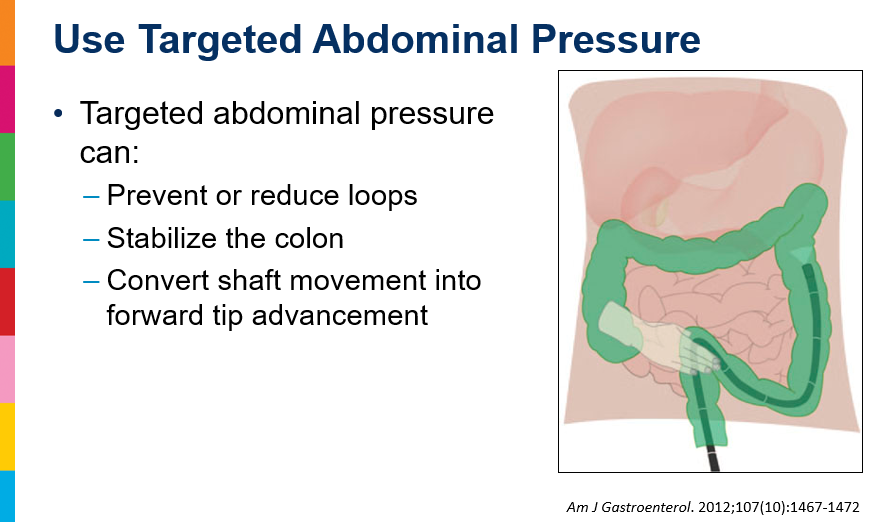
- LLQ pressure can help minimize sigmoid looping
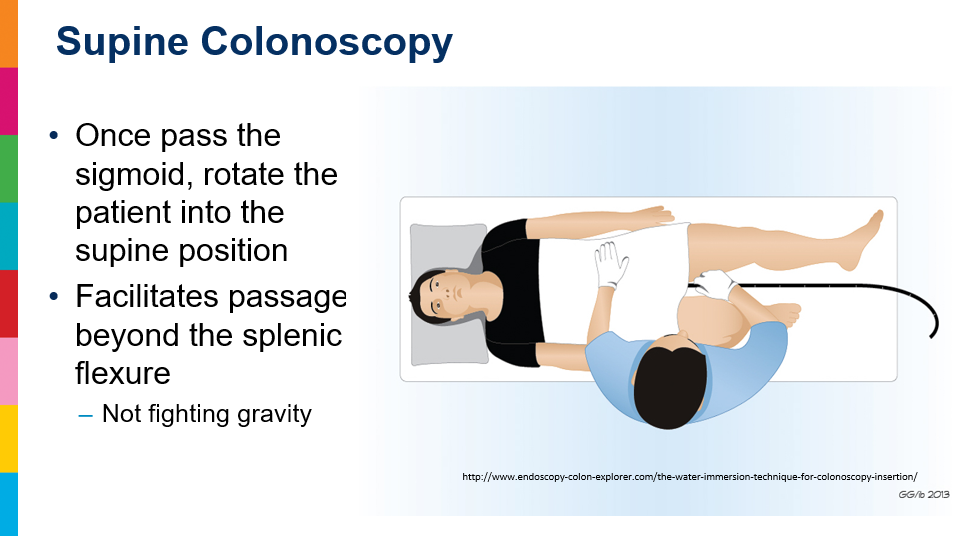
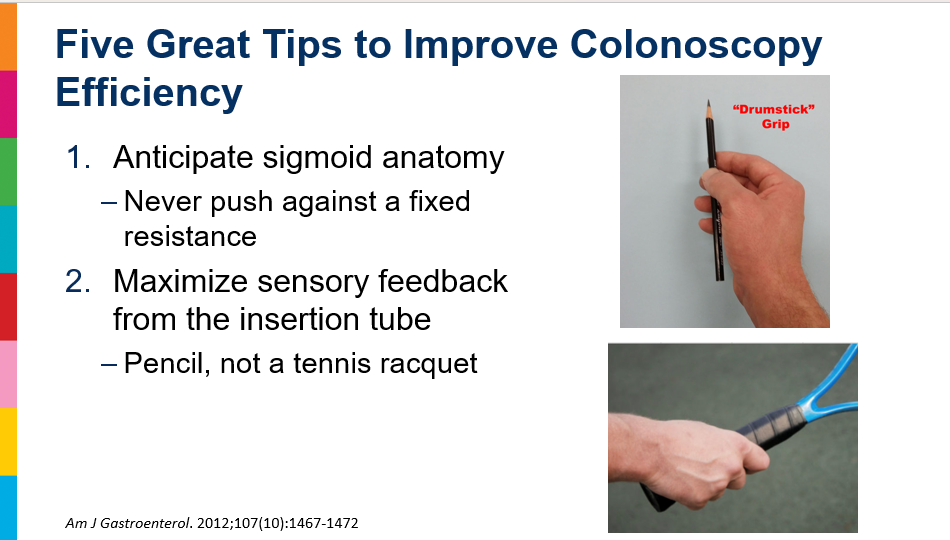
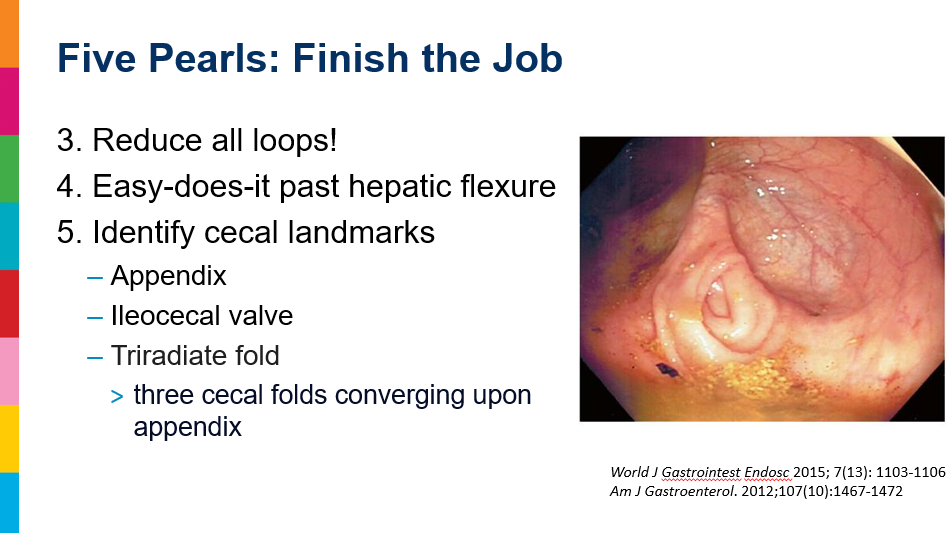
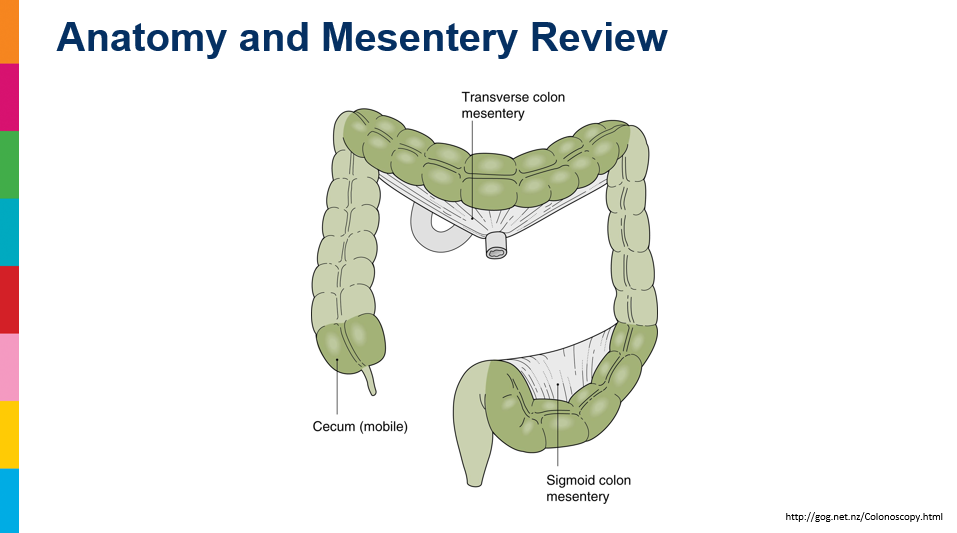
- Anatomy: sigmoid and transverse colon are more mobile. They are suspended by mesenteries (the transverse mesocolon and sigmoid mesocolon), which allow them to swing or shift freely in the abdomen, unlike the other fixed parts of the colon.
Related blog posts:

