Global Evidence of Gastric Cancer Prevention with Helicobacter pylori Eradication

Several recent articles have confirmed the benefits of H pylori eradication on reducing the risk of gastric cancer. This is in both Western and Eastern populations.

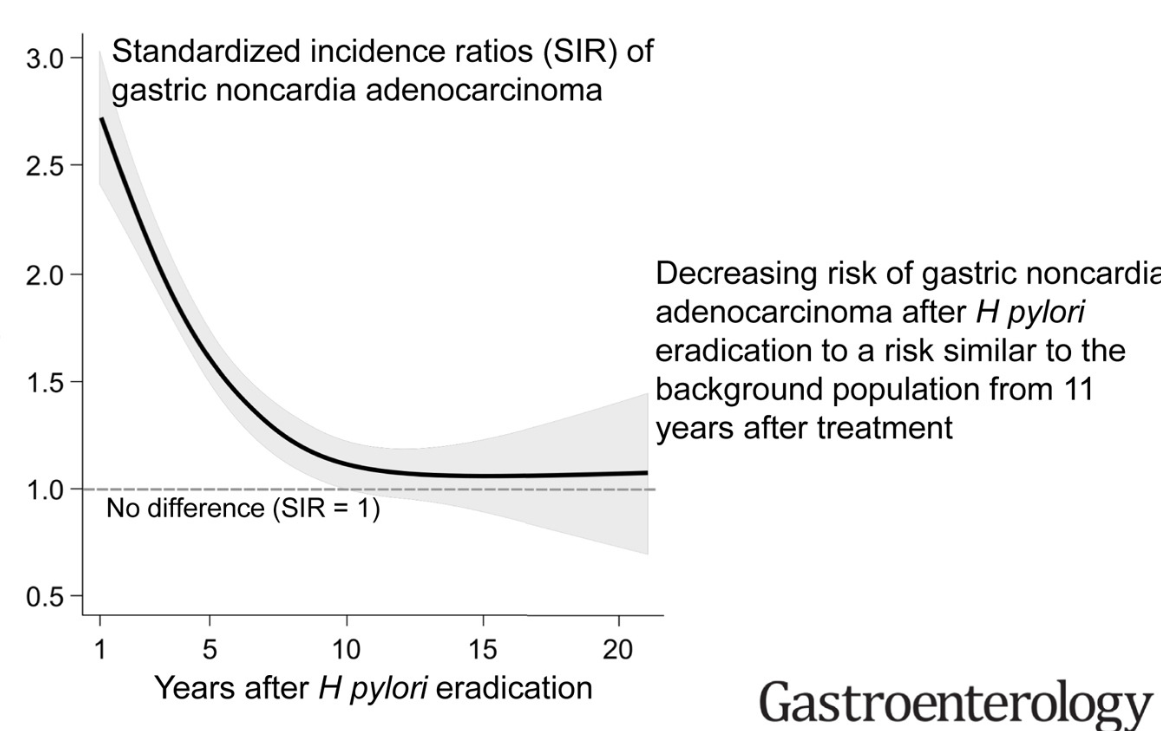
In this retrospective study from Nordic countries (Denmark, Sweden, Norway, Finland, and Iceland), researchers followed outcomes among ~700,000 people treated for H. pylori infection. The incidence of gastric adenocarcinoma was twice that of the general population in the first 5 years after treatment, likely reflecting H. pylori–related carcinogenesis that already was underway, but after 11 years, the incidence fell to that of the general population and remained there.

Discussion points:

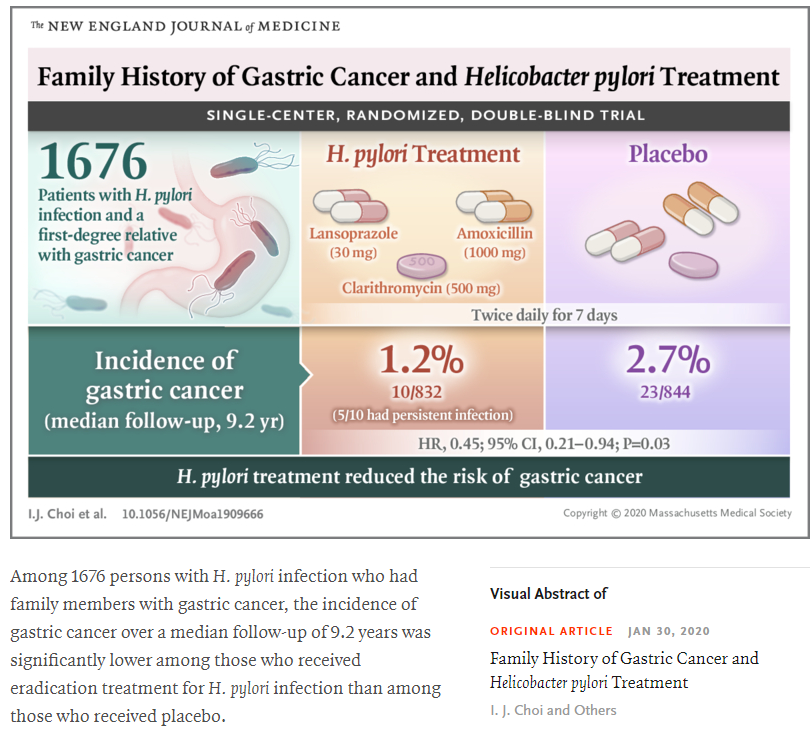
  • The results of this study from 5 entire Western countries are in line with systematic reviews from Asian populations, indicating that H pylori eradication reduces the risk of gastric cancer
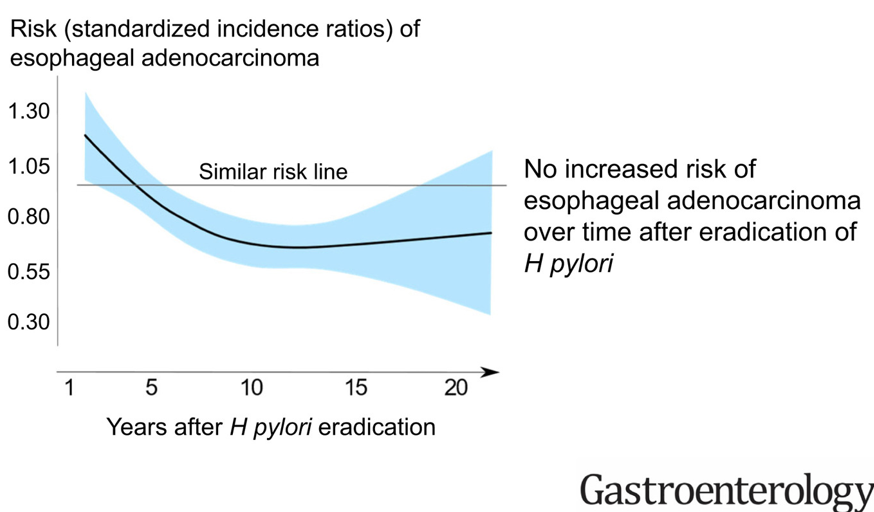
  • In addition, it has been proposed that eradication of H pylori might increase the risk of esophageal adenocarcinoma, but our recent study based on the NordHePEP found no such increase (Ref: Gastroenterology. 2024; 167:485-492.e3)
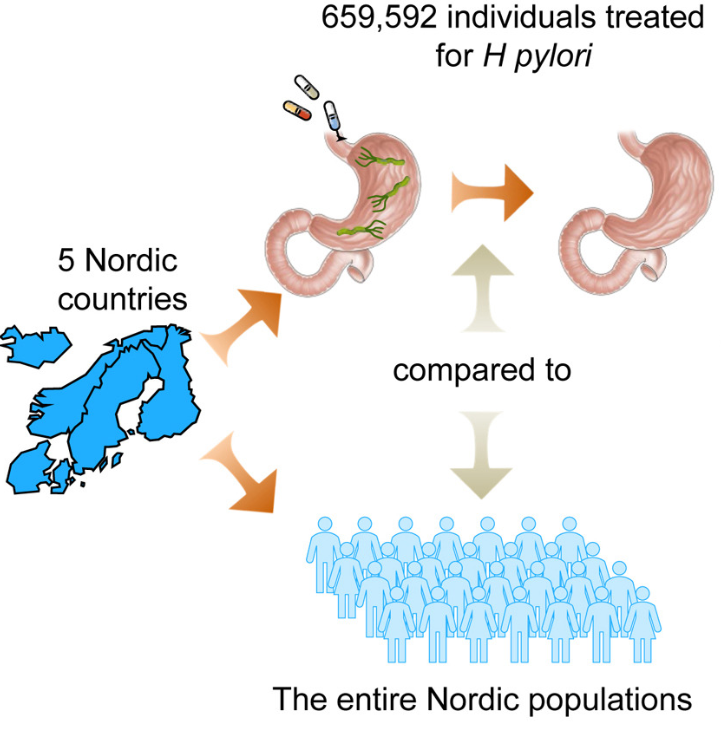
In this population-based study with more than 900,000 individuals, gastric cancer incidence and mortality rates were significantly lower in H pylori-treated individuals than in the general population.

In this meta-analysis of 11 randomized trials and 13 cohort studies researchers compared outcomes in treated and untreated H. pylori–positive adults. In both groups of studies, gastric cancer incidence was 40% lower in people who underwent H. pylori eradication. All but two of these studies were from eastern Asia.

 “In 2025, the IARC Working Group has issued a new report reaffirming H pylori eradication as a globally actionable and cost-effective intervention for the primary prevention of GC.18…Also, addressing the global public health challenge of antibiotic resistance remains essential, necessitating the development of susceptibility-guided or empirically optimized regimens tailored to local resistance patterns.

My take (borrowed from the commentary): “Despite the challenges, collectively, the emerging evidence from diverse populations reinforces the significant benefits of H pylori eradication in reducing GC incidence and mortality. These findings continuously support that H pylori eradication remains an effective preventive strategy across demographic settings, highlighting its relevance as a critical public health measure globally.”

Related blog posts:

Getting Rid of H pylori Does Not Increase the Risk of Esophageal Adenocarcinoma

A-K Wiklund, et al. Gastroenterol 2024; 167: 485-492. Risk of Esophageal Adenocarcinoma After Helicobacter pylori Eradication Treatment in a Population-Based Multinational Cohort Study

Background: Helicobacter pylori infection is associated with a decreased risk of esophageal adenocarcinoma, and the decreasing prevalence of such infection might contribute to the increasing incidence of this tumor. For this reason, the authors examined the hypothesis that eradication treatment of H pylori increases the risk of esophageal adenocarcinoma.

Methods: Using national registries with Nordic population adults (≥18 years, n=661,987) receiving H pylori eradication treatment from 1995–2018, the authors evaluated 5,495,552 person-years after eradication treatment.

Key findings:

  • The standardized incidence ratios (SIR) did not increase over time after eradication treatment, but rather decreased and was 0.73 at 11–24 years after treatment
  • The overall SIR of esophageal squamous cell carcinoma, calculated for comparison, showed no association (SIR = 0.99)

My take: Eradication of H pylori lowers the risk of gastric cancer. This study shows that treatment does NOT result in an unintended consequence of increasing esophageal cancer.

Related blog posts:

Long Term Benefits of Helicobacter Eradication in U.S.
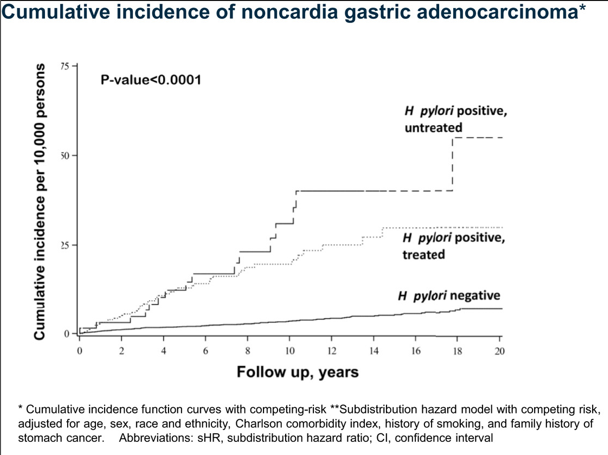
D Li et al . Gastroenterol 2023; 165: 391-401. Open Access! Effect of Helicobacter pylori Eradication Therapy on the Incidence of Noncardia Gastric Adenocarcinoma in a Large Diverse Population in the United States

The authors examined a retrospective cohort study of Kaiser Permanente Northern California members (716,567 individuals) who underwent testing and/or treatment for H pylori between 1997 and 2015 and were followed through December 31, 2018. Key findings:

  • The adjusted subdistribution hazard ratios of NCGA for H pylori–positive/untreated and H pylori–positive/treated individuals were 6.07 and 2.68, respectively, compared with H pylori–negative individuals.
  • When compared directly with H pylori–positive/untreated individuals, subdistribution hazard ratios for NCGA in H pylori–positive/treated were 0.95 at <8 years and 0.37 ≥8 years of follow-up.

My take (borrowed from authors):  H pylori eradication therapy was associated with a significantly reduced incidence of gastric cancer after 8 years compared with no treatment. The risk among treated individuals became lower than the general population after 7 to 10 years of follow-up. The findings support the potential for substantial gastric cancer prevention in the United States through H pylori eradication.

Related blog posts:

Synergistic Dangers: Helicobacter Pylori and Cancer Genes

Y Usui et al. NEJM 2023; 388: 1181-1190. Helicobacter pylori, Homologous-Recombination Genes, and Gastric Cancer

Background: Gastric cancer is the fifth most common neoplasm and the fourth leading cause of death from cancer worldwide.1 Helicobacter pylori has been classified as a group I carcinogen and is an environmental risk factor for gastric cancer.2 Although H. pylori infection affects more than half the world population

Methods: This study evaluated the association between germline pathogenic variants in 27 cancer-predisposing genes and the risk of gastric cancer in a sample of 10,426 patients with gastric cancer and 38,153 controls from BioBank Japan. This retrospective study also assessed the combined effect of pathogenic variants and H. pylori infection status on the risk of gastric cancer and calculated the cumulative risk in 1433 patients with gastric cancer and 5997 controls from the Hospital-based Epidemiologic Research Program at Aichi Cancer Center (HERPACC).

Key findings:

  • Germline pathogenic variants in nine genes: (APCATMBRCA1BRCA2CDH1MLH1MSH2MSH6, and PALB2) were associated with the risk of gastric cancer.
  • At 85 years of age, persons with H. pylori infection and a pathogenic variant had a higher cumulative risk of gastric cancer than noncarriers infected with H. pylori (45.5% vs. 14.4%).
  • Limitation: The study population was from East Asia and thus, the findings may be different in other populations.

My take: H. pylori infection has a synergistic effect in increasing the risk of gastric cancer in individuals with germline pathogenic variants in homologous-recombination genes. To minimize the risk of gastric cancer, H pylori eradication is important; however, it is especially in those with cancer-predisposing variants.

From NEJM Twitter Feed

Related blog posts:

Smoking, Alcohol and Obesity Increase Risk of Malignancies + Staff Morale (Humor)

S-M Wang et al. The American Journal of Gastroenterology: September 2021 – Volume 116 – Issue 9 – p 1844-1852. Open Access: Population Attributable Risks of Subtypes of Esophageal and Gastric Cancers in the United States

This study examined population risks for esophageal squamous cell carcinoma (ESCC), esophageal adenocarcinoma (EAC), gastric cardia adenocarcinoma (GCA), and gastric noncardia adenocarcinoma (GNCA).

“We prospectively examined the associations for risk factors and these cancers in 490,605 people in the National Institutes of Health-the American Association of Retired Persons Diet and Health cohort Diet and Health Study cohort from 1995 to 2011.”

Key findings:

My take: Tobacco, Obesity and Alcohol are associated with increased risk for a large proportion of esophageal and gastric cancers in the United States

Related article: VK Rustgi et al. Gastroenterol 2021; 161: 171-184. Open Access: Bariatric Surgery Reduces Cancer Risk in Adults With Nonalcoholic Fatty Liver Disease and Severe Obesity

Key findings:

  • The IPTW (inverse probability of treatment weighting)-adjusted risk of any cancer and obesity-related cancer was reduced by 18% (hazard ratio, 0.82; 95% CI, 0.76–0.89) and 25% (hazard ratio, 0.65; 95% CI, 0.56–0.75), respectively, in patients with versus without bariatric surgery.
  • In cancer-specific models, bariatric surgery was associated with significant risk reductions for colorectal, pancreatic, endometrial, thyroid cancers, hepatocellular carcinoma, and multiple myeloma.

Link: Improving Morale (53 seconds)

Treating Helicobacter Pylori Lowers The Risk of Gastric Cancer

Related blog posts:

Helicobacter Pylori: Relationship to Cancer and Dubious Beneficial Claims

I found a recent review (Gastroenterol 2015; 148: 719-31) regarding Helicobacter pylori (HP) of interest.  David Graham explores the issue of HP eradication with regard to cancer and whether there are benefits to the infection that result in detrimental effects with HP eradication.

The potential mechanisms in which HP infection can increase the risk of gastric cancer are depicted in Figure 2; the most important:

  • Inflammation induced by infection
  • Genetic/epigenetic changes –> genetic instability in gastric epithelial cells

Lessons regarding eradication therapy:

  • Sequential therapy has been shown in some studies to be effective/superior (in Italy) yet inferior in others (eg. Korea).  “The results are explained entirely by differences in patterns of drug resistance, which typically were not assessed before studies were initiated.”
  • Findings from many studies cannot be applied to other populations without resistance data.

Does HP infection reduce the risk of obesity or childhood asthma?  Probably not.

  • “Any claim that a major human pathogen also might provide a meaningful health benefit, and that plans to eradicate it should be reconsidered, is guaranteed to elicit interest from the press.”
  • As a counter example, Dr. Graham notes “because 2 events are associated does not mean that one causes the other. For example, one study reported a correlation between the number of storks in Brandenburg, Germany, and the birth rate in Berlin.” [Backen MB. Harm. In: Bracken MB. Risk, chance, and causation. New Haven: Yale University Press, 2013; 108-09.]
  • He notes that HP can both promote or inhibit acid secretion/acid reflux.  Increased acid secretion with resultant esophageal disease could increase the risk of adenocarcinoma of the esophagus; however, “the risk of developing adenocarcinoma of the stomach remains higher than the risk of adenocarcinoma of the esophagus.”  This indicates that if there is an increased esophageal cancer risk, eradication would still be favorable by lowering gastric cancer risk.
  • Asthma: “overall, the studies do not support the hypotheses that increases in childhood asthma were related to the absence of H pylori.”
  • Obesity: “A meaningful causative association between H pylori and obesity is unlikely.”

Screen Shot

Screen Shot

Take-home message: H pylori is a pathogen and should be treated as such.

Related blog posts:

University of Chicago

University of Chicago