
While Zika virus infections may not be seen frequently by pediatric gastroenterologists, this infection will be a common concern for the families we treat and we may end up taking care of children with feeding problems/neurologic impairment due to congenital infection.
I attended a recent Georgia American Academy of Pediatrics board meeting. One of the topics discussed was the Zika virus. An update was given by Dr. Harry Keyserling, chair of the infectious disease committee (who has given permission for me to share some of his slides). Some of the important points from his talk:
- The Zika virus shares some similarities with the Dengue virus. The Zika virus is a single-stranded RNA flavivirus. Incubation period is 3 days to a few weeks. It can be acquired from mosquito bites, spread sexually, transplacentally or intrapartum. It may be transmissible via blood, organ donation or possibly breastmilk.

History of Zika Virus

Most are asymptomatic. The clinical spectrum in those with symptoms are noted above.
- 80% of infected individuals are asymptomatic.
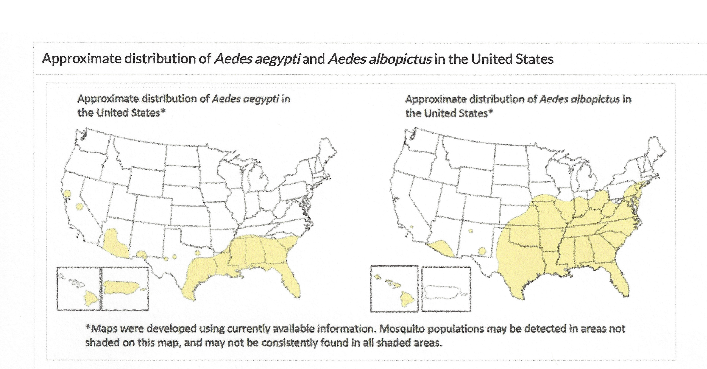
Approximate distribution of mosquito vector
- Due to the geographic distribution of the vector, it is likely that there will be many more cases in Georgia.
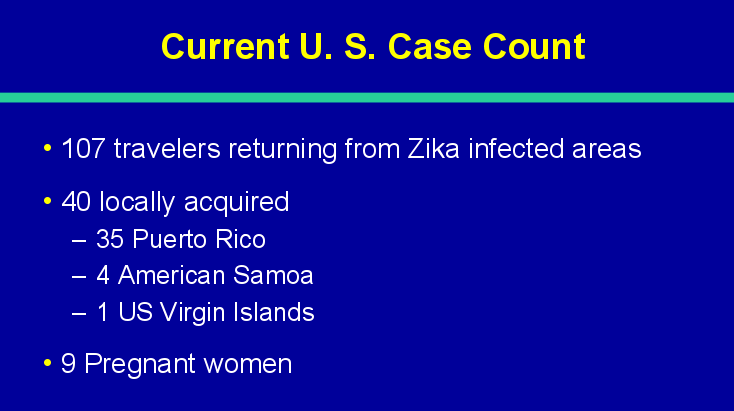

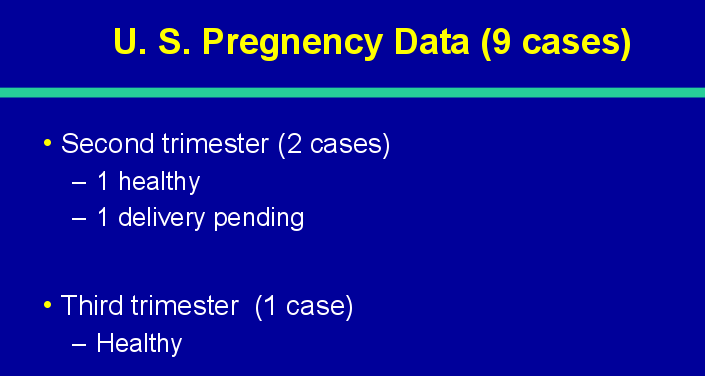
- The most alarming association has been with microcephaly. In some locations, there have been recommendations to avoid pregnancy until 2018. After natural infection has spread, it is likely to lead to immunity and then should be safe to become pregnant.
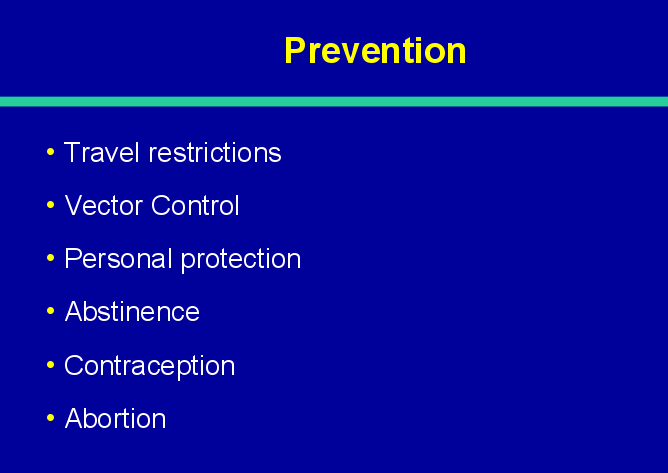
- Zika can be acquired through sexual-transmission which indicates that pregnant women in endemic areas could need to avoid sex.
More resources:
- Link: NEJM Zika Resources. This site has links to NEJM publications on Zika virus, CDC Zika website, WHO website, and healthmap of reported cases.
- The CDC Zika site has comprehensive information and includes information for healthcare providers to send diagnostic assays to the CDC.
- NEJM: Zika Virus Associated with Microcephaly
- Zika NEJM Link (full text): Zika Virus in the Americas Anthony Fauci/David Morens
- From Wall Street Journal: Brazil Confirms More Microcephaly Births, Dengue Case Rise
My take: Because the Zika virus is going to continue to spread and the methods for prevention are not entirely effective, the next few years are going to present a lot of challenges. This will continue until some population immunity develops (following infection or perhaps after development of an effective vaccine).
 gutsandgrowth