Sophie Egan, NY Times 5/28/26: 5 Health Risks From Consuming Too Much Protein
An excerpt:
“Most Americans eat more protein than they need. We asked experts what can happen if people have too much of a good thing…
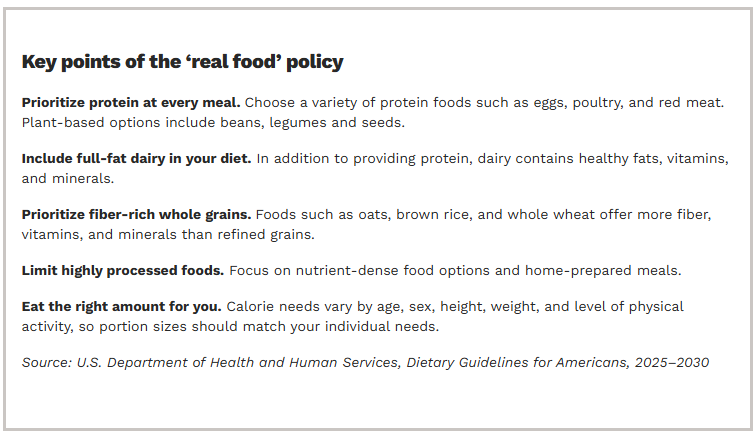
If you’ve browsed the packaged-food aisle of a grocery store lately, or scanned the updated Dietary Guidelines for Americans, you might think that when it comes to protein, more is better…the new inverted food pyramid, released by the Trump administration in January, features protein prominently, with steak, chicken and cheese at the top…
Potential problems can arise when people eat much more than around 1.2 grams of protein per kilogram of body weight per day…
Heart Disease and Type 2 Diabetes
Research suggests that those who eat larger amounts of red and processed meat tend to have higher risks of heart disease and Type 2 diabetes…In one large analysis published in 2023, for instance, researchers found that eating an extra 100 grams of red meat (equivalent to about one thin, boneless pork chop) per day increased the risk of heart disease by 11 percent — and every additional 50 grams of processed red meat (equivalent to about one standard hot dog) per day increased it by 26 percent. Another study, also published in 2023, found that among the nearly 217,000 (mostly female) participants, those who ate the most red meat had a 40 percent higher risk of developing Type 2 diabetes than those who ate the least, and that those who ate the most processed red meat had a 51 percent higher risk…
Cancer
In one study published in 2024, researchers found that diets high in red meat were linked with a 30 percent increased risk of developing colorectal cancer, and that those high in processed meat were linked with a 40 percent increase in risk…People who prioritize vegetables, fruits and whole grains, along with lean or plant-based proteins, are less likely to develop certain types of cancer (as well as cardiovascular disease and Type 2 diabetes).
Constipation and Other Digestive Concerns
People who are focused on increasing their protein consumption (especially those on low-carb diets) sometimes inadvertently leave out high-fiber foods, like vegetables and whole grains [which may increase the likelihood of constipation and irritable bowel syndrome]…
Weight Gain
Excess calories, including those from protein, will be turned into fat…A half-cup of cooked vegetables, for instance, has an average of about 25 calories, whereas a half-cup of cooked chicken has about 140 calories…
Kidney Issues
If your kidneys are healthy, you probably don’t need to worry much about excess protein consumption…for the more than 1 in 7 Americans with chronic kidney disease — especially those who may be close to needing dialysis — metabolizing large amounts of protein can stress the kidneys…Kidney stones are also a potential side effect of consuming too much animal protein.”
My take: The famous line by Mae West “Too much of a good thing can be wonderful!” is not true for dietary protein.
Related blog posts:
- Have You Read the New “Dietary Guidelines for Americans, 2025-2030”?
- Is a High Protein Diet Beneficial and Safe?
- “Optimal dietary patterns for healthy aging”
- “How to Make America Healthy: the Real Problems — and Best Fixes”
- “You Can’t Outrun a Bad Diet”
- NY Times: “Our Food is Killing Too Many of Us”