Will You Be Able to Find a Caregiver When You Need One?

PMG Santos et al. NEJM 2025; 393: 105-107. Who Will Care for America? Immigration Policy and the Coming Health Workforce Crisis

This article outlines the role of undocumented immigrants in our health care system with a focus on home health aides. Given the increase in the numbers of Americans older than 65 yrs, 56 million in 2020 and projected to be 80 million in 2030, current immigration policies will worsen the severe health care worker shortages.

An excerpt:

Immigrants are a vital part of the U.S. health care system: at least one in five U.S. health care workers is foreign-born, including 29% of physicians, 17% of nurses, and 24% of direct care workers…Data suggest that most (if not all) foreign-born physicians and nurses are naturalized U.S. citizens or lawfully permanent residents. In contrast, of the 37% of foreign-born direct care workers who are noncitizens, nearly half may be undocumented.4 This divergence is at least partly attributable to policies that streamline pathways to legal permanent residency or citizenship for some but not all immigrants…

As federal policies threaten to further destabilize the direct care workforce, nonimmigrants are unlikely to fill the resulting void. Direct care workers assist with household chores as well as bathing, dressing, and toileting — thereby enabling frail, older adults and those with disabilities to live safely at home….The physically demanding nature of direct care work, combined with low pay and high susceptibility to exploitation, makes these roles unattractive to U.S.-born and highly skilled foreign-born workers…

This is not the first time that immigrants have helped fill critical health care roles that were unattractive to U.S.-born workers…the Exchange Visitor Program in 1948, allowing Filipino nurses to obtain temporary work visas. Later, the Immigration and Nationality Act of 1965 allowed Filipino nurses to stay in the United States permanently…

Federal officials could effectuate immigration reform in a way that secures our borders while addressing labor shortages. Instead, current policies threaten to further shrink this essential workforce, maligning and driving out hard-working immigrants at the expense of an aging America…compromising care for older adults and the health care system at large…

The recent deportation of immigrant health care workers is our canary in the coal mine: policymakers must act swiftly, or risk endangering the health of us all.

My take: I doubt the consequences of mass deportation have been carefully considered amid the heated rhetoric. There is saying, often attributed to Otto von Bismarck: “Only a fool learns from his own mistakes. A wise man learns from the mistakes of others.” As such, it appears that we are destined to learn from mistakes rather than avoiding them.

Related blog posts:

Seven Sisters Hike: Seaford to Eastbourne, UK

Providing Care and Upholding the Law in an Evolving Immigration Landscape

H Kaplan et al. NEJM 2025; 392: 21: 2084-2086. Health Care in an Evolving Immigration Landscape — Providing Care while Upholding the Law

An excerpt:

In January 2025, the “sensitive locations policy,” which protected health care facilities and other designated areas from immigration enforcement activities, was rescinded. This change does not grant the officials unrestricted access to all areas of health care facilities or to patient information — the Fourth Amendment and the Health Insurance Portability and Accountability Act (HIPAA) Privacy Rule remain in place. Immigration officials may enter public spaces (e.g., lobbies) without consent, but they can access private spaces (e.g., exam rooms) only with a valid warrant or in exigent circumstances, such as threats to public safety…

Under the HIPAA Privacy Rule, health care professionals are not obligated to provide protected health information (PHI) to anyone without a judicial warrant or subpoena. The definition of PHI is expansive and includes a patient’s name, immigration status, and hospital discharge date. Administrative warrants from the Department of Homeland Security (such as Form I-200 or I-205) are not judicial warrants and do not compel health care professionals to disclose PHI. A judicial warrant must be signed by a judge and list a state court or U.S. district court on the document.

If an immigration official presents a judicial warrant or subpoena, health care professionals should verify its validity with their institution’s legal counsel before complying with it. They should escort the official away from private areas and document the official’s name and identification number, the nature of the request, and any actions taken, and obtain a copy of any documentation the official provides. They should not provide immigration officials with information beyond the scope of the warrant. When possible, they should avoid documenting a patient’s immigration status in the medical record, since that information could be used against the patient in legal proceedings….

If an official attempts to gain access to a private area by claiming there are exigent circumstances, legal counsel should be contacted. If an official forcibly enters a private area without legal authorization, staff should avoid physical confrontation, document the incident in detail (including names, badge numbers, and any statements made), and notify institutional leadership, their security team, and legal counsel as soon as possible…

In the past, immigration officials have pressured clinicians to transgress their clinical duties or to conduct evaluations or interventions that are not clinically indicated, such as certifying detainees’ fitness to travel for deportation…Without a court order, clinicians are not obligated to perform interventions that are not clinically indicated.

My take (borrowed in part from authors): “Health care professionals may face legal and ethical challenges as immigration policies evolve. By understanding their own legal rights and those of their patients, they can continue caring for patients while advocating for them and adhering to the law.”

Related blog posts:

This Makes Me Mad…Immigration Policy

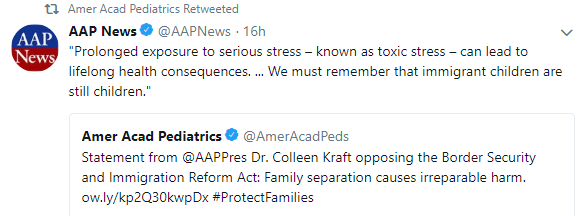
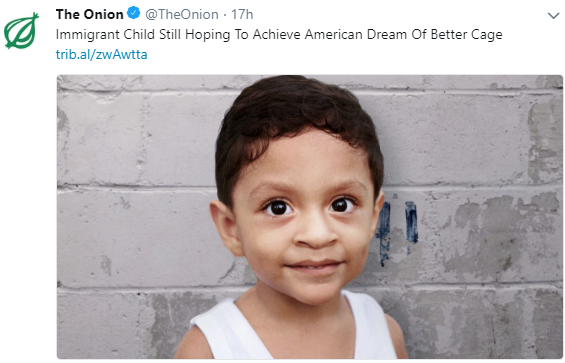
When our government takes actions on behalf of our country, this reflects on all of our values.  So, earlier this year I was disgusted and angry when I learned that as part of a ‘zero tolerance’ rule, young children were separated from their parents and placed in something akin to cages.  For me, this is a stain on our country’s history that could be compared to other atrocities like the Tuskegee experiments and Japanese internment during WWII.  While this policy was more short-lived, there are still children separated from their parents and for the children involved the consequences could be life-long.  Sadly, our entire country is responsible because we elected this administration which adopted these policies.

Now, this administration which seems incapable of any shame, is planning more steps that should make decent persons upset. Additional threats to lawful immigrants are being devised (KM Perreira et al. NEJM 2018; 379: 901-3).

“Under current guidelines, persons labeled as potential public charges can be denied legal entry to the United States” and in some cases deported.  Public-charge guidelines aim to keep immigrants from relying on public charges (eg. cash-assistance programs like welfare) for the first 5 years after admission to the U.S.

“The Trump administration is proposing sweeping changes to these [public-charge] guidelines.”  One of these proposed expansions of public-charge determination is including enrollment for Obamacare, which is legally mandated and which can include subsidies.  Another target is the Children’s Health Insurance Program.  As a consequence of these guideline changes, instead of ~3% of lawful immigrants being considered as receiving a public charge, if adopted, this would increase to a range from 32% to 47%.

If these policies are adopted, this is likely to have a lot of adverse health consequences.  Immigrants, including U.S.-born children, will be less likely to receive health care and more likely to be food insecure; 25% of U.S.-born children of immigrants currently receive SNAP (supplemental nutrition assistance program) benefits. Health consequences will affect millions and include an increase in low birth infants, increased infant mortality, and increased maternal morbidity.

For health care providers and institutions, implementation of these policies is likely to result in higher costs from uncompensated care.

In related commentaries (BL Grace et al. NEJM 2018; 379: 904-5, M Martin. NEJM 2018; 379: 906-7), the authors note the following points:

  • “Current immigration policies are undermining trust in U.S institutions…and changing the way immigrants and refugees seek health care.”  Many are worried that seeking health care could lead directly or indirectly (after providing information) to deportation
  • “Even naturalized citizens fear that their status is no longer secure.”
  • “I feel sad that my colleague’s 6-year-old patient has nightmares and urinary incontinence because she is terrified her parents will be deported.  Sad that my patients fear coming to the hospital despite grave illness out of panic that someone will ask about their immigration status.”

My take: We are all accomplices (many unwitting) in the roll out of these detrimental policies that are now affecting lawful immigrants..

Related blog posts: