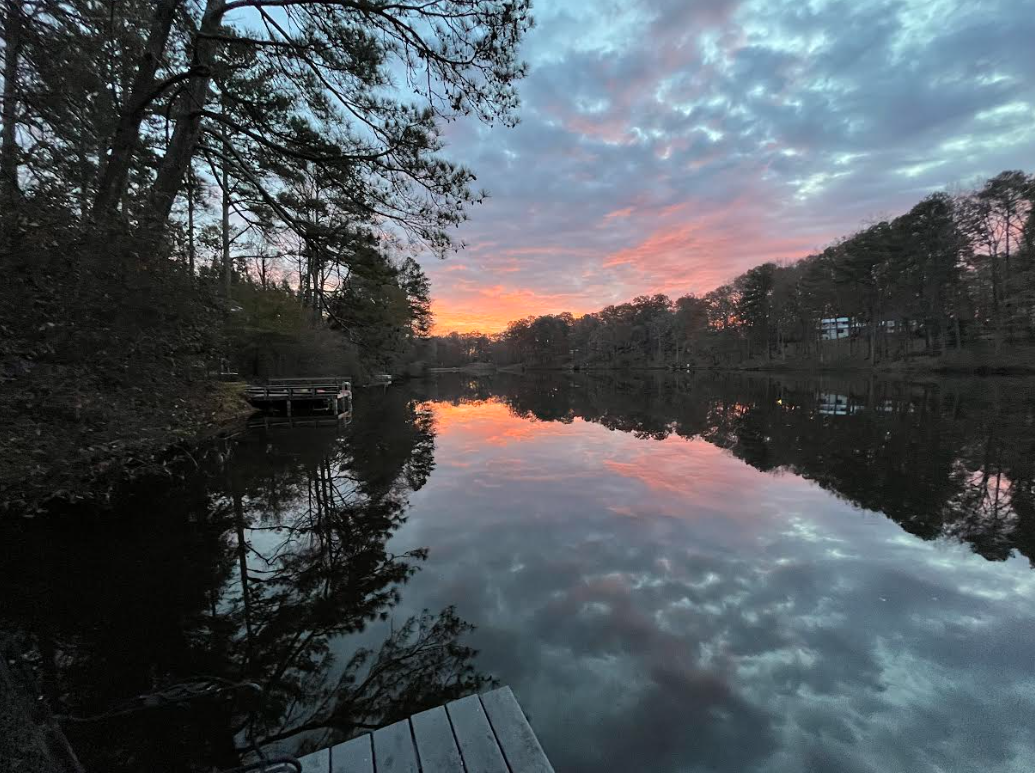
This morning I went to Stone Mountain for a hike. There were a huge number (perhaps 500) of firefighters from across the region in full gear climbing to honor the 343 firefighters and other victims who perished 25 years ago on this day. This annual hike started about 12 years ago. It made this hike quite solemn.
For those of you who like online games, there are two that I recently discovered that are quick and fun. Currently, both games are free.
MapTap.gg Daily geography game. Each day, the game asks you to identify 5 locations on a realistic unmarked 3D globe. The closer your guess, the higher your score. Each day there are short vignettes and facts.
Anno-Game Daily history game. Each day, the game asks you to determine the year of 5 important historical events. The closer your guess, the higher your score.
K Schulman, AL Kellermann. NEJM 2026;394:1669-1672. Substandard Generic Drugs — Threats to Patient Safety and National Security
An excerpt:
Generic drugs account for more than 90% of prescriptions filled in the United States. The first paragraph on the home page of the Office of Generic Drugs at the Food and Drug Administration (FDA) asserts that “FDA-approved generic drugs have the same high quality, strength, purity and stability as brand-name drugs.” On the strength of this assurance, America’s doctors, pharmacists, and patients assume that every version of a generic drug is equally safe. But this proposition is now being seriously challenged...
Between 2009 and 2019, the availability of generic medicines saved U.S. patients $2.2 trillion, according to the FDA.
Over time, intense price competition drove most production of generic drugs and ingredients offshore to countries with low labor costs and lax regulatory controls. Once that shift occurred, relentless pressure to minimize costs led some manufacturers to compromise on quality. Rapid globalization also outstripped the FDA’s capacity to monitor manufacturers. In 2022, the Government Accountability Office reported that 61% of foreign plants had not been inspected by the FDA in the preceding 5 years.1
When FDA inspectors finally reach these plants, some find glaring problems…More than 60% of generic-drug shortages are attributable to quality concerns, according to the FDA…
A private-sector laboratory detected high levels of nitrosamines (known carcinogens) in drugs made by several FDA-approved manufacturers, prompting recalls of metformin, angiotensin-receptor blockers, angiotensin-converting–enzyme inhibitors, prazosin, and ranitidine. More recently, independent tests of generic methylphenidate found nitrosamine levels above the FDA’s safety threshold in 7 of 15 immediate-release products…2
Recently, a team of U.S. and South Korean researchers with access to FDA data determined that significantly more serious adverse event reports were linked to generic drugs manufactured in India than to equivalent drugs manufactured in the United States…4
In 2008, a total of 238 deaths in the United States were linked to adulterated Chinese heparin. When the FDA toughened its approach to quality assessment of foreign manufacturers, shortages of more than 200 medications followed. This crisis prompted the FDA to prioritize minimizing drug shortages over ensuring safety…
There is a better way to assure the safety of generic drugs. In 1994, the European Medicines Agency (EMA), for example, established a proactive approach involving risk-based surveillance in addition to systematic planned and ad hoc testing of generic drugs both on the market and during routine inspections of manufacturers (in contrast, the FDA does not routinely test generic-drug products themselves, either on the market or during quality inspections of manufacturing plants). EMA testing relies on a network of official medicines control laboratories (OMCLs) that operate in accordance with International Organization for Standardization (ISO) accreditation standards for testing and calibration laboratories. At any point in a drug’s life cycle, an OMCL can pull samples for product testing...
The U.S. government should oversee an effort to rebuild America’s capacity to manufacture generic drugs, combining investment in private manufacturing with incentives for purchasing U.S.-made products under the Medicare and Medicaid programs. Currently, the United States is vulnerable to an embargo of essential drugs or the materials required to make them. A recent evaluation for the Department of Health and Human Services found that 87% of sites that make active pharmaceutical ingredients (APIs) and 63% of sites that produce finished dosage forms were located overseas…
My take (borrowed from the authors): Most generic drugs are safe, but a troubling minority are not…The United States already tests a wide range of consumer products. We should also test our generic drugs.
I posted this link in 2019 – this nearby house continues with pretty cool lights, though they change their songs each year. There are more than 25,000 lights which are synchronized to music. Cool stuff! Here’s a 1 minute clip: Holiday Lights 2019
——-
Last year I posted a list of some of my favorite books. Here are a few of my favorite that I read from the past year (not in any particular preference order):
PMG Santos et al. NEJM 2025; 393: 105-107. Who Will Care for America? Immigration Policy and the Coming Health Workforce Crisis
This article outlines the role of undocumented immigrants in our health care system with a focus on home health aides. Given the increase in the numbers of Americans older than 65 yrs, 56 million in 2020 and projected to be 80 million in 2030, current immigration policies will worsen the severe health care worker shortages.
An excerpt:
Immigrants are a vital part of the U.S. health care system: at least one in five U.S. health care workers is foreign-born, including 29% of physicians, 17% of nurses, and 24% of direct care workers…Data suggest that most (if not all) foreign-born physicians and nurses are naturalized U.S. citizens or lawfully permanent residents. In contrast, of the 37% of foreign-born direct care workers who are noncitizens, nearly half may be undocumented.4 This divergence is at least partly attributable to policies that streamline pathways to legal permanent residency or citizenship for some but not all immigrants…
As federal policies threaten to further destabilize the direct care workforce, nonimmigrants are unlikely to fill the resulting void. Direct care workers assist with household chores as well as bathing, dressing, and toileting — thereby enabling frail, older adults and those with disabilities to live safely at home….The physically demanding nature of direct care work, combined with low pay and high susceptibility to exploitation, makes these roles unattractive to U.S.-born and highly skilled foreign-born workers…
This is not the first time that immigrants have helped fill critical health care roles that were unattractive to U.S.-born workers…the Exchange Visitor Program in 1948, allowing Filipino nurses to obtain temporary work visas. Later, the Immigration and Nationality Act of 1965 allowed Filipino nurses to stay in the United States permanently…
Federal officials could effectuate immigration reform in a way that secures our borders while addressing labor shortages. Instead, current policies threaten to further shrink this essential workforce, maligning and driving out hard-working immigrants at the expense of an aging America…compromising care for older adults and the health care system at large…
The recent deportation of immigrant health care workers is our canary in the coal mine: policymakers must act swiftly, or risk endangering the health of us all.
My take: I doubt the consequences of mass deportation have been carefully considered amid the heated rhetoric. There is saying, often attributed to Otto von Bismarck: “Only a fool learns from his own mistakes. A wise man learns from the mistakes of others.” As such, it appears that we are destined to learn from mistakes rather than avoiding them.
Background: Nearly two decades ago, the Eight Americas study offered a novel lens for examining health inequities in the USA by partitioning the US population into eight groups based on geography, race, urbanicity, income per capita, and homicide rate. That study found gaps of 12·8 years for females and 15·4 years for males in life expectancy in 2001 across these eight groups. In this study, we aimed to update and expand the original Eight Americas study, examining trends in life expectancy from 2000 to 2021 for ten Americas (analogues to the original eight, plus two additional groups comprising the US Latino population), by year, sex, and age group.
Methods: The authors tabulated deaths from the National Vital Statistics System and population estimates from the US Census Bureau and the National Center for Health Statistics from Jan 1, 2000, to Dec 31, 2021.
Key findings: .
At the beginning of the 21st century, there was already a 12.6-year gap in life expectancy among Americas, but this gap grew even larger during the 2000s and 2010s and accelerated to 20.4 years after the first 2 years of the COVID-19 pandemic.
One’s life expectancy varies dramatically depending on where one lives, the economic conditions in that location, and one’s racial and ethnic identity.
There are limitations with the data that were used. For example, there is known to be substantial misreporting of race and ethnicity on death certificates
My take (borrowed from the authors): “The extent and magnitude of health disparities in the USA are truly alarming. In a country with the wealth and resources of the USA, it is intolerable that so many are living in conditions and with health outcomes akin to those of an entirely different country.”
‘Fistula Foundation which arranges obstetric fistula repair. This restores a woman’s life after this life-altering complication –a corrective surgery that costs just $619 per person
Muso Health helps reduce childhood mortality. In Mali, this organization reduced childhood mortality by 95%. The cost of bringing one more person into the Muso health care network is only $22 per year.
Reach Out and Read. This U.S-based charity allows doctors to “prescribe” reading to the child. This promotes reading as well as childhood well-child visits.
Crisis Text Line is for those who want to volunteer, rather than donate. This organization trains (15-20 hrs) volunteers to help individuals needing mental health support. “More than 90 percent of the volunteers report that their own mental health improves as a result of their participation.”