Huge Numbers of Long COVID Cases -Vaccination Helps

Y Xie, et al. NEJM 2024; DOI: 10.1056/NEJMoa2403211. Postacute Sequelae of SARS-CoV-2 Infection in the Pre-Delta, Delta, and Omicron Eras

Background: Postacute sequelae of severe acute respiratory syndrome coronavirus 2 (SARS-CoV-2) infection (PASC), also called “long Covid,” can affect many organ systems.1,2 The risk of PASC appears to increase with greater severity of infection and with the presence of preexisting medical conditions.

Methods: The authors used the health records of the Department of Veterans Affairs to build a study population of 441,583 veterans with SARS-CoV-2 infection between March 1, 2020, and January 31, 2022, and 4,748,504 noninfected contemporaneous controls.

Key findings:

NY Times, Pam Belluck 7/17/24: Vaccines Significantly Reduce the Risk of Long Covid, Study Finds

An excerpt:

The lowest rate of long Covid in the study, 3.5 percent, was among vaccinated people who were infected during the latest period in the study, between mid-December 2021 and January 2022. That compares with a rate of 7.8 percent for unvaccinated patients in the study who were infected during the same period…

To rule out other possible causes, the researchers factored in comparisons between uninfected people who developed similar symptoms…

Researchers found that among unvaccinated people infected between June 19 and Dec. 18, 2021, when Delta was the dominant variant, the rate of long Covid a year later decreased slightly to 9.5 percent from 10.4 percent among those infected in the first 15 months of the pandemic…

Among vaccinated people who had been infected, the rates of long Covid were markedly lower…About 5.3 percent of those infected during the Delta period had long Covid a year later, and 3.5 percent of those infected during the Omicron period did.

My take: A huge number of people in U.S. (and worldwide) have long COVID. This risk is markedly reduced with vaccination.

Related blog posts:

Severe Cognitive Slowing Identified in Long COVID

S Zhao et al. eClinical Medicine 2024; DOI:https://doi.org/10.1016/j.eclinm.2024.102434. Open Access! Long COVID is associated with severe cognitive slowing: a multicentre cross-sectional study

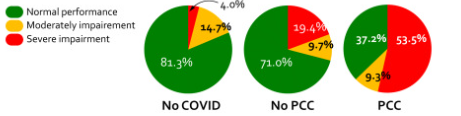
Methods: To examine cognitive slowing, patients with post-COVID-19 conditions (PCC) completed two short web-based cognitive tasks, Simple Reaction Time (SRT) and Number Vigilance Test (NVT). 270 patients diagnosed with PCC at two different clinics in UK and Germany were compared to two control groups: individuals who contracted COVID-19 before but did not experience PCC after recovery. For the SRT, participants were required to press the spacebar when a large red circle appeared in the center of the screen.

.**The simple reaction time task and the number vigilance task can be tried online at [https://octalportal.com/pcc]..

Key finding:

  • There was pronounced cognitive slowing in patients with PCC, which distinguished them from age-matched healthy individuals who previously had symptomatic COVID-19 but did not manifest PCC. Cognitive slowing was evident even on a 30-s task measuring simple reaction time (SRT), with patients with PCC responding to stimuli ∼3 standard deviations slower than healthy controls. 53.5% of patients with PCC’s response speed was slower than 2 standard deviations from the control mean, indicating a high prevalence of cognitive slowing in PCC.
  • Comorbidities such as fatigue, depression, anxiety, sleep disturbance, and post-traumatic stress disorder did not account for the extent of cognitive slowing in patients with PCC.
  • Cognitive slowing on the SRT was highly correlated with the poor performance of patients with PCC on the NVT measure of sustained attention.
Results of simple reaction time       

My take (borrowed from authors): Using a 30-s web-based, self-administered psychomotor task, cognitive slowing in PCC can be reliably and easily measured as part of diagnostic work-up, and has potential to be a biomarker to track the progress of rehabilitation of PCC.

**The simple reaction time task and the number vigilance task can be tried online at [https://octalportal.com/pcc].

Updated Health Warnings Needed For Alcohol & More on COVID-19/Paxlovid

AH Grummon, MG Hall. NEJM 2022; 387: 772-774. Updated Health Warnings for Alcohol — Informing Consumers and Reducing Harm

This article makes a compelling case that most U.S. consumers do not know the true risks of alcohol intake; this is likely in part due to the >$1 billion spent each year on marketing by the alcohol industry.

Leading causes of alcohol-related harms:

  • Fatal and nonfatal injuries resulting from acute intoxication (including injuries caused by motor vehicle crashes)
  • Chronic diseases including hypertensive heart disease, cirrhosis, pancreatitis and several types of cancer.2 Even light or moderate drinking increases the risk of these conditions, particularly cancer (eg. breast, colon, and stomach)2
  • Risks during pregnancy include miscarriage, preterm birth, and fetal alcohol syndrome (these risks are not specifically addressed in this commentary)
  • Also not noted in this article, alcohol is considered a major contributor to violence, including intimate partner violence

Key points –Scope of Problem and Informing Consumers:

  • “In April 2022, the Centers for Disease Control and Prevention (CDC) released new mortality statistics showing that alcohol consumption now accounts for more than 140,000 deaths per year in the United States, or more than 380 deaths per day. The Covid-19 pandemic has exacerbated alcohol-associated harm in the United States, with alcohol-related deaths increasing by 25% during the first year of the pandemic as compared with the previous year”(White AM, Castle IP, Powell PA, Hingson RW, Koob GF. Alcohol-related deaths during the Covid-19 pandemic. JAMA 2022;327:1704-1706).
  • “A national survey of U.S. adults, for example, found that nearly 70% are unaware that alcohol consumption increases the risk of cancer.3…Some alcohol companies even seek to link their products to health campaigns. Several companies, for example, have sold seasonal, pink ribbon–themed alcoholic drinks during October to promote their efforts to raise funds for breast-cancer research — despite compelling evidence that alcohol increases the risk of developing breast cancer.”
  • The authors advocate for better warning labels. They argue that “updated alcohol warnings would provide new risk information to many Americans, … implementing such warnings would be a sensible policy for addressing industry dominance over alcohol-related information, even if warnings’ effects on consumption are fairly small.”

Related article: NBC News 11/4/22: Alcohol deaths spiked among middle-aged adults, especially women, during pandemic “Alcohol-related deaths rose by 26% from 2019 to 2020, a new report published Friday by the Centers for Disease Control and Prevention finds.”

Related blog post:

More on COVID-19:

Eric Topol: Paxlovid and Long Covid This in-depth article reviews the benefits of paxlovid (early) and later, including the reduction of Long Covid in 26% in a recent study. It also provides a table for potential drug interactions (Thanks to Jeff Lewis for sharing).

This recent study is reviewed in NY Times (11/7/22): Paxlovid May Reduce Risk of Long Covid in Eligible Patients, Study Finds

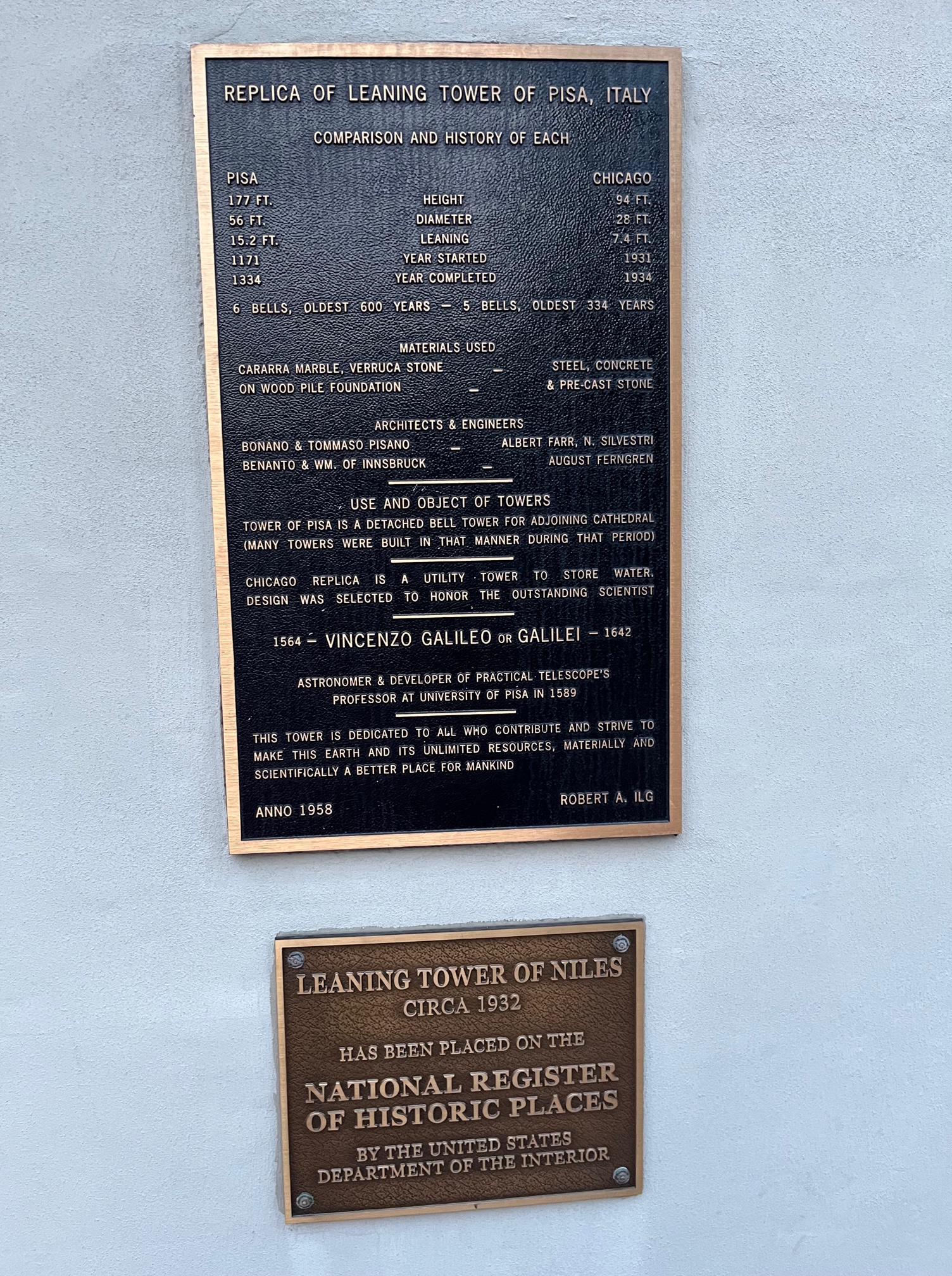
Leaning Tower of Niles (1934) (near Chicago, IL). The “Papa Chris Place” sign should help distinguish this landmark for the one in Pisa.