
DJ Palmer et al. N Engl J Med 2026;395:1090-1099. Trial of a Maternal Diet Rich in Eggs and Peanuts to Reduce Infant Allergy
Methods: For “The PrEggNut Trial,” a multi-site, randomized trial, “pregnant women whose unborn child had at least two biologic family members with medically diagnosed allergic disease were eligible to participate. Participants were assigned in a 1:1 ratio to follow either a diet high in eggs and peanuts that included at least 6 eggs and 60 peanuts per week (high egg–peanut group [n=1070]) or a standard (control) egg and peanut diet that included no more than 3 eggs and 30 peanuts per week (standard-diet group [n=1067]), from before 23 weeks’ gestation until 4 months postnatally during lactation. The primary outcome was IgE-mediated egg or peanut allergy in the infant at 1 year of age.
Key findings:
- There was no significant difference in the percentage of infants with IgE-mediated egg or peanut allergy between the maternal high egg–peanut group (83 of 1066, 7.8%) and the standard-diet group (89 of 1064, 8.4%) (relative risk, 0.93; P=0.65)
- A potential limitation of the trial was the lower-than-anticipated prevalence of egg or peanut allergy (8% actual vs. 16% anticipated)
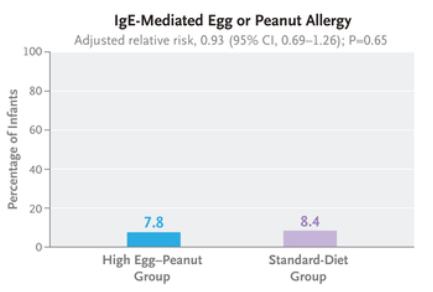
My take: Increased exposure to eggs and peanuts during pregnancy did not reduce allergies in infants. Exposure during infancy, however, can reduce the rates of allergies.
Related blog posts:
- In the News: Fewer Peanut Allergies, Possibly Improving Obesity Rates in U.S., Best Fruit for Constipation (2025). Referenced article (Open Access!): S Gabryszeweki et al. Pediatrics e2024070516. Guidelines for Early Food Introduction and Patterns of Food Allergy “Recent (20213) guidelines …recommended the introduction of peanut, egg, and other major food allergens at age 4 to 6 months, regardless of atopic history or food allergy testing.”
- Allergy Prevention Strategy: Early Exposure Beneficial (Long-term Data for Peanuts) (2024)
- LEAP-ON Study: Early Peanuts Prevent Allergies (2016)
- The “EAT” Study (2016)
- The Peanut Story -From NEJM Blog
- Links: Prevent Peanut Allergy (National Peanut Board)

