
As noted in a previous blog post (Changes in the Use of IBD Biologic Therapy), there has been an increased use of biologic therapy early in the course of patient’s with inflammatory bowel disease (IBD). Another retrospective study (H Yu et al AP&T 2018; 47: 364-70 -thanks to Ben Gold for this reference) examines the market share and costs of biologic therapy for IBD using the Truven Marketscan Commercial Claims and Encounters database (2007-2015). This database consists of out-patient and in-patient pharmaceutical claims of approximately 40-50 million privately insured patients each year from patients from all 50 states (U.S.).
Key findings:
- Among 415,405 patients with IBD (188,842 with Crohn’s, 195,183 with ulcerative colitis, 31,380 with indeterminate IBD), the proportion using biologics increased over the 9-year period (2007-2015); overall, the market share increase was from 7.1% (2007) to 20.5% (2015).
- There were 28,797 pediatric patients with IBD (17,296 with Crohn’s, 9368 with ulcerative colitis, and 2133 with indeterminate colitis). The overall market share in pediatric patients was the highest, increasing from 19.1% to 45.9%.
- For all patients with Crohn’s disease (CD) the proportion receiving biologic therapy increased from 21.8% to 43.8%. For patients with ulcerative colitis (UC), the proportion increased from 5.1% to 16.2%.
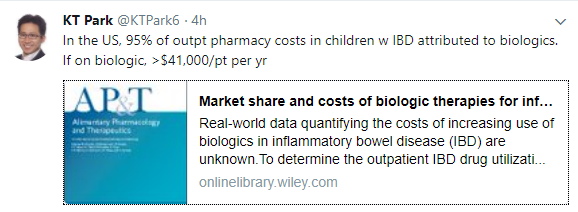
- Per-member per-year (PMPY) costs increased. “The average biologic-taking patient accounted for $25,275 PMPY in 2007 and $36,051 PMPY in 2015.” This was similar in the pediatric population, going from $23,616 PMPY in 2007 to $41,109 PMPY in 2015.
- The share of costs of medicines: the costs of biologics as a share of the total increased from 72.9% in 2007 to 85.7% in 2015. 95% of the pharmacy costs in children with IBD are attributed to biologics.
My take: This trend of increasing use of biologics and their associated costs is going to continue due to their effectiveness. While there are direct costs related to these medications, the net cost is unclear as they can prevent hospitalizations and surgeries. In addition, by helping to spare corticosteroids and increasing response rates, biologic therapies improve quality of life, minimize opportunity loss, and optimize long-term health outcomes.

Bright Angel Trail, Grand Canyon
 gutsandgrowth