
N Santucci et al. J Pediatr Gastroenterol Nutr. 2026;82:1394–1399. Open Access! Children and adolescents with disorders of gut–braininteraction with comorbid hypermobility and orthostaticintolerance have worse outcom
Methods: This was a retrospecitive study from a multidisciplinary pediatric DGBI clinic which examined the relationship between hypermobility spectrum disorders (HSDs) and orthostatic intolerance (OI). HSD terms included Ehlers–Danlos syndrome, hypermobile Ehlers–Danlos syndrome, and generalized hypermobility; OI terms included postural orthostatic tachycardia syndrome, dysautonomia, and orthostatic hypotension. Of 175 patients, 46% had HSD and 43% had OI; 26% had both HSD and OI.
Key findings:
- Patients with both HSD and OI had significantly worse nausea, depression, disability, and somatization scores than others (p < 0.01).
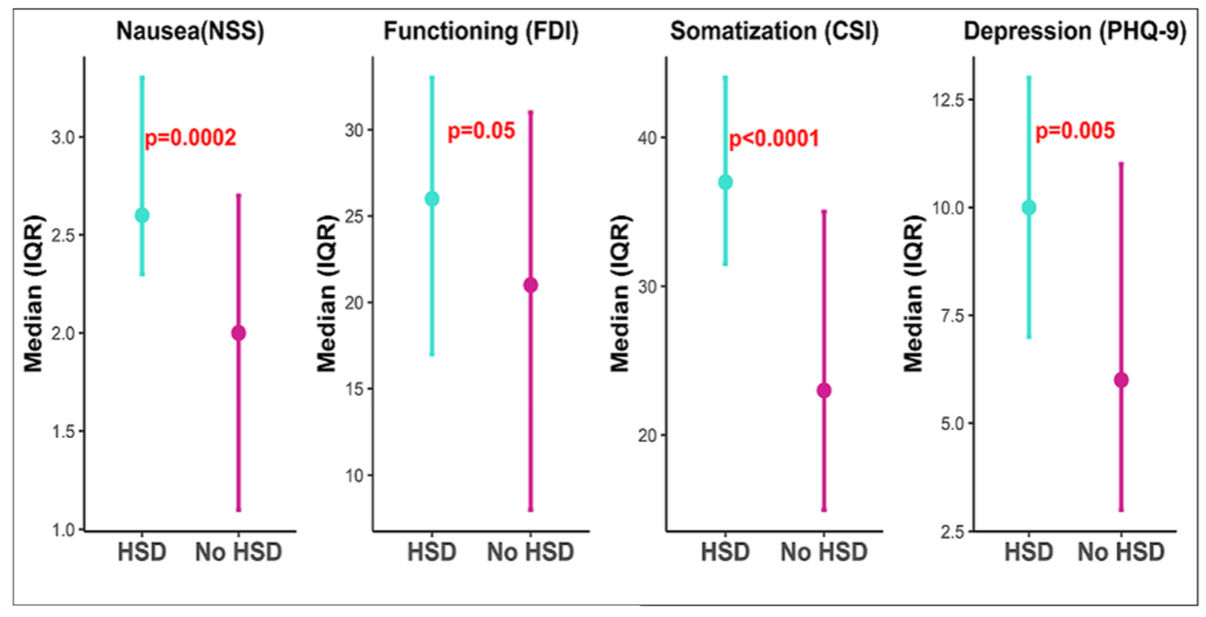
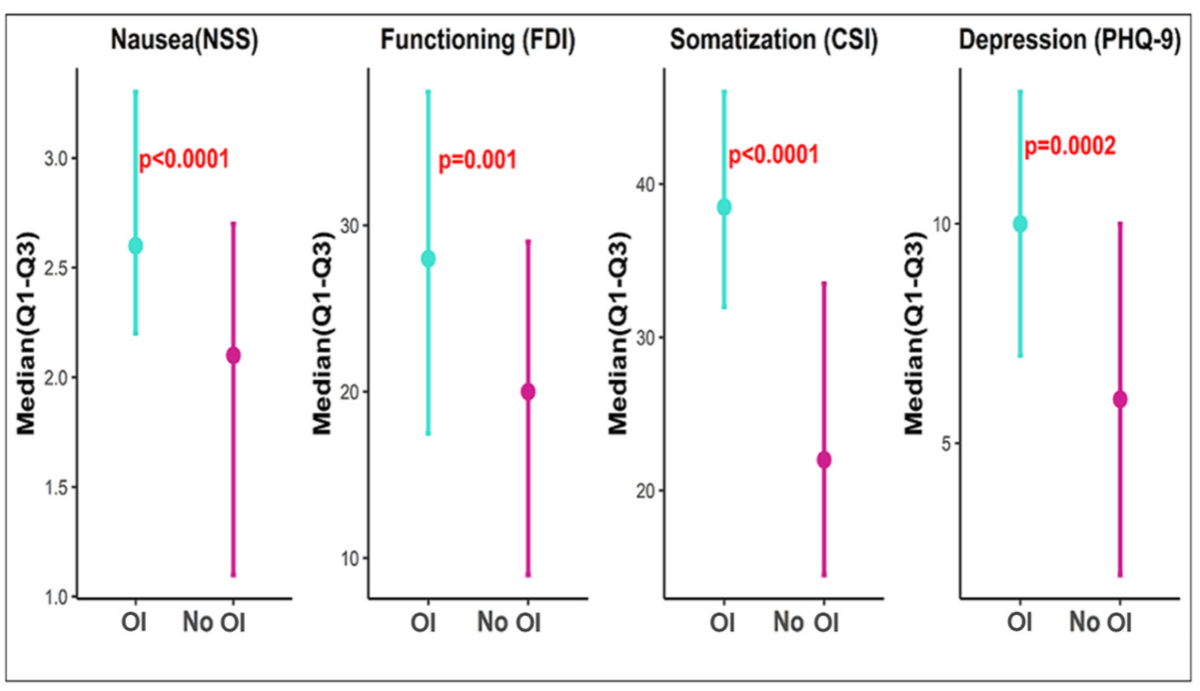
- HSD and OI groups individually also showed worse outcomes than non-HSD/non-OI groups. Moderate correlations were found between depression and anxiety in OI and nausea and disability in HSD.
- Patients with both HSD and OI (n=45) had worse NSS (p < 0.0001), PHQ-9 (p = 0.007), FDI (p = 0.001), and CSI (p < 0.001) compared to patients with either OI or HSD and patients with neither.
Discussion:
- “Autonomic dysfunction may explain the shared GI symptoms for OI and HSD patients. GI blood flow, motility, and secretion are regulated by an integral neural mechanism involving inputs from the central nervous system and the enteric nervous system. “
- “Formal diagnosis of HSD and OI can be challenging and often requires involvement of multiple subspecialists…Studies comparing these groups run the risk of under-reporting diagnoses or including patients without the diagnosis. Strict clinical criteria are required using guidelines.”
- There may be a selection bias for these patients in a specialized clinic for DGBIs; this was not discussed in this article. There is likely an increased rate of screening for HD and OI in patients with more severe DGBIs given previous reports of association with DGBIs.
My take: HSDs and OI are highly prevalent in DGBIs. In this study, both of these disorders were associated with worsened symptoms.
Related blog posts:
- Antroduodenal Dysmotility in Hypermobility Disorders and Ehlers-Danlos Syndrome
- Myth or Fact: Joint Hypermobility is Related to Pediatric Functional Abdominal Pain & Dr. Roy Link
- Joint Mobility -Not Associated with Increased Functional GI Disorders
- Expert Advice for GI Manifestations of Hypermobile Ehlers-Danlos Syndrome Including Association with POTS and Mast Cell Activation Syndrome (MCAS)
- Rome V Pediatric Upper Gastrointestinal Disorders of Gut-Brain Interaction (Part 3)
- Dr. Neha Santucci: Management of DGBIs in the Post-Pandemic Era (Part 1)
- Dr. Neha Santucci: Management of DGBIs in the Post-Pandemic Era (Part 2)
- Dr. Katja Karrento: Chronic Nausea — Evidence of a Complex Syndrome

